Starmer’s Election Reversal Sparks Anger as Reform Surges
Keir Starmer's government faced its 14th major U-turn, reversing plans to delay local elections for 30 English councils after a legal challenge by Reform UK. The decision, which ignited fury among opposition parties and Labour colleagues, follows accusations of a 'political stitch-up' and raises questions about ministerial accountability and the integrity of local democracy.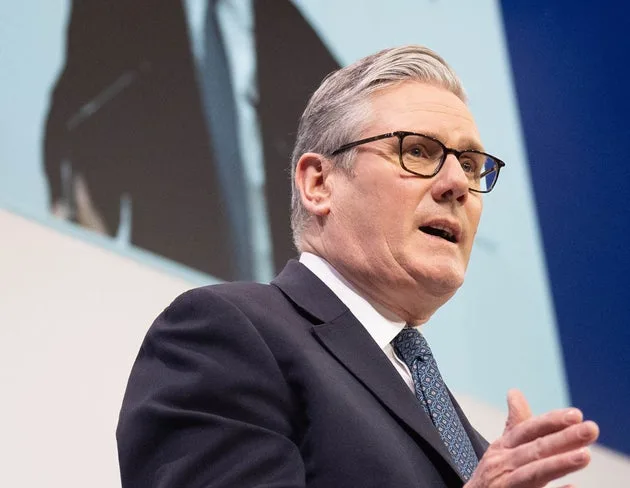
Keir Starmer's government faced significant scrutiny and internal strife on Monday after announcing yet another policy reversal, abandoning plans to delay local elections for 30 councils in England.
This latest U-turn, which came just hours after Starmer defended his record by stating, “I am a pragmatist. I am a common-sense merchant,” marks the 14th major policy reversal since he entered government less than two years ago.
The decision to reverse the election delays was met with delight from opponents and infuriated his own Labour colleagues, with Conservative leader Kemi Badenoch posting, “Predictable chaos from a useless government that cannot make basic decisions. This is a zombie government. U-turn after U-turn after U-turn.”
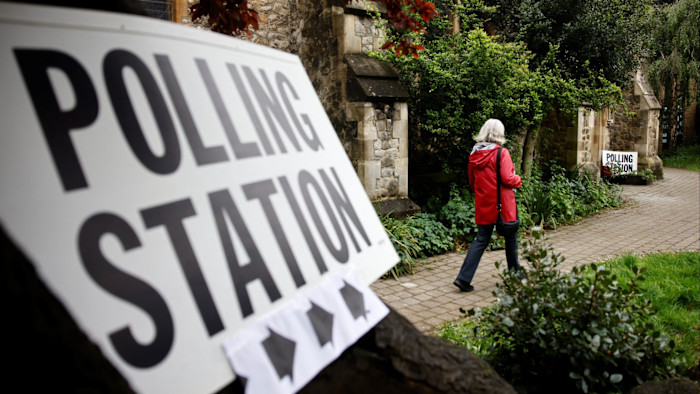
The controversy originated from ministers' proposals in December 2024 to simplify local government structures, including plans to eliminate smaller district councils and merge some neighboring authorities.
While nine local authorities successfully delayed their elections the following year without major backlash, a government letter last December asking if 30 councils wished to delay elections again ignited fury among opposition parties and some within Labour.
Of the 30 councils, 21 are Labour-led, five Conservative, two Liberal Democrat, one independent, and one Green, leading to accusations of a politically motivated maneuver designed to shield the Labour Party from potential electoral backlash.
Critics argued that delaying elections in predominantly Labour-controlled councils risked undermining democratic accountability, with opposition figures from the Conservative Party and the Liberal Democrats questioning the timing and intent of the proposal.
Some Labour backbenchers also privately expressed concern that the optics of the move would reinforce a growing narrative of indecision within government.
At the center of the storm is Keir Starmer, whose leadership has increasingly come under pressure amid a string of reversals on key policies ranging from infrastructure commitments to public sector reforms.
While allies insist his willingness to change course reflects responsiveness and pragmatism, critics argue it signals a lack of strategic clarity.
Kemi Badenochintensified that criticism on Monday, framing the latest reversal as evidence of a government struggling to maintain coherence. Her remarks echoed a broader opposition strategy to portray Starmer’s administration as reactive rather than decisive.
The issue of local government restructuring in England remains unresolved. Ministers maintain that consolidating councils could improve efficiency and reduce administrative costs, but the repeated shifts in approach have complicated efforts to build consensus among stakeholders.
For now, the immediate political damage lies less in the policy itself and more in what opponents describe as a pattern. With 14 U-turns in under two years, the government faces a growing perception problem—one that could prove more difficult to reverse than any single decision.