Starlink Secures Uganda License, Airtel's Direct-to-Cell Service Poised for Takeoff
Uganda has granted Starlink a provisional license, signaling a major advancement for LEO broadband in East Africa. This move coincides with Airtel Uganda testing Starlink's direct-to-cell service, promising expanded connectivity in underserved areas. The development positions Uganda as a potential testbed for hybrid satellite-cellular solutions.
Uganda's communications regulator, the Uganda Communications Commission (UCC), has issued a provisional licence to Starlink, marking a pivotal moment in the satellite operator's expansion into East Africa.
This development underscores a significant shift in how African regulatory bodies are approaching low-earth orbit (LEO) broadband connectivity across the continent.
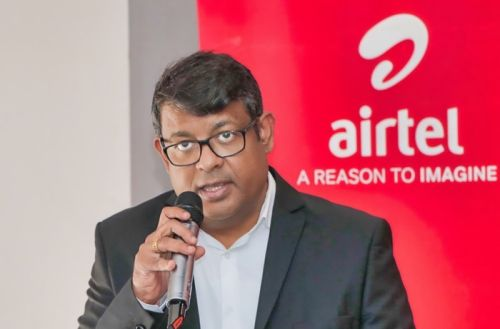
Simultaneously, Airtel Uganda has initiated testing of Starlink’s direct-to-cell (D2C) LEO satellite service, further highlighting the region's embrace of advanced connectivity solutions.
The direct-to-cell technology is a groundbreaking innovation that enables standard mobile handsets to connect directly to satellites, eliminating the need for specialised equipment.
This capability is poised to dramatically expand connectivity in remote and underserved areas where traditional terrestrial network infrastructure is either limited or entirely absent.
Airtel Uganda's active testing of the D2C service reflects a growing trend among established telecommunications operators to collaborate with LEO satellite providers, aiming to broaden their coverage footprints, especially within rural communities across Africa.
Uganda's decision to grant Starlink regulatory approval adds it to an increasing roster of African markets where Starlink is either seeking or has already secured such endorsements.
This provisional licence represents the first formal regulatory greenlight for Starlink in Uganda, although the UCC has yet to disclose specific conditions or a timeline for the issuance of a full licence.
This broader engagement by African governments and regulators with LEO satellite operators acknowledges the technology's immense potential to bridge persistent connectivity gaps that fibre optic and mobile networks have struggled to close, particularly in landlocked and rural regions.
For Uganda, a nation where internet penetration outside major urban centres remains a significant challenge, a fully licensed Starlink operation holds the promise of accelerating access to high-speed broadband.
This would benefit businesses, educational institutions, and households that have historically relied on slower or less dependable internet connections.
The combination of regulatory approval and an active D2C trial with a prominent mobile operator like Airtel suggests that Uganda could emerge as an early and crucial testing ground for hybrid satellite-cellular connectivity models throughout the African continent.