STAR WARS SHOCKER: New Series Revives George Lucas' Original Sequel Plan!
<em>Star Wars: Maul - Shadow Lord</em> is poised to resurrect George Lucas’ abandoned sequel trilogy concepts, particularly his original vision for Darth Maul as a galactic criminal kingpin. The series introduces Devon Izara, a Twi'lek protégé who mirrors the narrative function of Lucas' intended character, Darth Talon. This move signals Lucasfilm's new strategic approach to adapting original ideas for current Star Wars canon.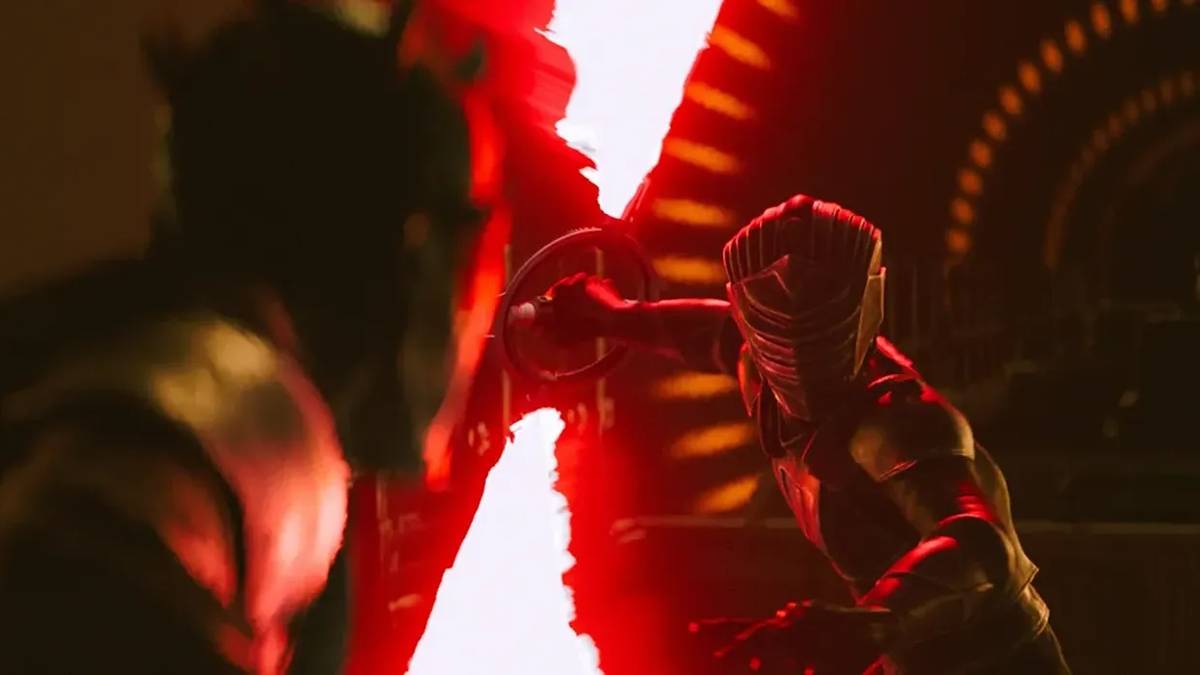
For over a decade, the "what ifs" surrounding George Lucas’ abandoned sequel trilogy plans have been a persistent topic in modern Star Wars history. When Lucas sold Lucasfilm to Disney in 2012, he had already developed concepts for Episodes VII, VIII, and IX. These original ideas, particularly concerning the villains, diverged significantly from the trilogy that eventually reached screens. Now, with the upcoming release of Star Wars: Maul - Shadow Lord, Lucasfilm appears to be thoughtfully revisiting this discarded roadmap, notably by extending the story of Darth Maul (Sam Witwer) and resurrecting central pillars of Lucas’ sequel-era mythology.
At the core of Lucas’ original sequel trilogy vision was Darth Maul, a character he never considered truly expendable. Despite his apparent demise in The Phantom Menace, Lucas had reconceived Maul as a long-term antagonist whose true power stemmed from influence rather than a direct Sith hierarchy. In Lucas’ outlines, Maul survived, rebuilt his power, and emerged as the criminal kingpin of the galaxy, ruling the underworld in the power vacuum left by the fall of the Empire. He was intended not as the front-facing villain of the sequel trilogy, but as its architect, fulfilling a role akin to Emperor Palpatine by manipulating events from the shadows and operating outside the traditional structures of Sith dominance.
To carry out Maul’s will, Lucas planned to introduce Darth Talon, a character pulled from Star Wars Legends material. Originally appearing in the Legacy comics, set over a century after the original trilogy, Talon became a fixation for Lucas due to her visual design and narrative function. In his sequel trilogy plans, Lucas repositioned Talon almost a hundred years earlier in the timeline, transforming her into Maul’s Sith apprentice and the primary physical antagonist of Episode VII. While Maul orchestrated events from the shadows, Talon was designed to confront the new generation of heroes directly, effectively stepping into the Darth Vader role for the saga’s next chapter.
However, this specific narrative never made it to the screen. Disney’s sequel trilogy ultimately pivoted towards familiar iconography and legacy characters, culminating in the return of Emperor Palpatine and the sidelining of Maul’s larger arc. Despite this departure, Lucas’ original ideas never completely faded. They lingered on the fringes of canon, occasionally resurfacing in animated forms and expanded lore, and now, most prominently, in Maul - Shadow Lord.
The first trailer for Maul - Shadow Lord confirms Maul’s rise during the early days of the Empire, but its most revealing aspect is the introduction of Devon Izara (Gideon Adlon), a young Twi’lek who becomes deeply entangled with Maul. Lucasfilm describes Devon as conflicted, sharing quiet ritual scenes with Maul and receiving instruction that goes beyond brute-force combat. While she is not explicitly identified as a Sith, the narrative parallels to Darth Talon are unmistakable. Devon mirrors Talon in her functional role as a Twi’lek protégé bound to Maul, an extension of his power, and connected to his dominion over the galactic underworld rather than the remnants of the Sith Order.
A key difference lies in their moral framing: Lucas’ Talon was an unwavering, devoted apprentice fully embracing the dark side. Devon, by contrast, appears uncertain and more susceptible to doubt and internal conflict. This characterization aligns with modern Star Wars storytelling’s emphasis on psychological depth and choice. This isn’t a coincidence; it exemplifies Lucasfilm’s current approach to legacy material. Instead of directly importing Legends characters, the studio preserves their narrative purpose while reshaping them to fit contemporary canon. Devon is not Darth Talon by name, but she occupies the same narrative space Talon once held, achieving Lucas’ original narrative intent without contradicting established continuity.
The significance of this approach is further amplified by its timing and the influence of Dave Filoni. While Maul - Shadow Lord was developed during Kathleen Kennedy’s tenure as Lucasfilm president, its creative direction aligns closely with Filoni’s philosophy. Filoni has a well-documented history of reintroducing and reinterpreting Legends concepts into canon, as seen with Grand Admiral Thrawn in Star Wars Rebels and Darth Bane in The Clone Wars. In each instance, Filoni reimagined these elements, grounding them within the emotional and thematic framework of modern Star Wars. Maul - Shadow Lord continues this tradition by re-centering Maul and granting him a protégé, reinforcing his status as a generational villain capable of sustaining long-term momentum across multiple projects, and implying continuity and an evolving threat.
This approach also reflects a broader strategic shift within Lucasfilm. In recent years, the studio’s most successful storytelling has unfolded outside the immediate orbit of the sequel trilogy. Series like The Mandalorian and Ahsoka have demonstrated the enduring appeal of stories rooted in the aftermath of the original trilogy, where the galaxy’s future is uncertain and power structures remain in flux. Maul - Shadow Lord operates within this same transitional space, directly drawing from Lucas’ foundational ideas while allowing new characters and interpretations to emerge. Devon’s existence suggests that Lucasfilm is no longer content to leave Lucas’ sequel-era concepts as purely hypothetical. Instead, the studio appears willing to selectively incorporate them, adapting them into forms that serve the current canon while honoring their original narrative intent. This represents a recalibration toward long-form mythmaking rooted in Lucas’ designs, rather than a full reversal of the sequel trilogy or an erasure of Rey’s story.
Ultimately, the creative choices surrounding Maul - Shadow Lord point to something larger than a single character revival or Legends-inspired homage. They indicate a renewed confidence in long-form storytelling built around influence, legacy, and ideological succession—all hallmarks of Lucas’ original conception for the sequel trilogy. This approach favors patient narrative infrastructure, where power is inherited, contested, and reshaped over time, contrasting with reliance on surprise resurrections or symbolic callbacks. This marks a notable evolution for Lucasfilm. By reviving Maul’s intended role as a manipulator and framing his influence through a conflicted protégé, Lucasfilm reconnects with Lucas’ philosophy, which emphasized systemic corruption and shadow empires over singular tyrants, while also embracing moral ambiguity and choice, themes increasingly defining modern Star Wars storytelling. In this sense, Maul - Shadow Lord acts as a continuation of an unfinished conversation, acknowledging that Lucas’ vision was never fully realized but recognizing that those ideas can still evolve within the current canon. Rather than rewriting the past, Lucasfilm appears to be building forward using foundations laid years ago, treating Lucas’ sequel vision as a valuable resource rather than a relic of an abandoned plan.