South Africa's Immigration War: President's Crackdown Amidst Crisis and Community Tensions
South Africa's President Cyril Ramaphosa has announced stringent new measures to tackle illegal migration, including jailing employers of undocumented workers and setting up dedicated deportation courts, amidst rising anti-foreigner tensions. These steps come as repatriated foreign nationals declare they will not return, fueling a national debate on immigration enforcement, human dignity, and economic challenges. A prominent leader of the June 30 movement has expressed doubts about the government's ability to effectively manage the crisis.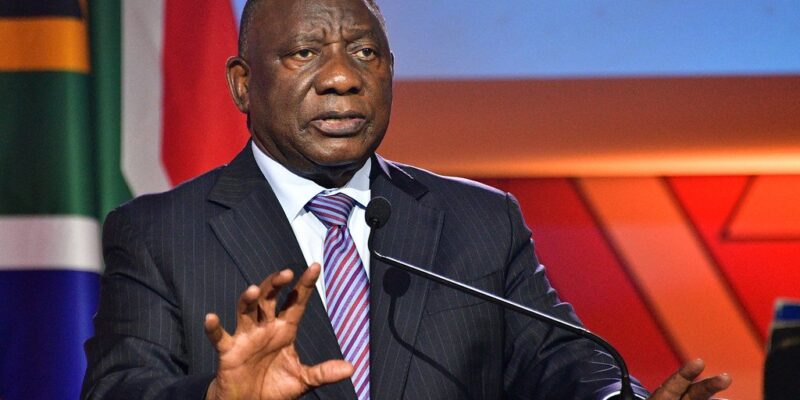
South African President Cyril Ramaphosa has addressed the nation, announcing a comprehensive raft of new measures aimed at cracking down on illegal migration amidst rising tensions, anti-foreigner marches, and widespread frustrations regarding high unemployment rates. The initiatives include stricter penalties such as jailing employers who hire undocumented workers, the establishment of dedicated courts to expedite the deportation of undocumented migrants, and the creation of a national register incorporating biometric data for every person in the country to combat identity theft effectively.
The presidential address comes after weeks of heightened concerns, with several African nations organizing the evacuation of their nationals due to fears of escalating violence. Anti-migrant groups had issued a June 30 deadline for undocumented migrants to leave the country. This sentiment has manifested in real-world incidents, including hundreds of African migrants fleeing their homes in the Overberg region of South Africa’s Western Cape Province following reports of door-to-door intimidation and the tragic deaths of two Mozambicans in Mossel Bay. Many displaced individuals sought refuge in community halls, on beaches, or in nearby mountains, with some opting to return to their home countries. Recently, a group of approximately 140 people boarded buses for repatriation to Malawi and Mozambique. In Durban, foreign nationals have been camping outside the city’s home affairs department for weeks, expressing fears for their lives.
President Ramaphosa acknowledged that illegal migration was exerting unfair pressure on South Africa’s public services and stressed the government's commitment to addressing the issue. He outlined a five-point strategy focusing on rigorous enforcement against immigration law violators, bolstering border security, eradicating corruption within the immigration system, closing existing loopholes in immigration legislation, and fostering collaborative efforts with other African countries to tackle the root causes of migration. However, he issued a stern warning against vigilantism, unequivocally stating that “only the authorised government officials may act against violations of the law, including violation of our immigration laws. No other person is allowed, for example, to confront someone in the street to demand proof of nationality.”
While some analysts suggest a resurgence of anti-migrant sentiment could be linked to local elections scheduled for November, the President asserted that authorities would not permit groups to exploit legitimate concerns “to destabilise” the country through inciting violence. He declared, “We will act against forces who are exploiting the concerns of our people about illegal immigration to further their own political, personal or criminal agendas,” and cautioned against social media campaigns that disseminate misinformation and lies about foreign nationals. Ramaphosa also reaffirmed that there is “no space for xenophobia, racism, sexism, Afrophobia or any other forms of intolerance in South Africa,” emphasizing the nation's identity as a “product of migration” that contributes to its diversity and vibrancy. Official figures indicate South Africa is home to over three million foreigners, representing about 5 percent of the population, with many more believed to be undocumented.
In a related development, several foreign nationals repatriated from Kleinmond in the Western Cape have reportedly declared their intention not to return to South Africa. This high-profile operation has reignited national debate concerning immigration policies, documentation requirements, local employment opportunities, and community concerns. Some departing individuals expressed disappointment with their experiences, while others looked forward to new beginnings back home. The situation has elicited mixed reactions across South Africa, with some advocating for strict enforcement of immigration laws and others urging a balanced approach that respects human dignity and promotes regional cooperation. This ongoing debate raises critical questions about the future of immigration policy, border management, and the underlying economic challenges driving migration across the African continent.
Adding to the discussion, Phakel’umthakathi Ndabandaba, a prominent leader associated with the June 30 movement, has voiced his skepticism regarding the government's capacity to effectively manage illegal immigration in South Africa. His remarks, made amidst growing public debate on border control and immigration policies, highlight a belief that authorities have consistently failed to provide lasting solutions despite years of promises and community concerns. Ndabandaba's comments are expected to further fuel discussions as the June 30 movement continues its advocacy for stronger action and increased enforcement of existing immigration laws.