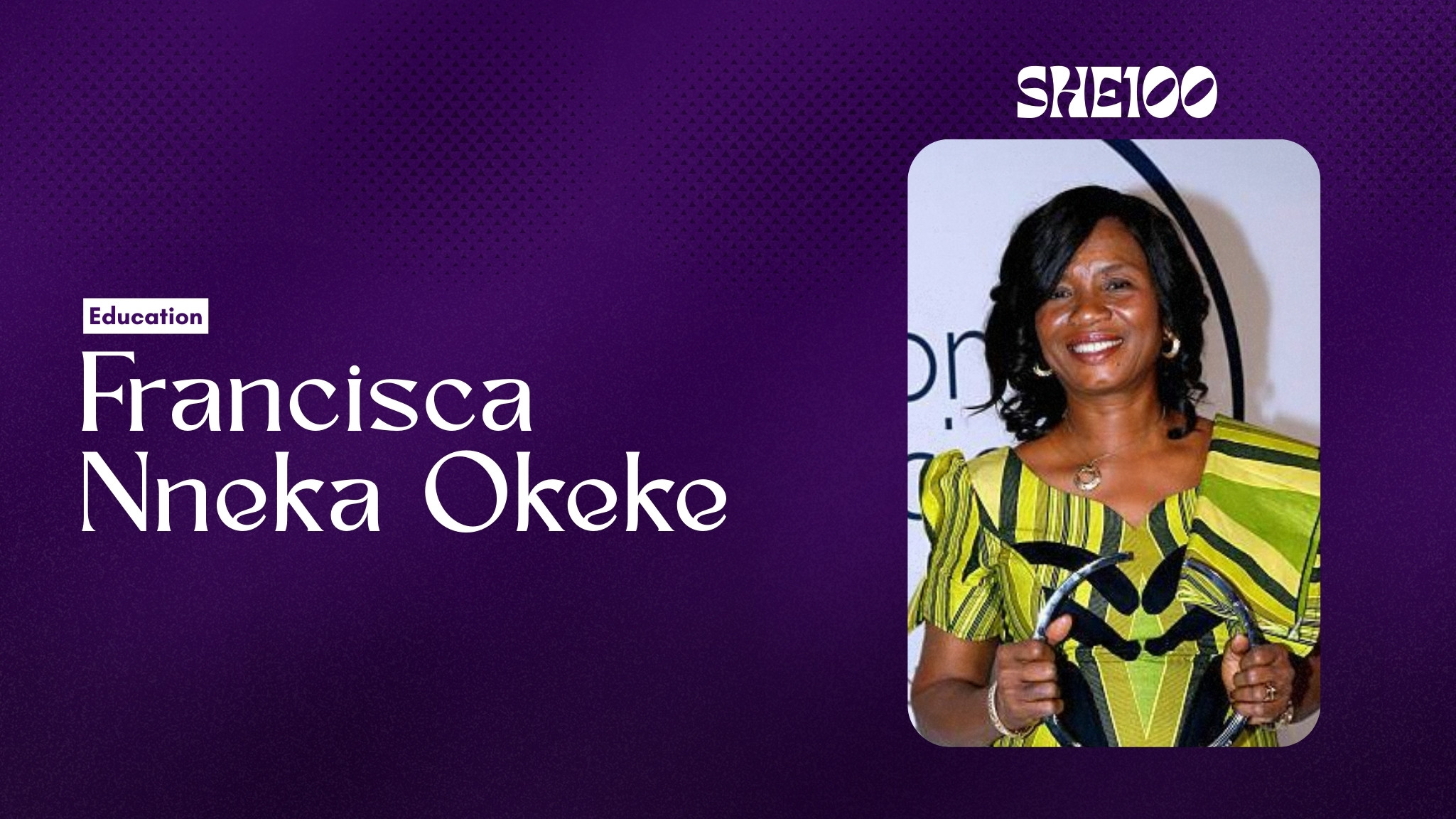
She100: Francisca Nneka Okeke, The Pioneer Who Opened Doors for Women in Nigerian Physics
Celebrating Francisca Nneka Okeke, the pioneering scientist who became Eastern Nigeria’s first female Professor of Physics and opened pathways for women in STEM through groundbreaking research and leadership.
Paint a mental picture:
It is the late 1970s and a young woman from Onitsha walks into a physics class at the University of Nigeria, Nsukka. The room has thirty students. Two of them are women and she is one of them.
That young woman is Francisca Nneka Okeke and decades later, she would become the first female Professor of Physics in all of Eastern Nigeria, a globally decorated scientist and the reason that same physics department would never look the same again.
Prof. Okeke was born on October 14, 1956 in Onitsha, Anambra State. Her father was a mathematician, a very brilliant one, encouraging and way ahead of his time in how he raised his daughter.
He taught her mathematics early and she was always ahead of her class.
But her real love was the sky. As a little girl, she would stare upward, baffled. Why is the sky sometimes blue and sometimes white? How do aeroplanes even stay up there?
Most people would eventually stop asking. Francisca never did.
The Night She Made Up Her Mind
Her path to physics was not exactly straight though.
After secondary school, she started teaching physics to senior students, a job she initially found overwhelming.
One particular WAEC practice question had her entire class racking their brains. She went to graduate physics teachers for help — nobody had an answer.
So she stayed up through the night, working on it. In the early hours of the morning, she solved it.
She was so excited she screamed, waking her father, who came to check on her. When she told him she had solved the problem, he walked away beaming with pride.
That night, she made a decision — she was going to become a physicist.
Building the Credentials
She enrolled at UNN, earned herB.Sc in Physics in 1980 and kept going from there.
She got a postgraduate diploma in education, a Masters in science education, a Masters in applied earth geophysics and finally a PhD in Ionospheric Geophysics in 1995.
Her postdoctoral work took her to the University of Tokyo in Japan. By the time she returned, she was formidable.
The Science That Matters
Her area of research,the ionosphere, might sound abstract but its implications are great.
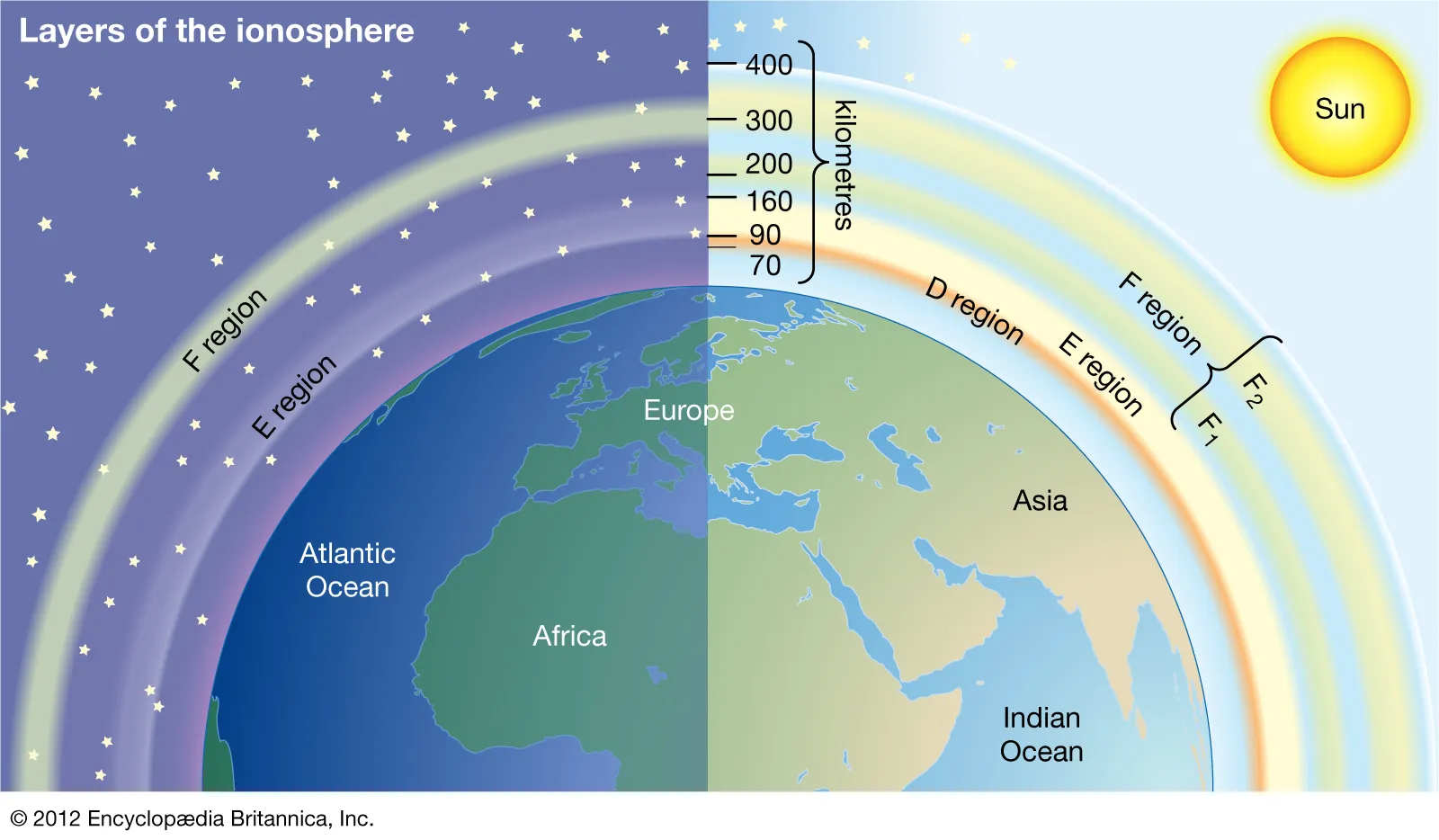
Prof. Okeke spent years studying the equatorial electrojet, a concentrated electric current that flows along the Earth's dip equator and causes the magnetic field there to fluctuate almost five times more than anywhere else on the planet.

Her work on how the sun, moon and Earth's orbital patterns affect this layer of the atmosphere has contributed to the global understanding of climate variability and space weather.
Dismantling Walls at Home
But even as she built an internationally respected research career, she was also quietly dismantling walls at home.
In 2003, she became the first woman to head the Department of Physics and Astronomy at UNN. In 2008, she became the first female Dean of the Faculty of Physical Sciences.
Both times, people questioned openly whether she could handle it. She answered by doing the job well.
And she did not stop there. When she became Head of Department, there were only two female academic staff in the physics department.
By the time she finished her tenure as Dean, she had advocated for the employment of three additional female lecturers across the faculty.
That might seem small on paper. But for the women who got those positions, it was everything.
Recognition That Reached the Stars
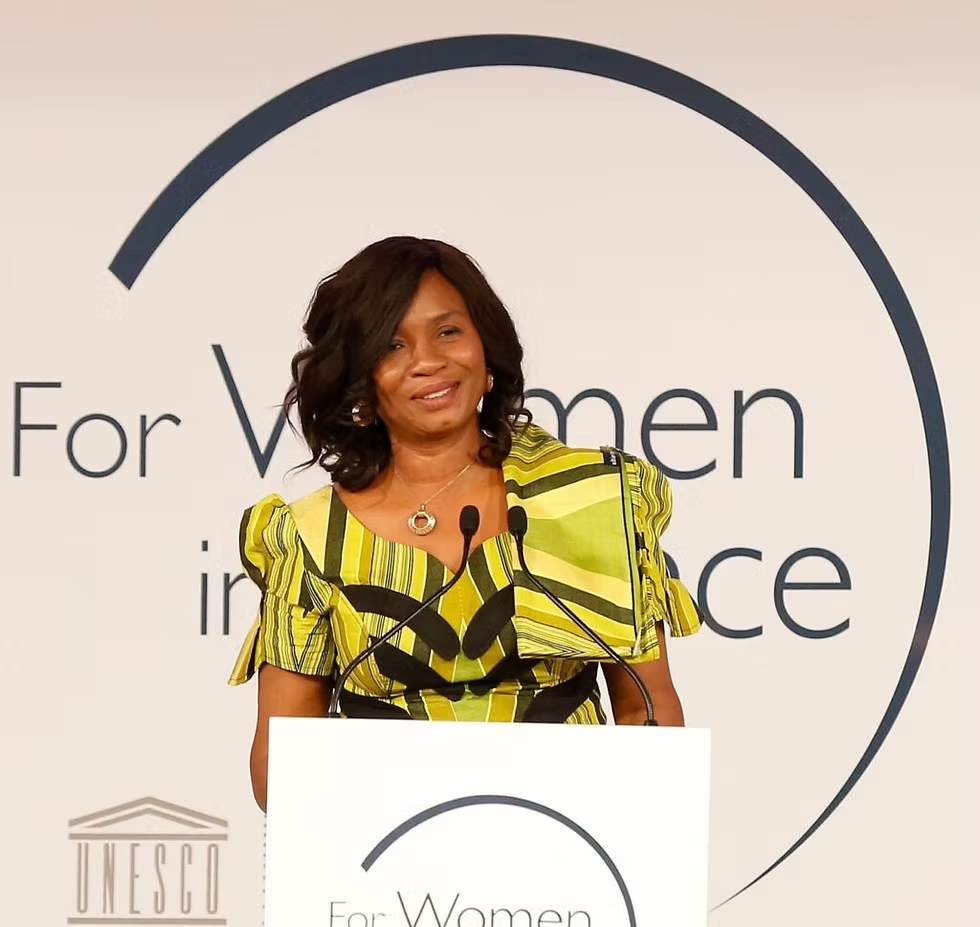
In 2013, she received the L'Oréal-UNESCO For Women in Science Award, one of only five women in the world selected that year, representing Africa and the Arab states.
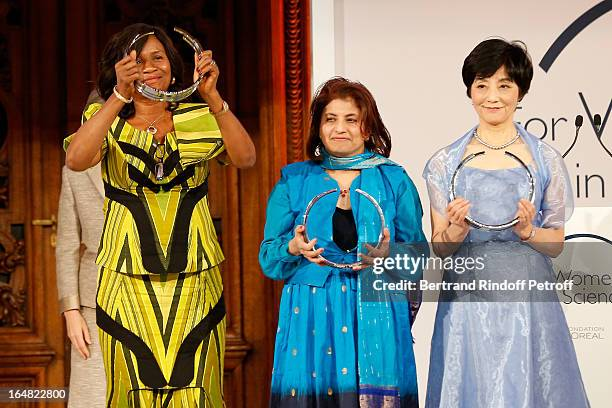
The award recognised her contributions to atmospheric physics and climate change research. She said the recognition placed Nigeria on the world map of scientific honours. And that was nothing but the pure truth but it did more than that.
It gave a generation of young Nigerian girls audacity to see themselves in places they had been told were not for them.
The recognition kept coming. An asteroid, number 149831, now bears her name, a fact that feels almost surreal for a woman whose love of the sky started her whole journey.
She has published over 100 research papers, authored 15 books, and supervised 28 PhD students and over 36 Masters students.
She is a fellow of the World Academy of Science (FTWS), the Africa Academy of Science (FAAS), the Nigerian Academy of Science (NAS), and the Japanese Society for Promotion of Science (
JSPS).
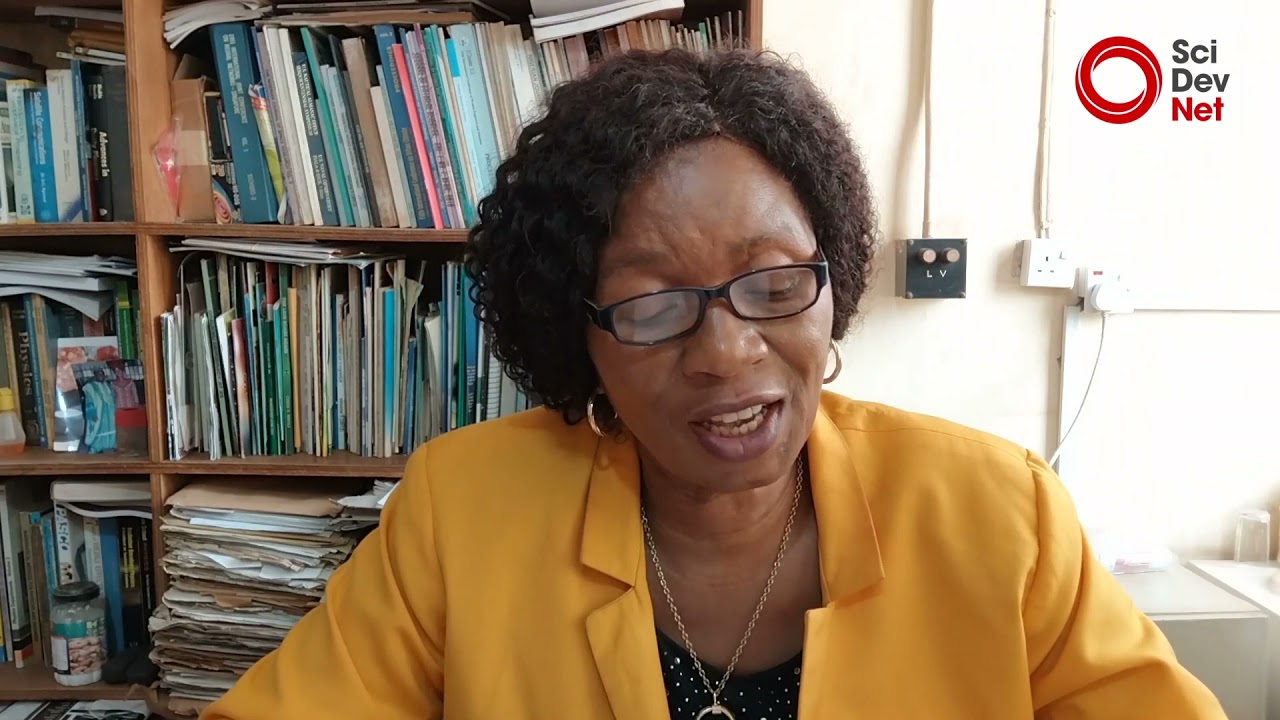
She founded the UNN chapter of the Organisation for Women in Science for Development. She runs workshops. She mentors and keeps showing up.
She Pushed the Door Open
What makes Prof. Okeke's story so compelling is not just the list of firsts though that list is long. It is the consistency.
She did not open one door and walk through it alone. She pushed it open and stood there, making sure others could follow.
In her own words: "My future dream and aspiration remain that the gender gap in STEM is abridged."
She spent her career making sure that dream is no longer just hers.