Rwanda's Entertainment Revolution: Migina Transforms into a Modern Hub for Sports & Culture!

Published 2 hours ago7 minute read
Precious Eseaye
Precious Eseaye
Rwanda's Entertainment Revolution: Migina Transforms into a Modern Hub for Sports & Culture!

The area surrounding Amahoro Stadium and BK Arena in Kigali is experiencing a profound transformation, with new developments, road upgrades, and private investments steadily reshaping the character of Remera. This evolution is particularly evident in Migina, a neighborhood adjacent to the iconic Amahoro Stadium, which is quietly transitioning from its former reputation as a bar-filled, rundown hotspot into an affluent urban area characterized by high-rise buildings, modern apartments, and hotels. Long recognized primarily as a sports zone due to the national stadium, the area is now adopting a broader identity, integrating sports infrastructure with expanding hospitality and commercial activities. As Innocent Munyarukumbuzi, a 69-year-old resident of 33 years, notes, "The changes here are almost unbelievable... If someone left Rwanda 20 years ago and came back today, they would struggle to recognise this area."

These ongoing changes are integral to a larger strategic initiative: the development of the Kigali Sports and Entertainment City (KSC). This comprehensive project is designed to create a structured and integrated urban space by merging sports, hospitality, and commercial elements. The KSC concept is organized around a designated 60-hectare precinct, featuring clearly defined zones for core sports infrastructure, strategic redevelopment corridors, and specific areas earmarked for both public and private investment. According to the Ministry of Sports, this ambitious transformation is driven by meticulous long-term planning, ensuring a coordinated vision rather than fragmented or uncoordinated growth.

Brave Christ Bahire, Director General for Sports Infrastructure Development and Management at the Ministry of Sports, confirmed that the government has formally launched the KSC project under the Second National Strategy for Transformation (NST2). A crucial next step involves commissioning a comprehensive feasibility study and master plan, anticipated in the upcoming fiscal year. This detailed planning process will meticulously define the precinct's development over time, encompassing land use, infrastructure sequencing, movement systems, and meticulous alignment with the broader Kigali Master Plan 2050. Despite increasing investor interest and several private proposals for developments within and around the precinct, the government is adopting a unified approach. Rather than approving projects individually, investments are being aligned with a single, government-led framework to ensure a "coherent and optimised development ecosystem rather than fragmented, piecemeal interventions," Bahire explains. This planning phase will guide decisions on construction, location, and connectivity with existing infrastructure, also incorporating redevelopment corridors designed to enhance placemaking, public spaces, and the seamless integration of present and future developments.

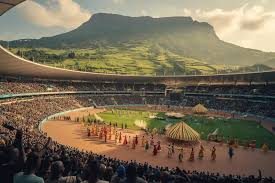
The planned sports city builds upon a strong foundation of infrastructure that has steadily expanded over the last decade. Amahoro National Stadium and BK Arena have emerged as pivotal venues for a diverse range of sporting events, concerts, and regional gatherings, significantly boosting activity in the neighborhood. Zaria Court Kigali has contributed a valuable mix of hospitality, retail, and lifestyle services, while the enduring presence of the FERWAFA headquarters anchors football administration in the vicinity. Collectively, these existing developments have already initiated shifts in movement patterns and business activity in Remera, attracting more visitors and elevating the demand for various services. The Kigali Sports and Entertainment City project aims to intricately connect these established facilities within a more organized and synergistic system, ensuring they function as an integrated whole rather than disparate, standalone entities. At the heart of this comprehensive system lies the core sports infrastructure zone, serving as the central anchor of the wider precinct.

A fundamental principle behind the KSC project is to transform the area into a vibrant, 365-day destination, ensuring continuous activity beyond just match days or major events. Instead of being utilized occasionally, the precinct is envisioned to operate throughout the year, supported by a carefully curated mix of activities. This includes integrating sports venues and training facilities with hotels, robust hospitality infrastructure—especially around the FERWAFA hotel area—alongside diverse retail spaces, entertainment facilities, and thoughtfully designed public areas that encourage constant engagement. The ultimate intention is to create an environment where individuals can not only attend events but also spend extended time for business, leisure, or everyday activities. As Bahire articulates, "The intent is that the precinct becomes a destination for sports enthusiasts, families, visitors, and investors alike," reflecting a modern paradigm shift in how sports infrastructure is conceived, moving from single-purpose venues to essential, integrated components of a dynamic urban system.

The development of the KSC is poised to generate far-reaching positive impacts across multiple sectors. For sports, the improved infrastructure will significantly bolster Rwanda's capacity to host major regional and international competitions, while also supporting talent development through enhanced training environments and fostering the growth of professional structures in sports management. In tourism and hospitality, the increased activity in the area is already stimulating demand for accommodation, restaurants, and related services, with new and expanding businesses around BK Arena providing early evidence of this shift. From an investment standpoint, the government is actively promoting public-private partnerships, leveraging a clear master plan to provide structure and predictability for investors, thereby facilitating resource commitment within identified development opportunities. Furthermore, this development is expected to considerably enhance Rwanda's international visibility, enabling the country to host more high-profile events in a modern, well-organized setting.

Beyond the architectural and functional transformations, changes in the area extend to the urban landscape itself. The concentration of development around Amahoro Stadium and BK Arena is driving substantial improvements in road infrastructure, optimizing traffic flow, and enhancing public transport connectivity. Essential utilities and service infrastructure are also being fortified to support the escalating level of activity. These cumulative changes are progressively reshaping the area's integration within the wider city, making it more accessible and better connected to other parts of Kigali. Planned public realm enhancements, including new open spaces and pedestrian-friendly zones, are anticipated as redevelopment corridors are implemented. This approach aligns perfectly with Kigali's broader urban planning strategy, which prioritizes the development of organized zones capable of sustaining economic activity efficiently. Bahire further highlights the project's commitment to integrating smart and environmentally sustainable solutions, consistent with Rwanda's national priorities for green growth and climate resilience.

For the residents and communities surrounding Remera, these ongoing developments promise both immediate and long-term benefits. Small shops and informal businesses, once prevalent around Migina and the Controle Technique area, are gradually being succeeded by modern supermarkets and retail outlets, signaling early economic transformation. In the short term, the extensive construction activities are generating vital employment opportunities in engineering, construction, and logistics. Over time, the completed KSC development is projected to create sustained employment in hospitality, retail, facility management, and various other service sectors linked to the precinct. Local businesses, particularly small and medium-sized enterprises, are also expected to thrive from the increased demand brought by a greater influx of visitors and residents. Simultaneously, the project includes provisions to expand access to sports and recreational facilities, fostering youth engagement and broadening community participation in sports and leisure activities. Public spaces and community-oriented programs are also integral to the development, ensuring the area remains accessible and beneficial beyond purely commercial uses.

Despite the visible pace of change, officials emphasize that the entire process is being managed with meticulous care. Detailed designs and visual concepts for the Kigali Sports and Entertainment City have not yet been publicly released, with their unveiling contingent upon the completion of the comprehensive feasibility study and master planning process. This deliberate approach is intended to preclude any uncoordinated development, guaranteeing that all future investments are rigorously aligned with a clear, overarching, long-term vision. "We are determined to ensure that any private investment is guided by a sound, government-owned master framework," Bahire asserts. Even prior to a finalized master plan, the transformations already underway are definitively shaping the area's future. New developments continue to emerge, existing infrastructure is being upgraded, and the overall level of activity in Remera is steadily escalating. The area is progressively assuming a new and significant role within the city, transcending its traditional identity as solely a sports zone. As the Kigali Sports and Entertainment City project advances, the next critical phase will focus on finalizing the feasibility study and establishing a robust development framework, which will then meticulously guide the area's evolution, the implementation of diverse projects, and the structured formation of partnerships with investors. Ultimately, this landmark development is anticipated to play a pivotal role in shaping Rwanda's sports, entertainment, and hospitality sectors, while concurrently making substantial contributions to broader urban growth and national prosperity.

Recommended Articles

Loading...

You may also like...