Afro Trailblazers Series(Part 3): Rukky Ladoja’s Return, and the Rise of Dye Lab
From London to Lagos. Learn about Rukky Ladoja’s Return, Failures, Successes, and the Rise of Dye Lab.
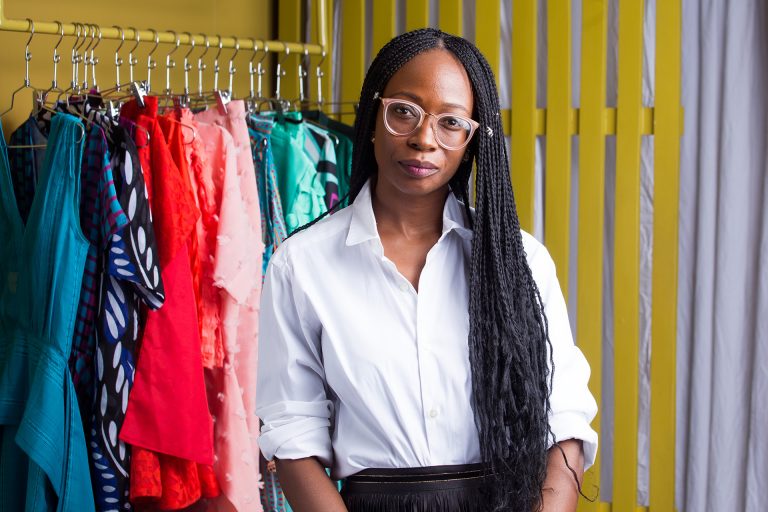
Starting around 2021, a vibrant wave began quietly slipping onto our TV screens, lounges, and evening soirées. A burst of color to the casual aesthetic had arrived: pastel-toned tie-dye trousers turning heads, neon-hued bubus floating across the room, and kaleidoscopic sunsets frozen in cotton t-shirts. It wasn’t just fashion — it was a mood.
In Nigeria’s fashion scene—known for its color, audacity, and cultural pride—few names carry the weight and quiet defiance of Rukky Ladoja. Once at the helm of one of Nigeria’s first ready-to-wear fashion success stories, and now the founder of Dye Lab, Ladoja’s journey isn’t just one of style—it’s one of survival, transformation, and return.
Her work sits at the intersection of art and heritage, modernity and memory. But the path to this creative clarity was anything but smooth.

From London to Lagos: A Cross-Continental Aesthetic
Born and raised in Nigeria, Rukky Ladoja studied and lived in England, a chapter that sharpened her global lens but deepened her cultural grounding. With over a decade of experience in fashion, creative direction, and consulting across Nigeria’s vibrant cultural industries, Ladoja returned home to disrupt, redefine, and eventually rediscover what Nigerian fashion could mean.
In 2011, she co-founded GREY, a bold, eclectic ready-to-wear label that fused African tradition with global techniques. GREY gained a cult following among Nigeria’s style-savvy women and was featured in international publications like Vogue Italia and Elle South Africa. But in 2019, at its peak, GREY shuttered its doors—an emotional and professional earthquake.
When a Brand Fails—and a Vision Is Born
The closure of GREY wasn’t just a business loss—it was a personal one. Ladoja has spoken openly about the “lingering scars” it left behind. The complexities of GREY’s designs proved too difficult for many local tailors. More importantly, the brand struggled to find its place in the rigid taxonomy of global fashion categories.
But from the ashes came clarity. In 2021, during the COVID-19 lockdown, Ladoja began what she called a “passion project”—Dye Lab—with no grand plans, just a desire to reconnect with something meaningful. What began as necessity became a renaissance.
A New Ethos: Simplicity, Sustainability, and Soul
Dye Lab is radically different from GREY—not in ambition, but in execution. It celebrates traditional Yoruba dyeing techniques like Adire and Batik, reviving indigenous craftsmanship with modern silhouettes. Every piece is hand-dyed, produced in small batches, and rooted in zero-waste principles—from reusing batik wax to repurposing leftover materials.
Rather than chase trends or international buyers, Dye Lab leans in: toward community, local artisans, and authentic cultural resonance. The designs are intentionally simple—familiar to local tailors, empowering them and removing the production bottlenecks that once plagued GREY.
It’s a rare thing in fashion: a brand that moves slowly, deliberately, and meaningfully.
Diaspora Connect
Stay Connected to Home
From Lagos to London, Accra to Atlanta - We Cover It All.


Scar Tissue and Strength
One of the most profound aspects of Ladoja’s story is how she integrates pain into progress. GREY’s closure was more than a business failing—it triggered a period of doubt, reflection, and recalibration. The fear of failure became fuel. The desire for validation faded, replaced by a deeper yearning: to create something honest, grounded, and locally resonant.
She built Dye Lab with no external capital, relying instead on pre-orders and trusted relationships with suppliers who allowed her to work on credit. Every piece made and sold was an act of faith—and of resilience.
All of this, while navigating single motherhood. Ladoja credits her circle—including close collaborator and business partner Ozzy Etomi—for making it possible to balance the roles of mother, maker, and entrepreneur.

The Art of the Possible
In an industry often obsessed with rapid scale and Western validation, Ladoja has charted a different course. Dye Lab’s growth has been organic, community-driven, and built on a slow fashion model that feels radical in a world of fast trends.
Dye Lab’s garments are more than clothing—they’re wearable artifacts, steeped in history but meant for today’s body and mind. Each piece carries with it the texture of tradition, the hue of home, and the grace of reinvention.
Final Thoughts
Rukky Ladoja is not a comeback story. She’s a continuity story—a creative mind learning, refining, and building on her own terms. From the stylish chaos of GREY to the quiet power of Dye Lab, she’s shown what it means to evolve without erasing, to start over without forgetting.
In celebrating the past, she’s shaping the future—one hand-dyed garment at a time.