Red Dead Redemption 2 Exclusive: Arthur Morgan Actor Debunks Major Fan Theory
Roger Clark, the actor for Arthur Morgan, dismisses the popular 'trolley theory' explaining Dutch van der Linde's decline in Red Dead Redemption 2. He attributes Dutch's downfall to inherent impulses exacerbated by Micah Bell's influence and Hosea Matthews' absence, rather than a single head injury. Clark emphasizes a series of small, cumulative choices led to Dutch's tragic transformation.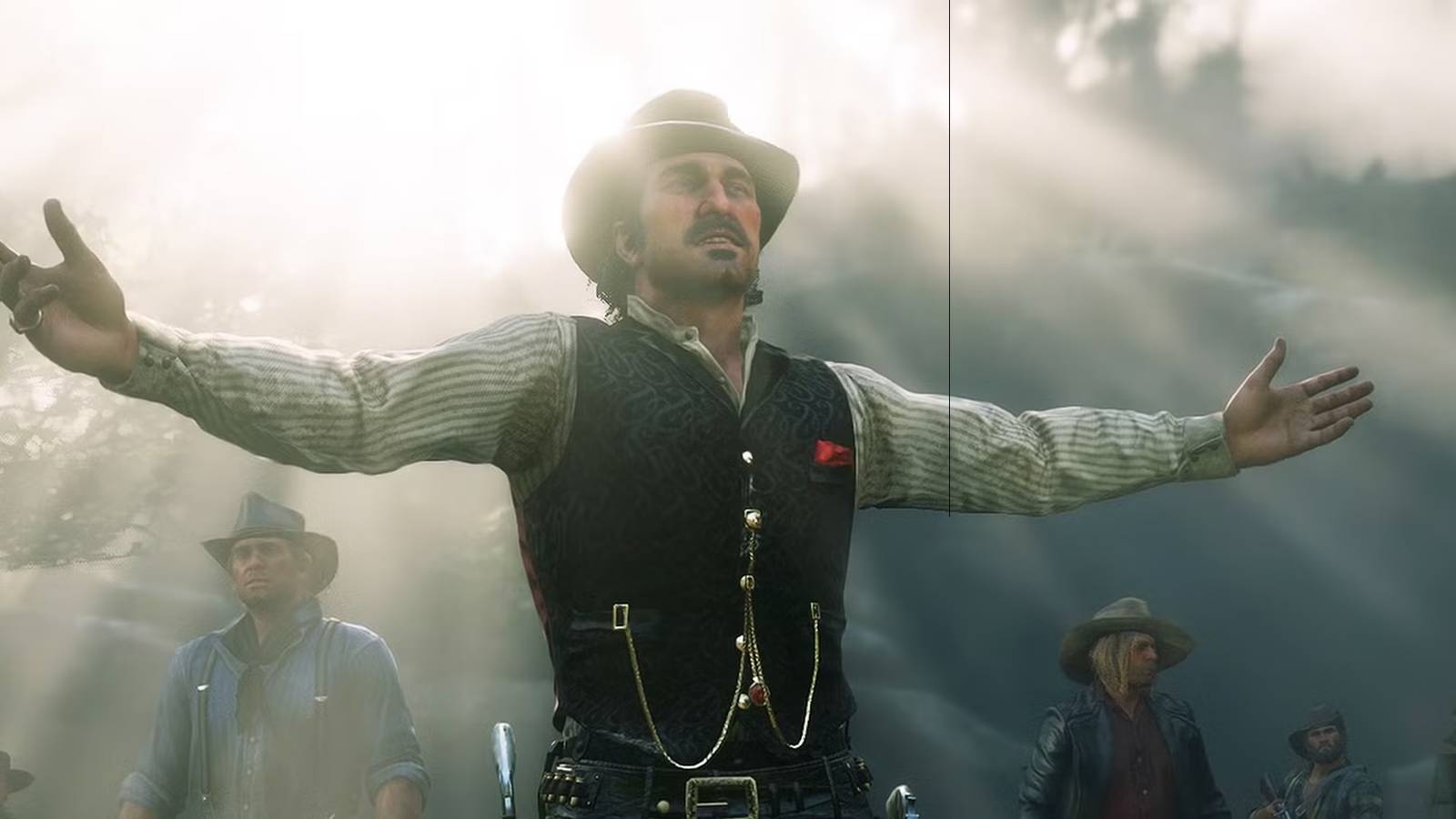
Roger Clark, the acclaimed actor behind Arthur Morgan in Red Dead Redemption 2, has offered a compelling analysis of Dutch van der Linde's controversial character arc, directly challenging the prevalent fan theory that Dutch's increasingly ruthless behavior was a consequence of a head injury sustained during a failed trolley robbery. Speaking at the FanX Salt Lake Comic & Pop Culture Convention alongside John Marston actor Rob Wiethoff, Clark unequivocally dismissed the so-called 'trolley theory,' stating, "I disagree. I don’t believe in that at all."
Clark underscored his skepticism by citing Dutch's prior act of violence against an innocent bystander, Heidi McCourt, an event that predates the infamous trolley crash. This earlier demonstration of Dutch's capacity for cruelty, in Clark's view, makes it implausible to solely attribute Dutch's subsequent moral decay to a single physical blow, even as his actions become progressively harder for the Van der Linde gang to reconcile.
Instead, Clark emphasized the profound influence of Dutch's closest confidantes on his trajectory. He painted Hosea Matthews as the "angel on Dutch’s shoulder" and, conversely, described Micah Bell as the "devil who took his place." In Clark's interpretation, Micah did not fundamentally alter Dutch's inherent character but rather created an environment that allowed Dutch to act upon impulses that Hosea had previously helped him suppress and keep in check. This perspective suggests that Dutch's ultimate downfall was not an instantaneous transformation linked to one specific traumatic event, but rather a more gradual and insidious process.
Clark acknowledged that the enduring debate among fans—whether Dutch's darker tendencies were always present or if he truly deteriorated over time—is a key element that makes the character so captivating. He posited that the truth likely lies "a bit of both," reflecting the nuanced nature of the character. Furthermore, Clark highlighted that Dutch initially leads the gang as a figure who genuinely cares for his people, a portrayal that amplifies the tragedy and emotional impact of the gang's eventual collapse and Dutch's descent into ruthlessness.
Ultimately, Clark concluded that Dutch’s profound transformation was not attributable to a singular moment. "I don’t think it was one moment," he reiterated, adding, "I think it’s lots of little small moments piled up on top of each other that change us." He firmly believes that Dutch’s intrinsic choices, compounded by the significant absence of Hosea and the corrosive influence of Micah, provide a far more comprehensive and revealing explanation for his character's tragic path than any isolated physical injury.