Red Card Scandal Erupts: FIFA, UEFA Clash Over Balogun Decision, Trump's Alleged Intervention
FIFA's controversial decision to suspend Folarin Balogun's automatic red card ban has drawn strong criticism from UEFA and other prominent figures, who accuse the organization of undermining football's integrity. While FIFA President Gianni Infantino denies political interference, reports suggest a call from US President Donald Trump preceded the unprecedented ruling, raising concerns about the consistency of rules and the future of the sport's governance.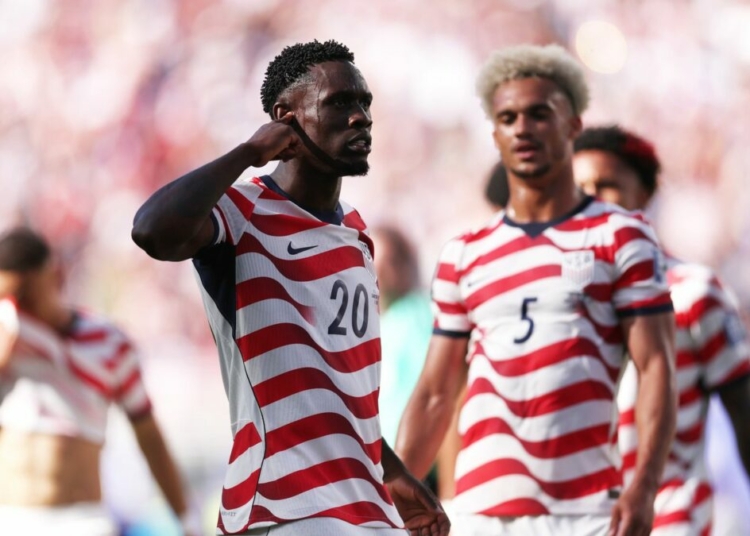
UEFA has vehemently criticized FIFA’s controversial decision to suspend the implementation of Folarin Balogun’s automatic one-match ban, a move that made the United States forward eligible to play in his country’s World Cup Round of 16 clash against Belgium. European football’s governing body described the ruling as having “crossed a red line” and warned it could severely undermine the integrity of football. Balogun, who received a red card against Bosnia-Herzegovina, was widely expected to serve an immediate suspension, a principle UEFA states is embedded in football regulations.
UEFA deemed FIFA’s intervention to effectively cancel a suspension during an ongoing tournament as “unprecedented, incomprehensible and unjustifiable.” They argued that while certain football regulations might be open to interpretation, the automatic suspension following a red card is not discretionary and cannot be subject to exceptions. This inconsistency, especially when other players sent off during the same World Cup have served their automatic suspensions, jeopardizes the certainty of rules and the credibility of the competition. The organization also cautioned that such a decision establishes a dangerous precedent, potentially requiring similar treatment in future cases within the tournament.
The controversy intensified after reports confirmed that Balogun’s reinstatement followed a phone call between US President Donald Trump and FIFA President Gianni Infantino. President Trump later publicly thanked FIFA for “reversing a great injustice,” further fueling allegations of political interference in sporting decisions.
Adding to the chorus of criticism, former FIFA president Sepp Blatter questioned the legitimacy of the decision, asserting that red cards should only be overturned through established disciplinary procedures based on rules and evidence, not “political phone calls.” Blatter warned that “Football must never become a playground for political power.” Similarly, EU Sport Commissioner Glenn Micallef emphasized that decisions on sport “belong to sporting bodies, not politicians,” and cautioned against the “weaponisation of sport for political purposes.”
In response to the mounting criticism, FIFA President Gianni Infantino vehemently denied interfering in the decision. He asserted that FIFA’s disciplinary and judicial bodies operate independently, applying the FIFA Disciplinary Code and deciding cases autonomously based on regulations and specific facts. Infantino acknowledged speaking with U.S. President Trump about the matter but maintained he informed the President of the ongoing independent legal process and that the case would be determined by FIFA’s competent judicial bodies. He reiterated his commitment to upholding the principle of independent institutions and the rule of law, regardless of his personal agreement or disagreement with their decisions, as this protects the integrity of competitions and FIFA’s credibility.
This case is particularly striking given its rarity. At the World Cup, only one other player, Brazil’s Garrincha in 1962, is known to have escaped a red card suspension, a decision made before automatic bans were in place and also shrouded in allegations of political interference. Of the 188 other red cards issued at the World Cup, Balogun’s is the only one in the modern era to be effectively nullified by such a decision.