Putin's Energy Crisis Deepens: Ukraine Strikes Force Oil Deficit Admission
Russian President Vladimir Putin has acknowledged a “certain deficit” of fuel, attributing it to ongoing Ukrainian strikes on energy infrastructure. Putin vowed to strengthen protections and boost fuel output while dismissing Ukrainian proposals for a mutual halt on deep strikes and limiting fighting to annexed regions. These long-range attacks by Kyiv aim to cripple Russia’s war machine and have led to domestic fuel shortages and rationing.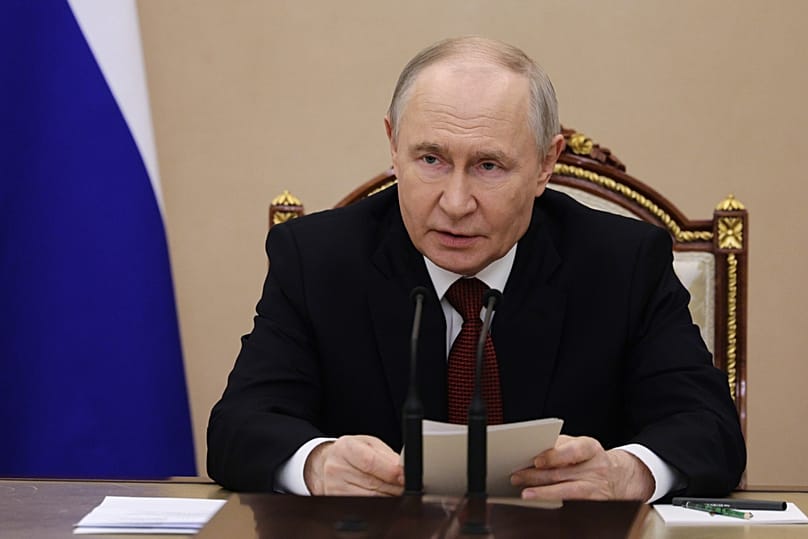
Russian President Vladimir Putin has for the first time acknowledged that his country is experiencing a “certain deficit” of fuel. This admission comes as Ukraine continues its campaign of striking Russian energy infrastructure, including a major oil refinery in southern Russia, which caught fire following an attack. While falling debris reportedly killed one person in Sloviansk and wounded another in eastern occupied Crimea, there were no immediate reports from Russian authorities regarding a claimed strike on another refinery in the Yaroslavl region, approximately 700 kilometers from the Ukrainian border.
The affected southern refinery, processing close to 4 million tons of crude per year, is a critical facility for southern Russia and a key source of petroleum products like fuel oil, naphtha, and marine fuel for export via Russia’s Black Sea ports. Amid these escalating strikes, Putin has pledged to enhance the protection of oil facilities and increase fuel output. Speaking at a meeting with officials, Putin described the current period as “difficult” but assured that Moscow would meet its social obligations. He further stated that Russia would import more fuel and accelerate repair works at damaged oil facilities to overcome this “temporary deficit.” Specific attention was given to addressing fuel shortages in Crimea, with Putin promising increased land and sea deliveries to the Black Sea peninsula.
Putin characterized the Ukrainian attacks on oil refineries as attempts to “cause a split in Russian society,” to force Russia to halt its troop advances, and to create conditions for negotiations on terms favorable to Ukraine. He firmly stated that Russia would not allow this, asserting that these strikes have “absolutely no effect on the situation at the front, on the line of contact.”
The Russian leader also revealed that Ukraine had previously proposed a mutual halt on deep strikes behind enemy lines. Putin dismissed this offer, arguing it was made because Russia’s own deep-strike capabilities are significantly more powerful. Additionally, he claimed Kyiv proposed a framework to limit active fighting exclusively to the four Ukrainian regions Russia unilaterally annexed in 2022—Donetsk, Luhansk, Kherson, and Zaporizhzhia—regions it has never fully captured.
Putin rejected this proposal as well, viewing it as a strategic maneuver designed to benefit the Ukrainian armed forces by allowing them to relocate forces from other areas to concentrate entirely on defending against Russian attacks in those four southeastern regions.
In recent months, Kyiv has intensified its long-range attacks on Russian military and energy facilities. The strategic goal of these strikes is to cripple Moscow’s revenue streams, which are essential for funding its full-scale invasion of Ukraine, now in its fifth year. Ukrainian President Volodymyr Zelenskyy confirmed these actions on Telegram, stating that each strike reduces resources fueling the Russian war machine and represents a step towards peace.
The campaign has had tangible consequences within Russia, leading to choked fuel supplies, widespread shortages, and long queues at gas stations across the country. This has prompted authorities in many regions to introduce fuel rationing. Western analysts suggest these actions have also slowed Moscow’s efforts on the battlefield, increasing pressure on the Kremlin to engage in negotiations.