ProvidusUnity Bank Is Live: Why This Merger Matters for Nigeria's Financial System
ProvidusUnity Bank has officially launched following the Providus Bank and Unity Bank merger. Here's why the deal could reshape Nigeria's banking sector and financial stability.
Nigeria's banking consolidation history has always been a story of pressure meeting policy. Regulators set a threshold, banks scramble or collapse and the sector emerges leaner, sometimes stronger, occasionally scarred.
The 2005 Soludo reforms compressed 89 banks into 25 in under eighteen months. This move was effective but left chaos; it left behind branch deserts, job losses and institutions that still failed when the global financial crisis arrived three years later.
The official launch of ProvidusUnity Bank Limited, the merged entity of Providus Bank and Unity Bank, is the latest chapter in that ongoing story. However, the conditions under which it was built and the logic that drove it, mark a meaningful departure from how Nigeria has done consolidation before.
What the ProvidusUnity Bank Merger Actually Represents
It is important to note that this is neither a distress acquisition nor a forced marriage brokered overnight by regulators scrambling to prevent a collapse.
The Providus-Unity merger is a deliberate, market-driven consolidation that took nearly two years to complete.
It started from the Central Bank of Nigeria's initial approval in August 2024 to the shareholder sign-off at an Extraordinary General Meeting in September 2025 and a Supreme Court judgment in June 2026 that dissolved Unity Bank's board and formally authorised ProvidusUnity Bank Limited as the combined entity's legal name.
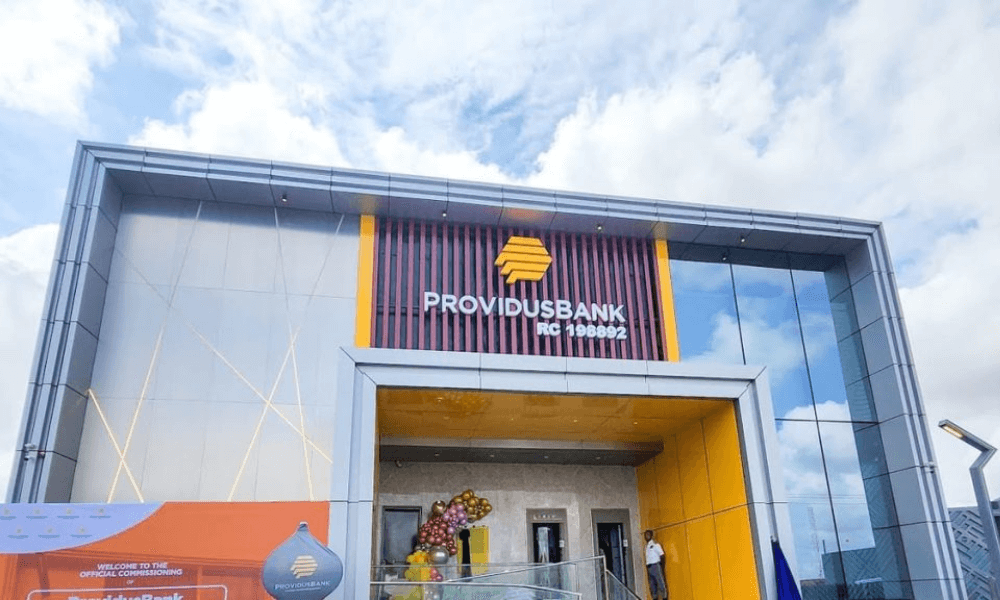
The combined institution now operates 229 branches, serves 3.6 million customers and holds a combined asset base of N4.49 trillion as of FY 2024, making it Nigeria's ninth-largest bank by assets.
The CBN has also committed a N700 billion loan to support its operations, signalling how seriously the regulator views the merger's strategic weight within the broader recapitalisation exercise.

How Nigeria's Past Banking Mergers Set the Stage
To understand fully what makes this merger significant, it helps to look at where Nigeria's banking sector has been. In 2004, CBN Governor Charles Soludo announced that every deposit money bank in Nigeria had to raise its minimum capital base from N2 billion to N25 billion by December 31, 2005 or merge.
The result was the compression of 89 banks into 25. This radical restructuring removed undercapitalised and mismanaged institutions from the system.
Even though the exercise worked, it came with costs. Fourteen banks failed during the process. The mergers happened under extreme time pressure. Some consolidated banks later collapsed during the 2007-2009 global financial crisis, revealing that scale alone does not guarantee stability.
Rural banking declined sharply as merged banks shut unprofitable branches, pulling services away from communities that had depended on smaller local institutions.
The 2024-2026 recapitalisation round, under which the Providus-Unity merger falls, was architecturally different by design.
The CBN's circular enumerated permissible compliance pathways including public offers, rights issues, private placements, and mergers and acquisitions, and executed the reform through the capital market rather than over it.
The entire round raised N4.65 trillion without a single major institutional failure, disruption of banking services and depositor losses. That is a measurably better outcome than 2005.
The Providus-Unity merger sits within this more disciplined framework.
Why the Providus-Unity Combination Is Structurally Different
The two banks brought different strengths to the table. Providus Bank, which began operations in 2017, built its identity on digital infrastructure, SME-focused banking and a fast-rising corporate banking franchise.
Unity Bank brought a decades-long national presence, deep regional penetration and a large retail customer base, particularly in agricultural financing. Neither of those profiles alone was sufficient for the competitive terrain Nigeria's banks now face.
Together, they satisfy the N200 billion minimum capital threshold required to retain a national banking licence under the CBN's current recapitalisation framework.

The combined bank is expected to operate with a stronger capital adequacy ratio, which matters beyond regulatory compliance.
A higher capital adequacy ratio means the institution can absorb shocks, finance larger transactions and continue serving customers during periods of economic turbulence rather than contracting credit when it is most needed.
The Supreme Court's role in concluding this merger is also worth noting. Two shareholders challenged the transaction at the Federal High Court, escalated to the Court of Appeal and ultimately lost at the Supreme Court, which invoked Section 22 of the Supreme Court Act to directly sanction the merger.
Legal analysts have described this as possibly the first time Nigeria's apex court has directly approved a banking merger rather than returning the matter to a lower court, setting a procedural precedent for future consolidation disputes.
What Nigeria's Financial System Stands to Gain
The implications extend beyond the two institutions involved. A bank with 229 branches and N4.49 trillion in assets operating under a unified digital and physical infrastructure is better positioned to expand credit access in underserved areas than either institution was separately.
Unity Bank's physical footprint, now paired with Providus's digital capabilities, creates a bank that can reach both the smartphone-first customer and the community that still relies on a branch counter.
For SMEs, which remain chronically underserved by Nigeria's formal banking sector, a larger and better-capitalised ProvidusUnity Bank means a broader credit pool and more product options.
A stronger capital adequacy position translates directly into willingness and ability to extend loans to businesses that would previously have fallen outside a smaller bank's risk appetite.
The merger also reinforces depositor confidence at a systemic level. When consolidation happens without coercion, through court-sanctioned processes, regulatory backing, and clear shareholder terms, it signals that Nigerian banks can restructure without disorder.
What remains to be watched is integration execution which includes how IT systems from both banks converge, how branch rationalisation is handled, and whether the combined institution translates its enlarged capital base into productive lending rather than government securities.
Scale creates opportunity and what ProvidusUnity Bank does with that opportunity in the years ahead will determine whether this merger is remembered as a turning point or merely a transaction.