Political Earthquake: Labour Crumbles as Reform and Greens Reshape UK Local Elections, Starmer's Leadership on the Line
Local elections in May 2026 delivered a stunning blow to Prime Minister Keir Starmer's Labour Party, which suffered significant losses across England and in devolved nations. Reform UK emerged as the clear victor, making sweeping gains and signaling a historic shift in British politics away from traditional two-party dominance. Amidst growing calls for his resignation, Starmer remains defiant as the political landscape fragments.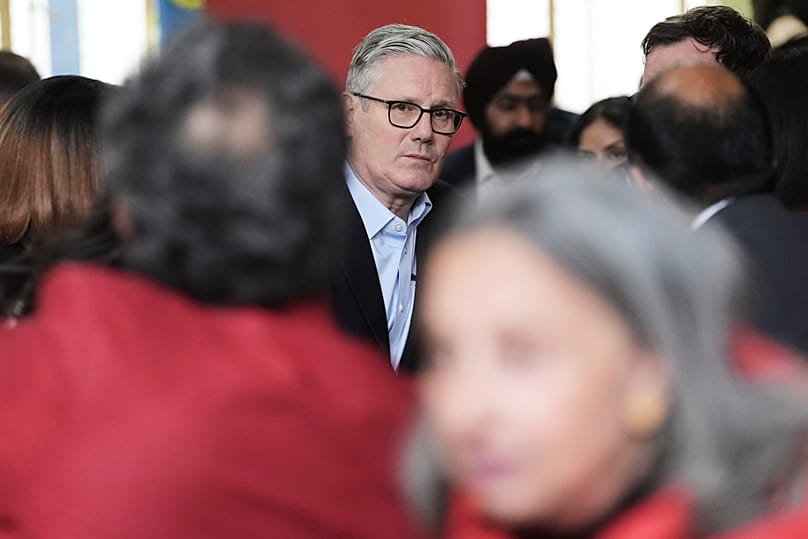
The May 2026 local elections in England, Scotland, and Wales have delivered a seismic shift in British politics, marked by substantial losses for the governing Labour Party and unprecedented gains for the hard-right Reform UK. These results are widely interpreted as an unofficial referendum on Prime Minister Keir Starmer, whose popularity has significantly declined since taking office less than two years ago.
Labour faced a bruising night, losing hundreds of council seats across the country and control of nine local authorities, including Hartlepool, Tameside, Redditch, Tamworth, Bolton, Wandsworth, and Westminster. In Greater Manchester, Labour lost 65 seats, including the council leadership in Bolton where leader Nick Peel also lost his seat, and lost control of Tameside council for the first time in 47 years. These losses extended into traditional Labour heartlands, often referred to as the 'Red Wall' areas, which had been key to Labour's 2024 general election victory. The party's struggles are attributed to repeated missteps, policy U-turns, failure to deliver promised economic growth, repair public services, ease the cost of living, and controversial appointments like Peter Mandelson as US ambassador. Starmer, despite acknowledging the results were 'tough' and taking responsibility, has vowed to fight on, insisting he will not 'walk away from that responsibility and plunge the country into chaos.'
However, calls for Starmer's resignation have intensified within his own party. Hartlepool MP Jonathan Brash, whose wife lost her council seat to Reform UK, openly called for Starmer to set a timetable for his departure to allow for an 'orderly transition.' Similar sentiments were echoed by former shadow chancellor John McDonnell, veteran Labour backbencher Graham Stringer, and Transport Salaried Staffs Association general secretary Maryam Eslamdoust, who compared Starmer to Joe Biden, paving the way for a hard-right government. Deputy Prime Minister David Lammy and Defence Secretary John Healey urged loyalty, cautioning against changing 'the pilot during the flight,' while Energy Secretary Ed Miliband reportedly advised Starmer to consider his position. Potential leadership rivals like Health Secretary Wes Streeting, former Deputy Prime Minister Angela Rayner, and Greater Manchester Mayor Andy Burnham face complications to their ambitions, with Labour struggling in their own local patches. Rayner, for instance, saw Labour lose all but one of the seats it was defending in her Tameside local council, putting her future leadership aspirations into question.
Reform UK emerged as the unequivocal big winner, securing hundreds of local council seats, particularly in working-class, Brexit-voting areas across England's North and Midlands. Nigel Farage, the leader of Reform UK, hailed the results as an 'historic change in British politics,' proclaiming the end of the traditional two-party domination. Reform won control of Havering Council in east London, Essex County Council from the Conservatives, and Newcastle-under-Lyme, demonstrating its national reach. Farage boasted that Reform is now 'the most national of all parties' and 'competitive everywhere,' winning in areas traditionally held by both Labour and the Conservatives. He dismissed the idea of a 'one off' protest vote, asserting that voters are 'becoming Reformers in every way.'
The elections underscore a profound fragmentation of British politics, moving from a two-party system to a