Plans Beyond Oil: The Foundations For Diversifying Nigeria's Economy
Nigeria is embarking(once again) on perhaps its most ambitious economic journey —diversifying away from oil dependency through an interconnected web of policies, infrastructure projects, and targeted sectoral strategies. This isn’t the first time Nigeria has talked about diversification. What sets this effort apart is the urgency of global energy transitions. Let’s take a look at the policy landscape, the plans and achievements so far in attaining this goal.
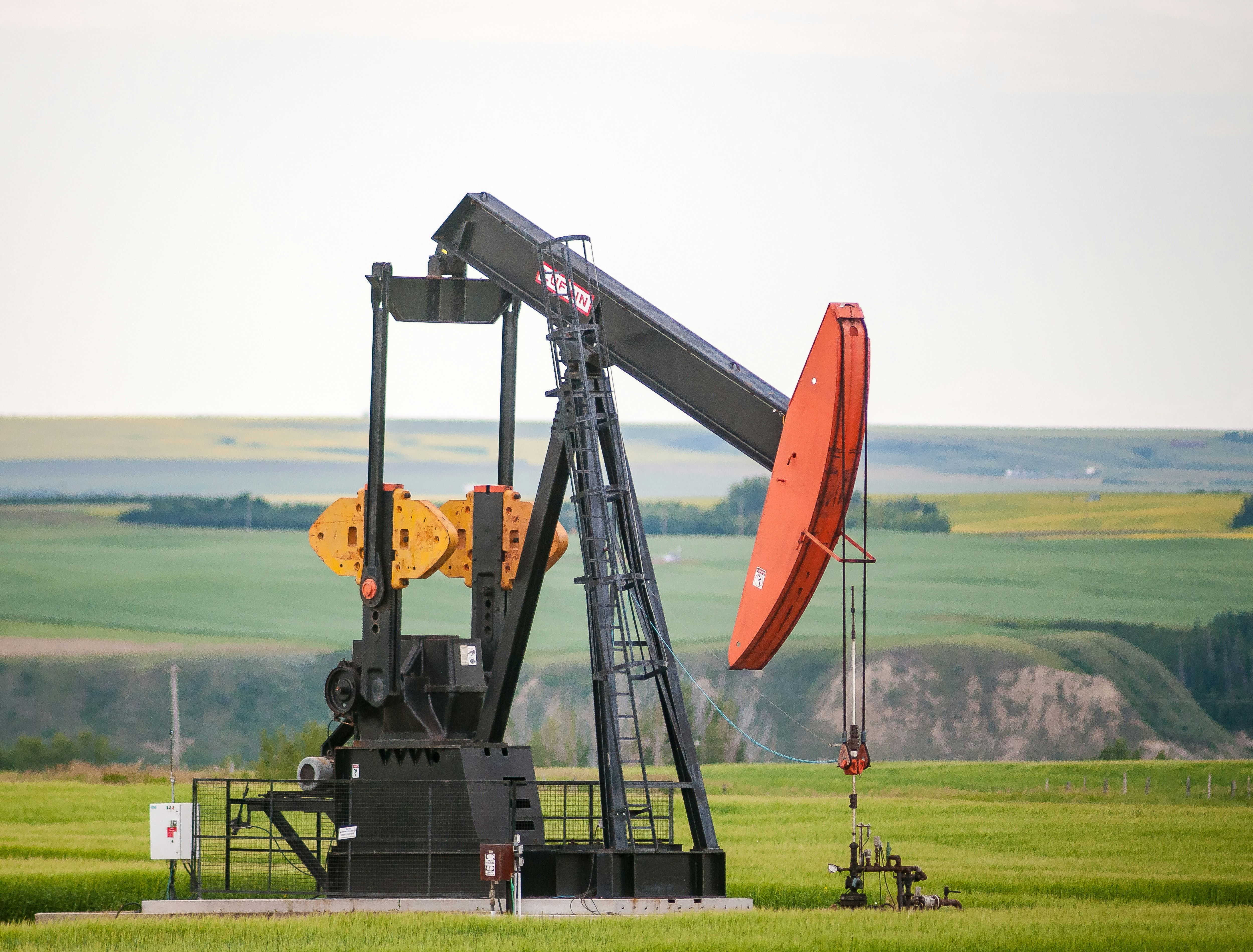
For over half a century, oil has been Nigeria’s economic lifeline and its Achilles’ heel. From swelling coffers during oil booms to pushing the nation to the brink during busts, petroleum revenues have shaped everything from public spending to political power.
Nigeria is embarking(once again) on perhaps its most ambitious economic journey —diversifying away from oil dependency through an interconnected web of policies, infrastructure projects, and targeted sectoral strategies.
This isn’t the first time Nigeria has talked about diversification. What sets this effort apart is the urgency of global energy transitions. Let’s take a look at the policy landscape, the plans and achievements so far in attaining this goal.
National Development Plan (2021–2025): Measuring Progress
The National Development Plan (NDP) represents Nigeria’s clearest articulation of how it intends to restructure its economy. Designed as a four-year roadmap, the NDP centers on expanding non-oil revenues, catalyzing job creation, fostering innovation, and scaling up public infrastructure.
All these are very important for developing a country that manufactures on a global scale, putting an end to excessive export of raw materials only. Without electricity, security, roads, and communication systems, can a country truly be industrialised and diverse?
So far, the NDP has catalyzed notable improvements in public-private coordination, with InfraCo increasing infrastructure funding by 30% since 2021 and enabling 15 major projects.
InfraCorp, officially the Infrastructure Corporation of Nigeria, is a government-backed infrastructure investment vehicle established to address Nigeria’s massive infrastructure deficit. It was set up in 2021 by the Central Bank of Nigeria (CBN), Africa Finance Corporation (AFC), and Nigerian Sovereign Investment Authority (NSIA).
Sectors like agriculture and digital services have also seen fresh momentum: the agricultural sector’s GDP contribution has grown by 5% from 2021 to 2024, and foreign direct investment in digital services rose by 40% during the plan period. Non-oil revenue increased by 12%, though this fell short of targets due to implementation challenges. However, structural bottlenecks—including bureaucratic delays and inconsistent state-level policy alignment—remain significant hurdles.
Revised National Integrated Infrastructure Master Plan (NIIMP): Building the Bones of Diversification
The NIIMP, stretching over two decades to 2043, is the scaffolding for Nigeria’s long-term economic ambitions. It targets raising the country's infrastructure stock to 70 percent of GDP and lays out investment pathways in transport, energy, ICT, housing, agriculture.
Progress has been mixed but not insignificant. Railway modernization projects, such as the Lagos-Ibadan and the Abuja-Kaduna corridors, are either complete or nearing completion. Several major expressway rehabilitation projects are also underway.
Federal Ministry of Industry, Trade, and Investment 2025 Roadmap(FMTI)
The FMITI 2025 Roadmap has been framed as a bold attempt to shift Nigeria from an import-dependent consumer economy to a competitive, export-oriented industrial power.
One of its early successes has been the revitalization of certain Special Economic Zones and improved investor confidence in sectors like ICT and pharmaceuticals. There has been an uptick in business registrations and growing interest from foreign manufacturers seeking to capitalize on AfCFTA opportunities.
Energy and Power: The Hardest Battle Yet
No policy is more critical—or more difficult—than resolving Nigeria’s power crisis. The 2025 energy strategy focuses on upgrading the national grid, expanding solar and gas generation, and attracting private capital to fill funding gaps.
In 2023, InfraCorp secured a deal for a 1GW solar photovoltaic (PV) manufacturing plant, which will be one of the world’s first large-scale facilities for lightweight, low-carbon solar panels. This project is expected to accelerate electrification, promote local manufacturing, create jobs, and contribute to Nigeria’s energy transition and climate commitments.
Still, many rural communities still lack access to electricity. The energy transition is moving, but slowly— perhaps too slowly for a country trying to industrialize at scale.

Digital Infrastructure: A New Frontier of Growth
Perhaps no area has advanced as quickly as Nigeria’s digital economy. The rollout of broadband infrastructure has reached several secondary cities, and 5G services are now available in at least six urban centers. Moreover, digital skills programs are equipping thousands of youth with marketable tech competencies.
Unfortunately, the digital divide remains vast. Many schools lack basic computer labs, and regulatory uncertainty continues to stifle innovation in certain sectors like cryptocurrency.
The potential is enormous, but realizing it will require more investment in rural connectivity, digital literacy, and supportive legislation.
Agriculture and Mining: Rediscovering Nigeria’s Real Wealth
Agriculture has always been Nigeria’s economic backbone, yet underdeveloped value chains and post-harvest losses have kept productivity low. The current plan targets agro-industrial zones, mechanization, and market access improvements.
Several Staple Crop Processing Zones (SCPZs) are now operational in states like Niger, Kaduna, and Cross River. These zones are beginning to attract agribusiness firms and offer local farmers better prices for their produce. At the same time, programs offering smallholder financing and insurance have started to gain traction. Mining has also shown signs of revival, with new geological surveys completed and a crackdown on illegal operations under way.
Yet both sectors still face regulatory uncertainty, infrastructural challenges, and environmental risks. In mining, investor caution remains high due to legacy issues with land rights and weak enforcement. In agriculture, the scaling of irrigation and cold storage remains limited.
Special Economic Zones: Islands of Progress in a Sea of Complexity
The revitalization of Special Economic Zones has produced a few standout cases. The Lekki Free Zone, for instance, is becoming a logistics and manufacturing hub with growing exports. Ogun-Guangdong and the Enugu Industrial City are also attracting investments in lightweight manufacturing and logistics.
However, without sustained public investment and regulatory reform, these zones risk becoming enclaves of growth rather than engines of national transformation.
Global Partnerships: The External Engine for Domestic Change
Nigeria’s diversification drive has found support from institutions like the African Development Bank, which is investing over $650 million annually in climate-smart infrastructure and agribusiness development. The World Bank and EU have backed vocational training, women’s empowerment programs, and broadband expansion projects.
These partnerships have injected credibility and resources into government efforts, but the key remains local ownership. International financing can accelerate progress, but cannot substitute for effective domestic governance. The success of these partnerships will depend on how well Nigeria uses them to build long-term capacity.
Conclusion: A Long Road, but Observable Movement
The challenge now is to accelerate implementation, bridge the gap between policy and practice, and ensure that gains are not confined to elite centers but felt across every Nigerian village, factory, and school.
Sources:
PwC Nigeria. (n.d.). Nigeria: Looking beyond oil. PwC.
Voice of Nigeria. (2022, October 21). Diversifying Nigeria’s economy beyond oil.