Petrol at ₦605 or Below ₦200: The Math Behind Nigeria's Next Fuel Promise
Nigeria’s petrol subsidy debate is returning ahead of the 2027 election, with promises of ₦605 and below ₦200 petrol raising questions about fuel prices, government spending and the real cost of cheaper petrol.
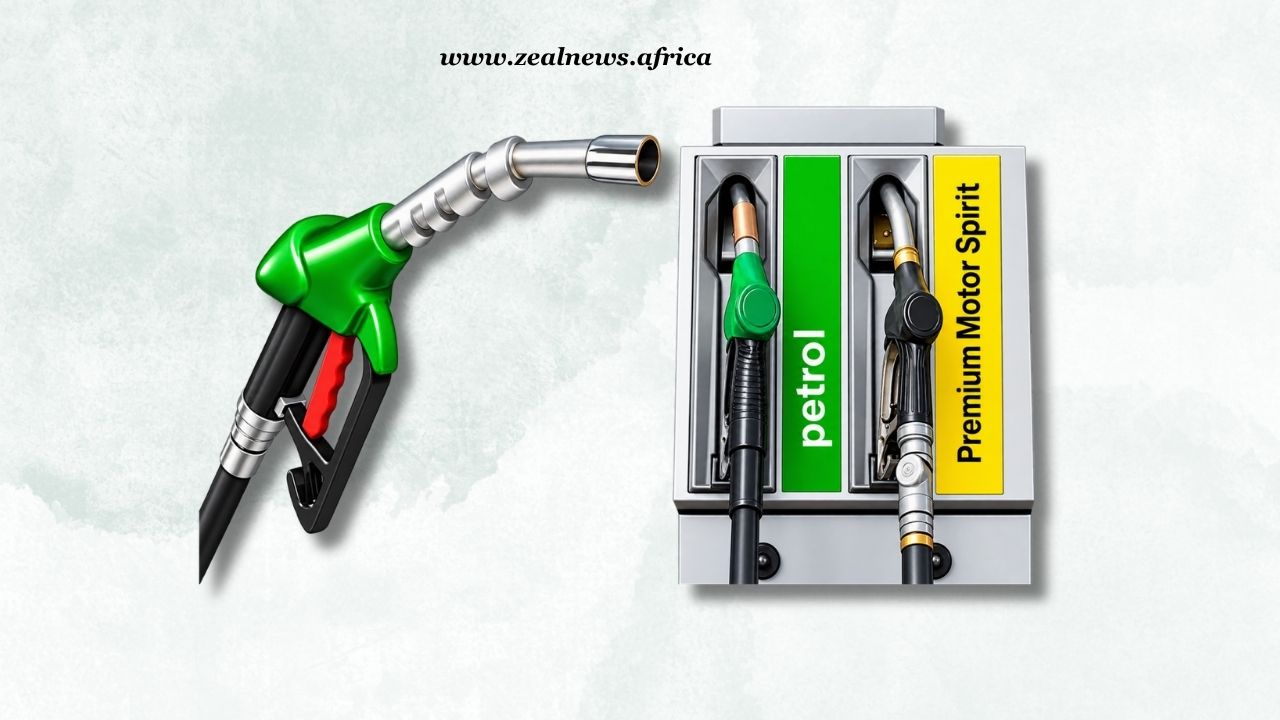
In any filling station in Lagos, the difference between ₦605 and ₦1,200 is not a political argument. It is the difference between what a driver can afford to put in the tank and what he has to remove from the money already meant for food, school fees, rent, or the day's business.
That is why petrol might become one of the easiest economic issues to campaign around. Give Nigerians a number, and they immediately understand it; tell them petrol can fall from above ₦1,200 to ₦605, or eventually to below ₦200, and the promise requires almost no translation.
But there is another number Nigerians rarely get to see. The number behind the number. Who pays the difference? What does petrol actually cost to produce and distribute? What happens to the price if crude falls? What happens if the naira weakens again?
And if the market eventually brings petrol back towards ₦800 or ₦900, as it was around the beginning of 2026, what exactly would a new subsidy be paying for?
These questions matter because Nigeria is approaching another presidential election with a petrol debate that is becoming increasingly focused on the price Nigerians should pay, rather than the economics that determine what that price actually means.
The Price at the Pump Is Not the Whole Story
When President Bola Tinubu removed the petrol subsidy in 2023, the consequence was immediate: transport fares, generator and logistics costs, and food distribution all became more expensive, adding to what inflation-hit households already carried.
More than three years later, Nigeria has adapted to a post-subsidy economy, not comfortably, but the economy has increasingly learned to operate without assuming government will permanently absorb the gap between the market cost of petrol and what consumers pay.
That makes the current conversation more complicated. Petrol is now around ₦1,210 per litre, with some fractions high in different places, and it is easy to conclude subsidy removal alone explains the price.
But it has also been responding to something Nigeria cannot control: the international oil market. By late January, NNPC was selling petrol at about ₦835 in Lagos and ₦839 in Abuja, before tensions involving Israel, Iran and the United States sent crude sharply higher, at one point towards $120 a barrel, and pump prices followed.
The price that some Nigerians might be angry about today, in other words, is not necessarily permanent; it carries global crude and exchange-rate movements on top of the structural changes from subsidy removal, and if those pressures retreat, the pump price can retreat with them.
What Exactly Are We Subsidising?
The easiest way to understand the problem is to stop looking at the pump price alone. Petrol was around ₦800 before the global oil shock, rose to as high as ₦1,735 per litre at some depots, and later peaked at ₦1,212 in July despite falling crude prices. And another, bigger question we need to ask is: what is still keeping pump prices high? Well, that is a question for another day.
But if crude prices keep easing and local refining keeps expanding, petrol could drift back towards ₦800–₦900 without any subsidy at all, which is where the ₦605 promise runs into a harder question: why spend enormous public money pushing the price down from a market rate of roughly ₦800 to ₦605, when the ₦1,200-plus shock that provoked the promise may already be unwinding on its own?
That relief of roughly ₦195 per litre still needs someone to absorb it, and at the scale of tens of millions of litres consumed daily, even a modest per-litre gap becomes an enormous expenditure; the lower the price is pushed below cost, the larger the gap grows.
A cheaper pump price does not mean petrol itself has become cheaper; someone pays the difference, and it eventually surfaces as reduced investment, higher borrowing or weaker fiscal capacity.
Social Insight
Navigate the Rhythms of African Communities
Bold Conversations. Real Impact. True Narratives.
READ ALSO: Presidential Hopeful Gbenga Olawepo-Hashim Promises ₦605 Petrol, but Nigeria Has a Trust Problem
That is why ₦605, ₦800 or ₦200 cannot be settled by which number sounds best. Gbenga Olawepo-Hashim has pushed the conversation forward with his proposal for a ₦605 starting price, built on cheaper domestic refining, lower production costs and exchange-rate stability- not insignificant variables, but ones that point to the real question: what crude price is assumed, what does refining cost, and does the answer still hold if the market was already heading to ₦800 on its own? Until that is answered, ₦605 is a destination without a complete map.
The Economy Has Survived the Shock, But Has It Recovered?
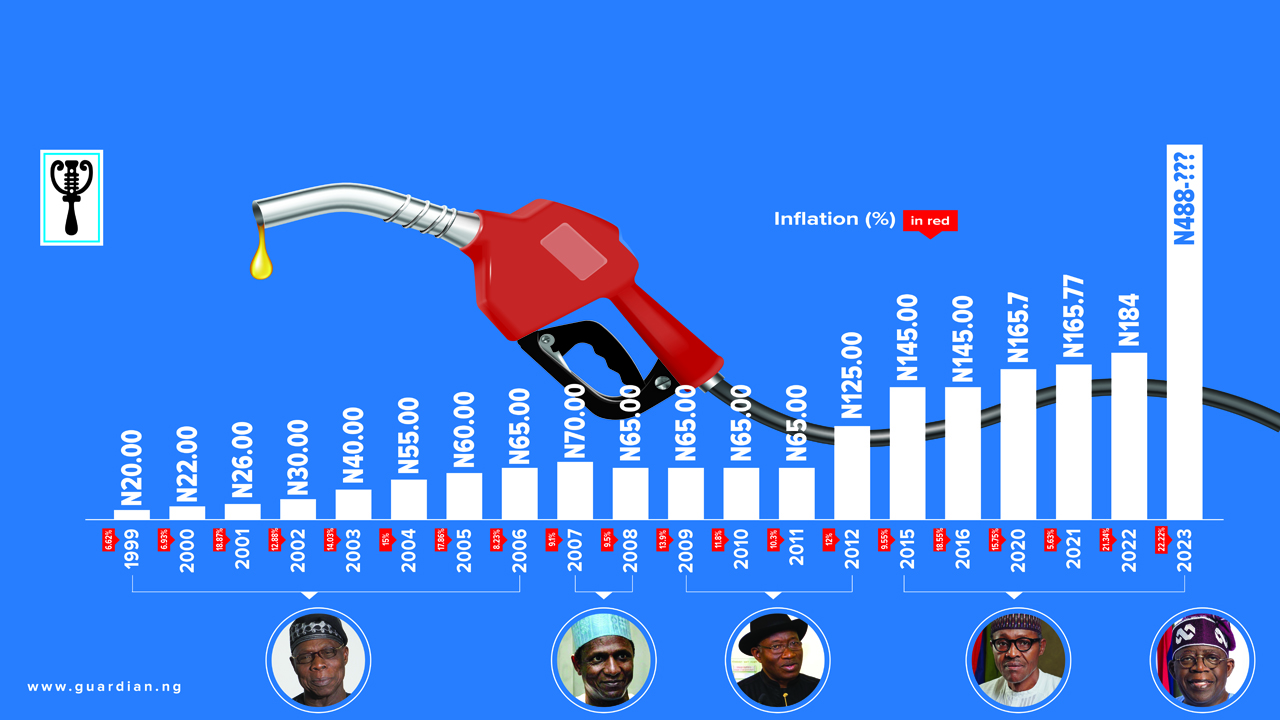
Chart Showing Nigeria’s Fuel Prices from 1999 to 2023, the Year President Bola Ahmed Tinubu Assumed Office | Image source: The Guardian Nigeria NewsThe argument for subsidy becomes more compelling through the experience of ordinary Nigerians. Three years without subsidy have not been easy; no serious argument holds that the average household has simply adjusted and moved on.
Removal coincided with currency depreciation, high inflation, and expensive transportation. But there is a difference between saying this policy hurt Nigerians and saying therefore subsidy is the solution; Nigeria can acknowledge the hardship while still asking whether returning to the old system solves the problem.
Some economists argue that blanket fuel subsidy is not the intervention the economy needs, particularly when the fiscal cost could crowd out spending on infrastructure and social protection.

The better question may not be whether government should make petrol cheap, but whether it should make living in Nigeria cheaper, not the same thing. Subsidy spending flows through consumption: whoever drives more, or owns several vehicles, gains more than someone who does not.
Targeted support could instead be built around households, transportation, or vulnerable groups, a conversation Nigeria rarely has when petrol becomes an election issue.
The Election Makes the Number Even More Powerful
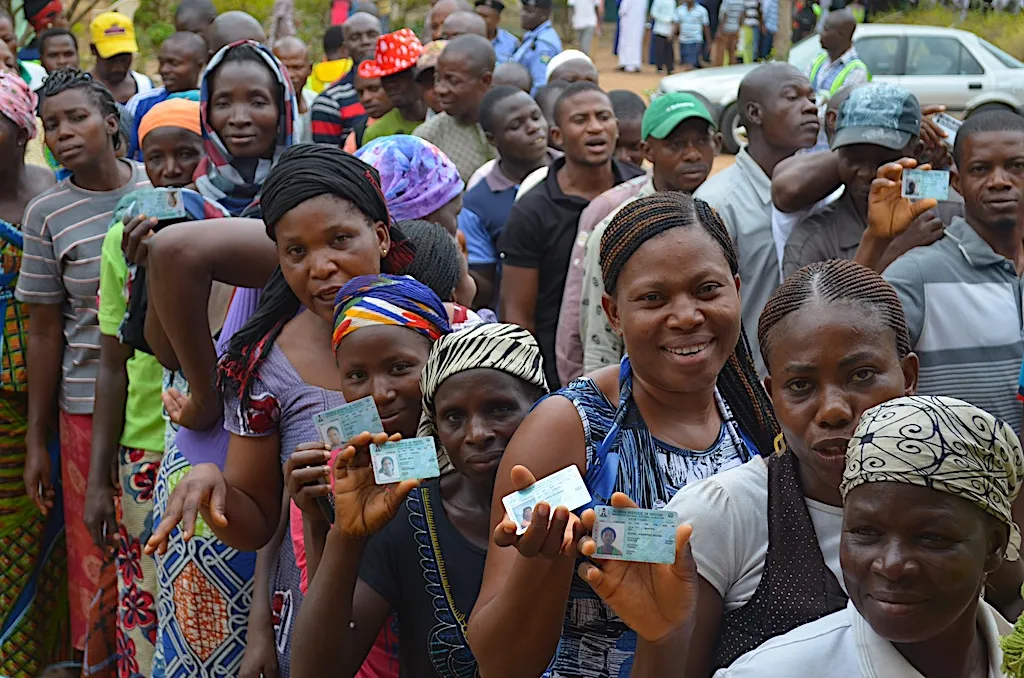
The timing is impossible to ignore. Nigeria is moving towards the January 2027 presidential election, and petrol is one of the few economic issues that reduces to a single number every voter understands: ₦605, ₦800, ₦1,200, ₦200.
Atiku Abubakar has spoken about restoring subsidy, Peter Obi has questioned the wisdom of it, and Olawepo-Hashim has placed an even lower figure on the table.
The approaches of these different presidential aspirants differ, but the conversation keeps returning to how cheap petrol can become, when it should be what petrol ought to cost in a Nigeria that produces its own crude, refines more locally and stabilizes its currency.
Only after answering that can the country judge whether ₦605 is cheap, expensive or simply artificially low, and whether subsidy is necessary at all.
There is nothing wrong with wanting cheaper petrol; lower energy costs shape logistics, small businesses and household spending in a country where transport touches almost everything.
But Nigeria has heard this promise before: cheap petrol, working refineries, oil wealth translating into affordable energy. The problem was never that Nigerians wanted too much; it was that the country kept discussing the price without confronting the system producing it.
So when the next politician says petrol will cost ₦605, the most useful response is not applause or disbelief. Ask what crude, refining and exchange rate the figure assumes. Ask who pays the difference, and what happens when oil prices rise or fall again. Ask whether Nigeria is being promised relief from a permanent problem, or from a temporary shock that may already be disappearing on its own.
Perhaps the most important question is not whether Nigerians deserve ₦605 or ₦200 petrol, but whether the country can build a system in which no one needs a politician to promise an artificially low price before they can afford to live. The pump displays one number. The economy carries another. Nigeria needs to know the second number before it votes on the first.