Pelumi Onifade Went Out to Tell End SARS' Story, And Never Came Back. We Still Have Questions About His Death
He went out to cover #EndSARS at 20 and never returned. Six years later, Pelumi Onifade’s family is still fighting for justice. What happened to him?
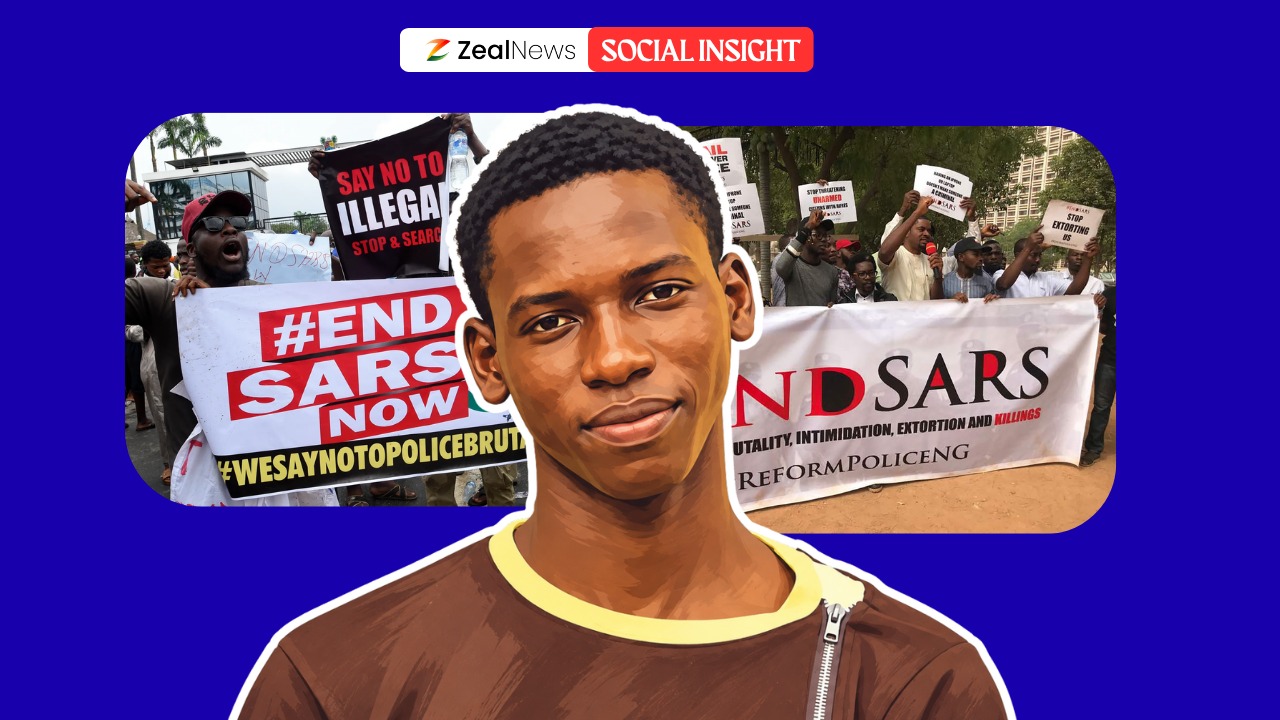
On October 24, 2020, a mother did not know that the son she watched leave home would become a name she would spend years fighting to bring back.
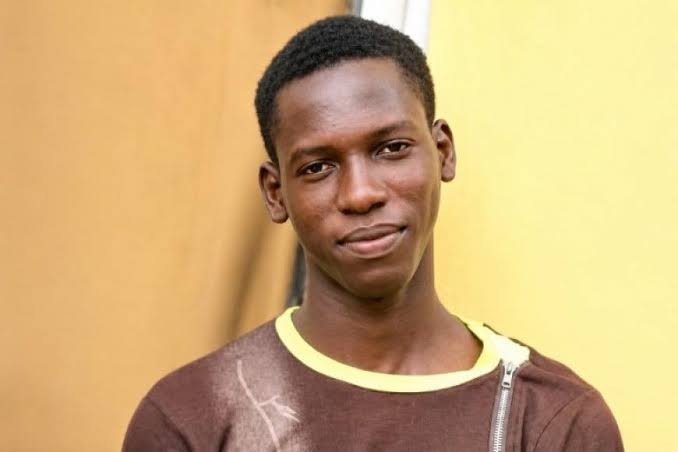
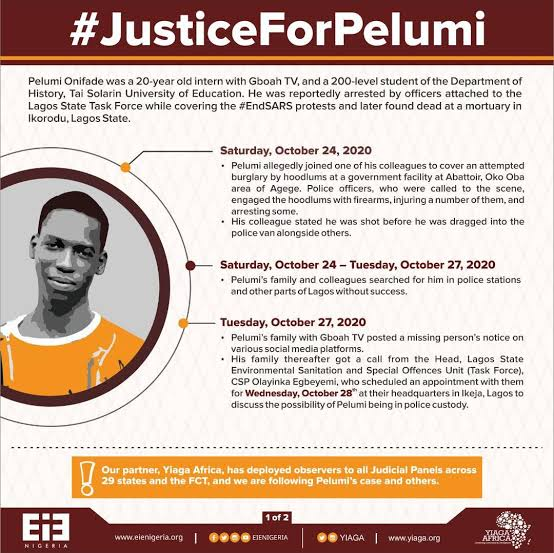
Pelumi Onifade was 20. He was a journalism intern with Gboah TV, a second-year History student at Tai Solarin University of Education, and a young man carrying a camera into the chaos surrounding the #EndSARS protests in Lagos. He went out to document what was happening. He never returned home.
For his family, the nightmare was not simply losing him. It was losing him without answers, searching for him without knowing where to look, and waiting years for institutions to establish what had happened. Even when a body believed to be his was found, they could not immediately lay him to rest.
Nearly six years later, DNA testing confirmed his identity. Yet his mother's fight for the return of his remains and accountability continued.
Pelumi left home to record a moment in Nigeria's history. His family has been trapped inside that moment ever since.
What Happened to Pelumi Onifade on October 24, 2020?
The #EndSARS protests began as a demand to end police brutality, particularly abuses associated with the Special Anti-Robbery Squad. They grew into a national movement as young Nigerians challenged police violence and demanded accountability from the authorities.
On October 24, Pelumi was covering unrest around a government facility in the Abattoir area of Oko-Oba, Agege, Lagos. According to accounts documented by organisations investigating his case, officers attached to the Lagos State Task Force took him away. Reports stated that he was shot before being forced into a police vehicle, despite wearing clothing identifying him as a journalist.
The police disputed responsibility for his death, maintaining that he did not die in their custody. Establishing what happened during his final hours therefore became central to the search for answers.
Meanwhile, his family faced a question no family should have to ask repeatedly: “where is our son?”
According to a timeline compiled by Enough is Enough Nigeria, the family was contacted on October 27 by the head of the Lagos State Environmental Sanitation and Special Offences Unit, commonly known as the Lagos Task Force, and invited to its Ikeja headquarters.
They were reportedly informed that five people had been arrested in connection with the events of October 24 and that one had died. Pelumi's body was subsequently located at a mortuary in Ikorodu.
Finding his body should have ended the search. Instead, it began another agonising wait. His remains were not immediately returned to his family, and questions about the circumstances of his death remained unresolved.
There is a particular cruelty in knowing that someone you love is dead but still being unable to bring them home. Grief has no proper place to settle when answers are missing and even burial remains uncertain.
Why Did His Family Wait Years for Answers?
The fight for accountability moved beyond public appeals and into the courts. In 2021, Media Rights Agenda initiated legal proceedings concerning Pelumi's death, seeking action from the relevant authorities.
Social Insight
Navigate the Rhythms of African Communities
Bold Conversations. Real Impact. True Narratives.
The process encountered obstacles. The Lagos State Government challenged the jurisdiction of the judicial panel considering the family's petition, arguing that the circumstances did not fall within its terms of reference. Such procedural disputes complicated efforts to examine what had happened.
In July 2024, the Federal High Court in Lagos directed the state government to take steps to investigate Pelumi's death and conduct a coroner's inquest. The inquiry was intended to establish the cause of death and identify anyone who might be held responsible.
The inquest began in October 2024. But even then, establishing the identity of the remains proved difficult.
In April 2026, the Lagos State University Teaching Hospital reportedly told the coroner that the body could not be identified because DNA samples held at the state's DNA and Forensic Centre had been destroyed during the October 2020 unrest.
Media Rights Agenda challenged that explanation, arguing that samples collected from Pelumi's parents after his disappearance could not have been destroyed before they were collected.

Consider what that uncertainty meant for his family. Years had passed, legal proceedings had begun, and the question of identity still hung over the case. The scientific evidence needed to settle it had itself become a subject of dispute.
In June 2026, the Lagos State DNA and Forensic Centre presented a report confirming a DNA match between Pelumi's mother, Adebose Onifade, and an unidentified body deposited at Ikorodu General Hospital on November 3, 2020. The body had been recorded under number 1385.
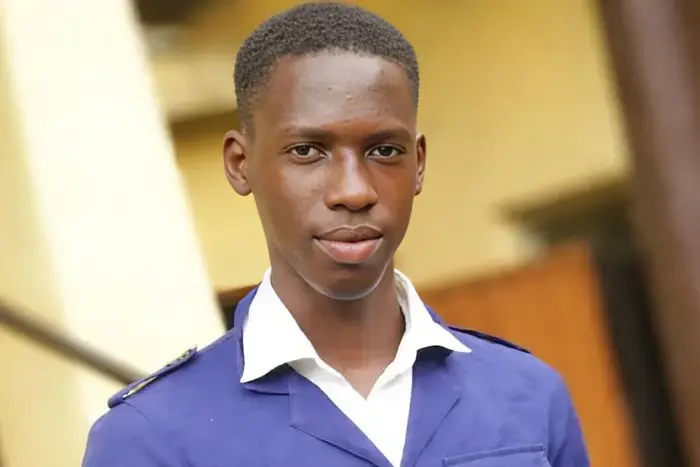
After years of searching, his identity was finally confirmed.
In September 2026, The Guardian Nigeria reported that a postmortem examination had confirmed that Pelumi died from a gunshot injury. The report, finalised on July 30, identified a penetrating firearm wound that caused extensive internal damage and bleeding.
The findings established the medical cause of death. They did not, by themselves, establish who fired the shot or determine individual responsibility.
The family had gained answers, but not all the answers it needed.
What Does Justice Mean When the Victim Is a Journalist?
Pelumi's death is not only a family's tragedy. It raises questions about what happens when journalists documenting public events become victims themselves.
Journalists preserve evidence, challenge official accounts and help the public understand events that powerful institutions might prefer to explain on their own terms.
During protests, that work becomes especially important because competing accounts emerge quickly and evidence can disappear.
A journalist's profession does not automatically establish who is responsible for a death. It does, however, make a credible investigation essential when a reporter dies under circumstances involving state officials.
Social Insight
Navigate the Rhythms of African Communities
Bold Conversations. Real Impact. True Narratives.
The Committee to Protect Journalists and other press freedom organisations have called for accountability in Pelumi's case. Their concerns extend to the conditions under which Nigerian journalists work and the protections available when their safety is threatened.
The requirements are: investigate the circumstances, preserve evidence, establish the facts and pursue accountability through a fair legal process wherever the evidence warrants it.
For Pelumi's mother, these principles are not abstract questions of press freedom. They are tied to a son she has spent years trying to bring home.
DNA confirmation can identify a body, and a postmortem can establish a medical cause of death. Neither can replace a full account of what happened or determine responsibility on its own.
As of today, Pelumi Onifade’s body has not yet been released to his parents.
Six years ago, Pelumi carried a camera into a protest because someone needed to document what was happening. Today, the questions surrounding his death remain part of the story Nigeria must confront.
He was 20, and would have turned 26 by now. He had a future beyond that October afternoon. His family deserved the chance to mourn him, bury him and know the truth without spending years fighting for each piece of it.
Pelumi went out to document a country demanding justice. Six years later, his family is still fighting for the justice he went out to help others demand.