Okada Takes Center Stage: Ghana Moves to Legalize, Regulate Motorbike Transport for Safety
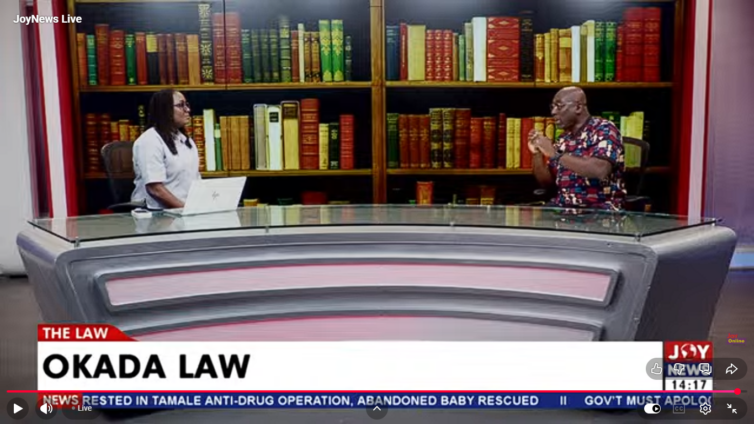
The Road Traffic (Amendment) Bill, 2025, commonly referred to as the Okada Law, represents a pivotal legislative advancement for Ghana's transport sector. Upon receiving presidential assent and being officially gazetted, this new law will formally legalize the commercial operation of motorcycles, tricycles, and quadricycles for passenger transport, acknowledging their established and increasingly popular role across the nation. This critical legislation also serves to update the existing Road Traffic Act, 2004 (Act 683), by introducing essential new provisions. These provisions address critical areas such as alcohol limits for riders, vehicle safety standards, and comprehensive regulations designed to foster safer and more organized commercial transport operations on Ghana’s roads.
Abraham Amaliba, the Director-General of the National Road Safety Authority (NRSA), extensively elucidated the implications of this new regulatory framework during his appearance on JoyNews' The Law. He emphasized the government's pragmatic approach, stating, "Okada has become popular, and it is now a mode of transport, whether you like it or not. After your vehicles, your airplanes, Okada has now established itself. A wise government will regulate it so that it becomes safe." This perspective underscores the necessity of regulation over outright prohibition, recognizing the widespread use of okada services.
A fundamental component of the proposed traffic reforms is the mandatory unionization of commercial motorbike riders. Amaliba clarified that the new law will prohibit individual "okada" operators from working independently; instead, they must be registered members of recognized unions. This requirement is intended to cultivate a clear system of identification and accountability within the sector. By belonging to a union, authorities will be better equipped to trace riders involved in traffic violations or other forms of misconduct. Furthermore, unions are slated to play a crucial role in upholding discipline among their members, bearing the responsibility of producing individuals who breach traffic regulations when requested by law enforcement agencies, thereby contributing to the effective regulation of misconduct.
In addition to unionization, the NRSA boss highlighted the stringent safety standards that will be enforced, particularly regarding protective gear. All commercial motorbike riders will be mandated to wear protective helmets that adhere to specific standards approved by Ghana’s regulatory authorities. Amaliba stressed the urgency of this measure, observing that many helmets currently utilized by riders do not meet adequate safety standards and can, in fact, aggravate injuries during accidents. He issued a stark warning: "We have noticed that sometimes when the accident occurs, the helmets that you wear may even speed up your death," thereby underscoring the vital need for certified protective equipment.
The new regulations also aim to eradicate unsafe riding practices, such as "zigzagging." While dedicated lanes for motorcycles and tricycles will be incorporated into the planning and construction of new highways and urban roads, existing road infrastructures will largely maintain their current layouts. In the interim, rigorous enforcement measures will be implemented to ensure that dangerous practices are curtailed. Amaliba reiterated that the government's strategy is both practical and phased, striving to balance enhanced safety with the realities of existing road conditions. He affirmed, "For new roads, we will provide separate lanes for motorists. Meanwhile, we will enforce the law to stop zigzagging and other unsafe practices." This comprehensive legislative overhaul signifies Ghana's commitment to transforming its commercial motorbike transport sector into a safer, more organized, and accountable system, ensuring that a widely used mode of transport operates under robust regulatory oversight.
You may also like...
FIFA Slams NFF, DR Congo with Heavy Fine After Heated World Cup Playoff

FIFA has levied disciplinary fines against the Nigeria Football Federation and the DR Congo Football Association followi...
Horror History Made! Amy Madigan Shatters Oscar Bias with 'Weapons' Win!

Amy Madigan secured a historic Best Supporting Actress win for "Weapons" at the 98th Academy Awards, marking a significa...
Oscar Sweep! 'One Battle After Another' Dominates 2026 Academy Awards with Best Picture, Director & More!

Paul Thomas Anderson's <i>One Battle After Another</i> dominated the 2026 Academy Awards, securing Best Picture, Anderso...
KPop Demon Hunters' 'Golden' Dominates 2026 Oscars: Best Original Song Win & Electrifying Performance

The Indian SUV market is seeing a surge in demand for compact SUVs, with the sub-segment clocking 1.38
Logan Marshall-Green Hints at Major 'Marshals' Drama

The CBS series 'Marshals' brings a fresh take on law enforcement, combining cowboy action with modern SEAL team intensit...
Cape Town Gears Up for Massive Post-Pandemic Travel Industry Comeback

ILTM Africa 2026 is poised to be a landmark event for the African luxury travel sector, featuring impressive internation...
Global Tensions Force Epic World Cruise Reroute to Africa

A major international cruise itinerary for Nicko Cruises' Vasco da Gama has been revised, redirecting the world voyage t...
NHS Crisis Deepens: Patients Forced to Pay for Private Care Amidst Soaring Wait Times

A patient watchdog has warned of a growing number of people turning to private healthcare due to concerns over NHS waiti...