Nollywood Just Got Its First Photorealistic AI Film. The Interesting Part? It's in Yoruba.
A Yoruba sci-fi film made largely with AI-generated visuals is testing what the technology could mean for Nollywood, from production costs to indigenous storytelling.
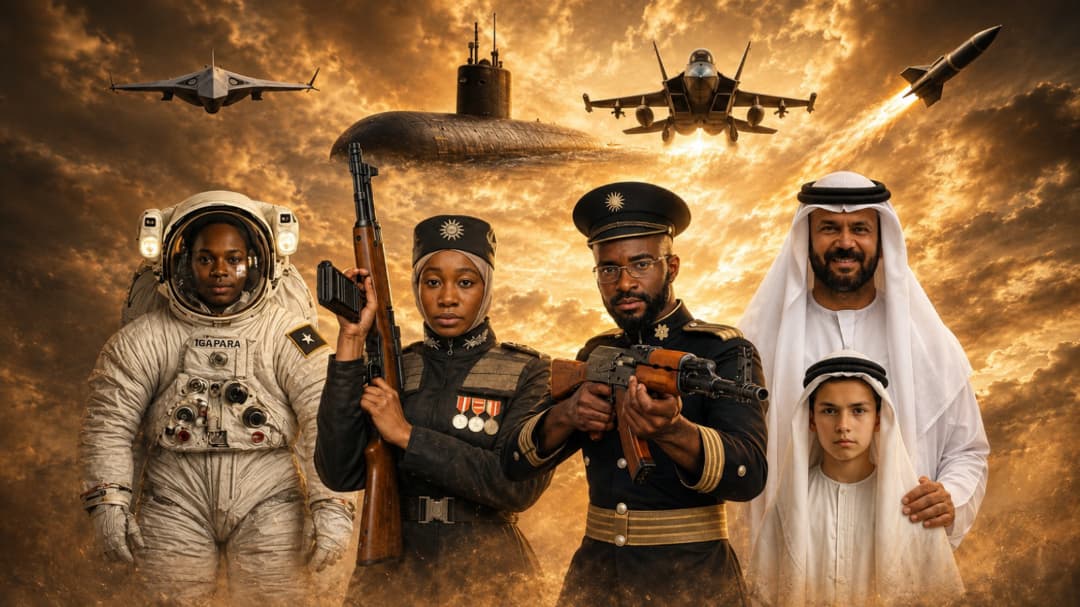
There is a Yoruba sci-fi film making the rounds, and the unusual part isn't just the story.
Asiri Ilu Awon Osu — Mystery of Osu Land, was made with AI-generated visuals. Its creators say about 80 percent of those visuals were produced with AI. The two-part feature runs for more than three hours and was co-created by Mysterious Tech Studio and actress Tanwa Hameed, popularly known as Asake Omogbajumo, who also plays General Asake.
The film still involved human direction and live-action performance, so the 80 percent figure is about the visuals, not the whole filmmaking process. Its story deals with oppression, abuse of power, injustice, faith and the struggle to change a society.
That combination is what makes the film worth paying attention to: a familiar Yoruba story being made with a production method that is still very new to Nollywood.
This isn't Nigeria's first AI film

Nigeria has already been testing AI in filmmaking.Makemation, released in 2025, was billed as Africa's first AI-themed feature and went into Nigerian cinemas. Other AI-heavy projects have followed, while the Naija Artificial Intelligence Film Festival has created a space for filmmakers experimenting with the technology.
What sets Asiri Ilu Awon Osu apart is the mix of feature length, photorealistic AI-generated visuals and Yoruba storytelling. The film was developed between June and September 2025.
Its creators call it the world's first Yoruba photorealistic AI feature film but has not yet been certified by Guinness record.
Still, the film itself is real, and so is the production experiment behind it.
Why this could matter to Nollywood
Nollywood has spent decades finding ways to make films without Hollywood-sized budgets. The video-film era did it with cheaper equipment and faster production. Digital filmmaking lowered some barriers again. AI could push that further.
Locations, sets, extras and visual effects can quickly become expensive, especially when a story demands a world that doesn't exist. A sci-fi film like Asiri Ilu Awon Osu is a useful example because its visuals are part of the challenge.
If AI can help create or extend those environments, filmmakers with smaller budgets may be able to attempt things that once had to be cut from the script.
That doesn't make filmmaking effortless. Someone still has to write, direct, edit, judge the generated material and keep the story together. AI can reduce some costs, but it also creates work in areas such as generation, correction and continuity.
The big opportunity may be for stories that have struggled to justify large production budgets: science fiction, fantasy, historical epics and other films that need elaborate worlds.
But making it look Yoruba is another matter
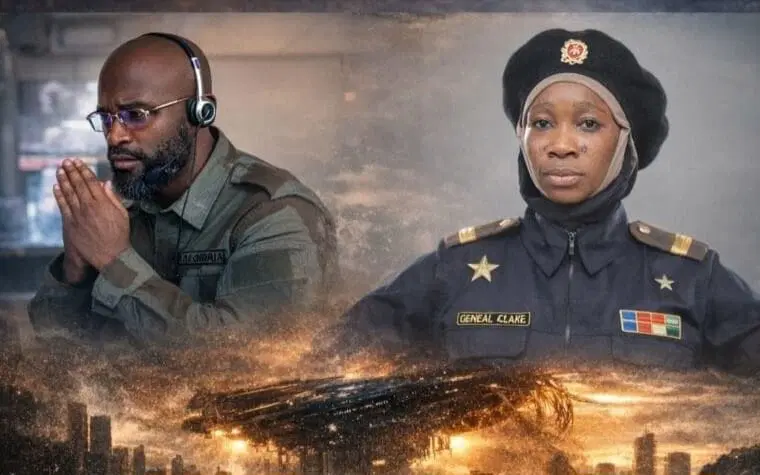
Photorealism can make an image convincing without making it correct.
A palace can look impressive and still be wrong. Clothing can look vaguely African without belonging to the culture or period being portrayed. A ritual can look cinematic while missing its meaning entirely.
That matters here because a Yoruba film needs more than Yoruba dialogue. Someone still has to know whether an image, costume, setting or gesture actually belongs in a Yoruba story. AI can generate the picture, but it cannot take responsibility for the cultural decision behind it.
There is another possibility. If AI makes dubbing, subtitles and localisation cheaper, films made in Yoruba, Hausa, Igbo or Pidgin could potentially travel further without requiring the same production investment for every audience.

That could make Yoruba, Hausa, Igbo and Pidgin films easier to take beyond their original audiences. But there is a catch.
The technology also raises difficult questions about actors' likenesses, cloned voices, copyright and who actually owns AI-generated material concerns already central toUNESCO's discussions on AI in filmmaking, which have called for transparency, consent and fair remuneration.
And if Nigerian filmmakers become completely dependent on foreign AI platforms, there is another risk: Nigeria could supply the stories while other companies own much of the technology underneath them.
Those questions will become hard to ignore as more productions follow.
For now, Asiri Ilu Awon Osu is an experiment. It doesn't prove AI has solved Nollywood's production problems, and it certainly doesn't mean human filmmaking is going away.
It does show that a Nigerian filmmaker can now attempt a feature-length, visually ambitious story in Yoruba using a production method that would have been difficult to imagine a few years ago.
That may be the real story: not that AI can make Nollywood films, but that it could give Nollywood more room to make the ones its old budgets couldn't.