Nkrumah's Enduring Flame: Ghana Celebrates Pan-African Vision, Family Rekindles Roots
NkrumahFest 2026 celebrated the 117th birthday of Ghana's first President, Dr. Kwame Nkrumah, emphasizing his enduring but unfinished Pan-African vision for a united and self-reliant Africa. Speakers highlighted the continent's continued challenges, calling for a renewed commitment to Nkrumah's ideals beyond mere commemoration. The event featured reflections on Nkrumah's historical impact, the importance of self-determination, and the family's pledge to reconnect younger generations with his philosophy.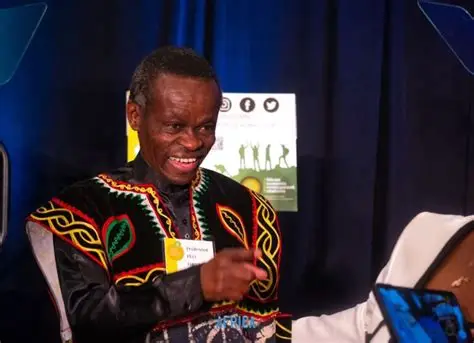
The 2026 NkrumahFest, held at Nkroful in Ghana’s Western Region, served as a significant occasion to commemorate the 117th birthday of Osagyefo Dr Kwame Nkrumah, Ghana’s first President, under the theme “Nkrumah @117: Celebrating His Enduring Legacy – Africa Must Unite or Perish.” The event drew a diverse assembly of prominent political leaders, government officials, traditional figures, academics, Pan-African advocates, and members of the Nkrumah family, including his daughter, Samia Yaba Nkrumah, to reflect on Nkrumah’s life, vision, and enduring legacy for Ghana and the African continent.
Renowned Pan-Africanist and anti-corruption campaigner Professor P.L.O. Lumumba underscored the incompleteness of Africa’s political and economic liberation, advocating for a renewed commitment to Nkrumah’s ideals. Prof. Lumumba highlighted Nkrumah’s transformative approach, linking Ghana’s independence to the liberation and unity of the entire continent. He recalled Nkrumah’s declaration on March 6, 1957, emphasizing that Nkrumah’s vision transcended Ghana, aiming for the liberation and dignity of Africans everywhere. Ghana subsequently became a pivotal center for African liberation movements, attracting influential figures like Julius Nyerere, Milton Obote, Nelson Mandela, W.E.B. Du Bois, and George Padmore. Prof. Lumumba traced Nkrumah’s Pan-African campaign to major conferences, including the 1958 Accra conferences and the 1961 Casablanca Conference, which paved the way for the creation of the Organisation of African Unity (OAU) in 1963. He consistently warned that political independence without continental unity would leave African states vulnerable to external influence, a warning he believes remains relevant today amidst ongoing conflicts in Somalia, Sudan, and Cameroon, terrorism in the Sahel, irregular migration, and Africa’s dependence on foreign sources for medicines, food, technology, and information. He urged a greater African capacity for self-production and the development of indigenous technology, recalling Nkrumah’s emphasis on self-reliance, industrialization, and energy projects like the Akosombo Dam.
National Chairman of the National Democratic Congress (NDC), Johnson Asiedu Nketia, attributed his political journey and current position to Nkrumah’s free education policy, declaring himself an “unrepentant Nkrumahist.” He questioned why Nkrumah does not receive the same level of recognition in Ghana as he does across Africa and the world, asserting Nkrumah’s irreplaceable role as the founder of Ghana, who unified previously separate territories like the Gold Coast Colony, the Ashanti Kingdom, the Northern Territories, and Trans-Volta Togoland into the modern nation. Mr. Nketia described NkrumahFest as an effort to