NBA Summer League Frenzy: Rookies Shine, ROTY Buzz Ignites
The 2026 NBA rookie class has made a significant early impression during the summer league, with top picks showcasing both promising potential and areas for development. While some players like AJ Dybantsa and Darryn Peterson are already generating Rookie of the Year buzz, others such as Caleb Wilson and Cameron Boozer have emerged as strong contenders. Early rankings and analyses highlight the immediate impact and long-term outlook for these rising stars.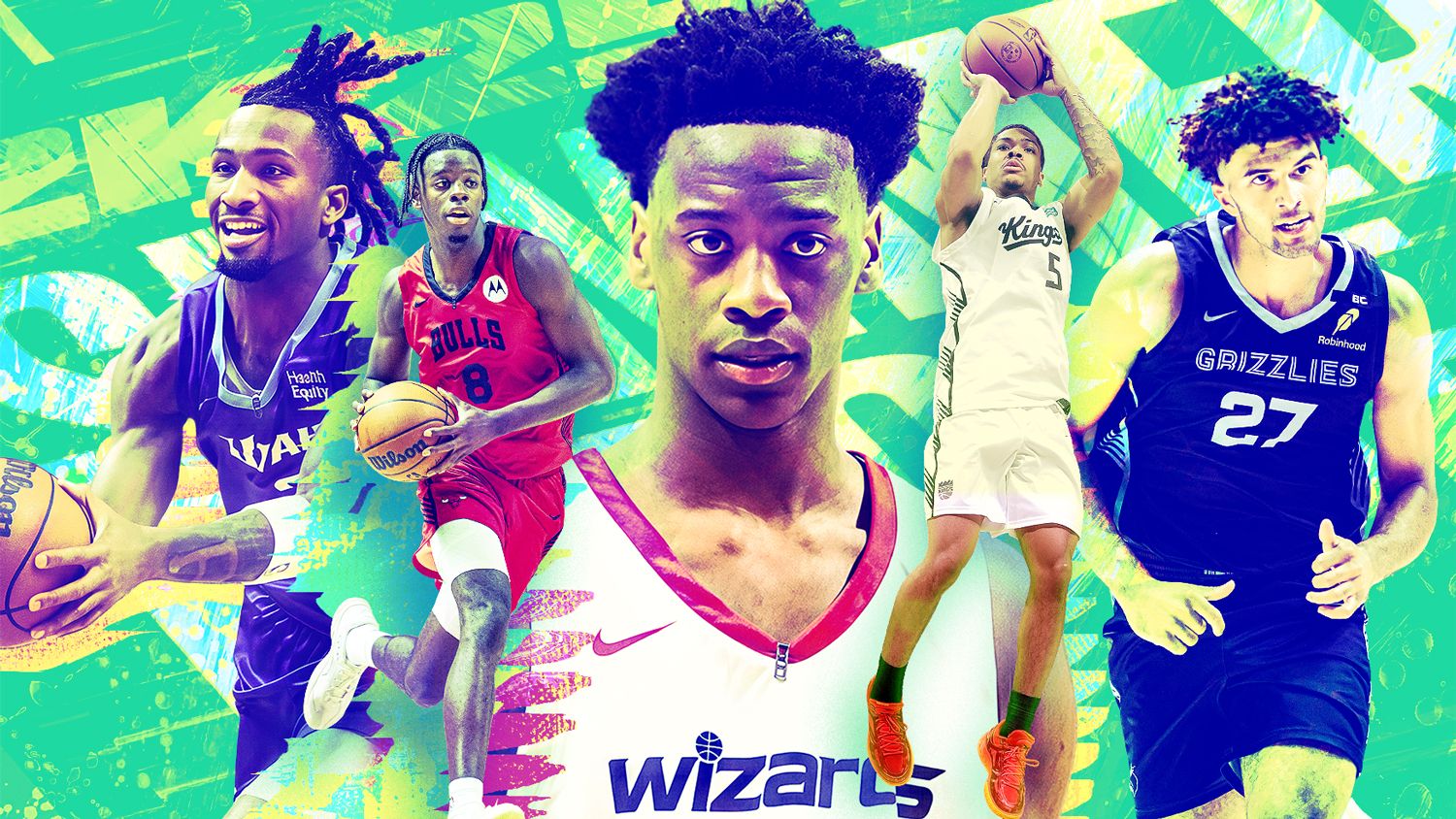
The 2026 NBA draft class has made an anticipated and impactful debut in the league's initial weeks, particularly during the Las Vegas summer league. NBA scouts, fans, and executives eagerly awaited to see the newest rookie talent, and for the most part, they haven't been disappointed. While No. 20 pick Jayden Quaintance and No. 21 pick Karim Lopez were sidelined with injuries, nearly every other first-round selection showcased their abilities in multiple games. This early exposure provides a crucial, albeit small-sample, look into the potential and immediate impact of these young players, allowing for initial rankings based on their potential and summer league showings. This analysis focuses on the top 11 picks who demonstrated impressive or notable performances, noting that players like No. 12 pick Aday Mara of the Oklahoma City Thunder appear to require significant development before contributing to a championship contender. It is crucial to remember these rankings reflect current quality rather than long-term projections and are inherently subject to variance from limited observations. Before diving into the top 11, several rookies deserve honorable mentions for their standout performances: Meleek Thomas of the Cleveland Cavaliers, who led the summer league in scoring with 28.3 points per game; Labaron Philon Jr. from the Philadelphia 76ers, noted for his smooth offensive operation; and Allen Graves of the Toronto Raptors, a steals machine whose defensive prowess could make him a formidable force alongside players like Scottie Barnes and Collin Murray-Boyles.
Starting the top 11 list, ranked at number 11 is Darius Acuff Jr. from the Sacramento Kings, the 7th pick in the 2026 draft. Acuff demonstrated the qualities of a lead creator, threading several clever passes in Vegas, suggesting an exciting partnership with Domantas Sabonis in pick-and-rolls. However, he also displayed significant weaknesses for a small guard, particularly his lackadaisical off-ball defense and subpar offensive efficiency. Across his summer league games, including the California Classic, Acuff shot 35% from the field, 27% on 3-pointers, and 70% on free throws. While these percentages are likely to improve with a larger sample size during the regular season, his other limitations indicate that he needs to be an exceptional offensive talent to truly thrive in the NBA, a path that has shown early reasons for doubt.
Keaton Wagler, the 5th pick, playing for the LA Clippers, comes in at number 10, serving as a prime example of why one should not overreact to summer league performances. Wagler initially struggled in Vegas, yet notably scored 18 points in a single quarter of his second game. With his imposing size (6-foot-5, 188 pounds), a smooth 3-point stroke (35% at summer league), and astute passing out of the pick-and-roll, Wagler possesses the profile of a lead creator at the NBA level. However, he often appeared overly passive in Vegas and lacked the explosiveness to consistently create separation from defenders. Even his high-scoring quarter largely came from beyond the arc, as he only converted 33% (7-for-21) of his 2-point attempts, suggesting a rookie year more aligned with development than immediate Rookie of the Year contention.
The Atlanta Hawks' Kingston Flemings, the 8th overall pick, is ranked at number 9. Flemings distinguished himself as the best defender among lottery guards in Vegas, capably sticking with opposing guards and holding his own when switched onto bigger players. His ability to strip the ball from a 6-foot-11 player like Danny Wolf, even if Wolf isn't the most imposing post presence, highlights his defensive versatility. Questions, however, persist regarding Flemings' offensive game. While he demonstrated the ability to score at all three levels in one half of summer league play and generally appeared composed under pressure, he also seemed hesitant to drive to his left. His overall efficiency, including his play in the Salt Lake City summer league, was a modest 32% from the field, leaving much to be desired.
At number 8 is Morez Johnson Jr., drafted 9th by the Dallas Mavericks. Johnson was a standout performer despite participating in only two summer league games. He showcased several advanced reads out of the short roll and was remarkably efficient inside the arc, hitting 75% (15-for-20) of his 2-point attempts. His defensive impact was even more impressive, as he proved to be a very active defender, tallying six blocks and five steals across his two appearances. While his aggressiveness sometimes led to foul trouble, his overall effort was commendable. His jump shot requires refinement, as his 3-point attempts were routinely off to the side rather than short or long. Nevertheless, for a prospect initially viewed as a reach at No. 9 on draft night, Johnson made significant strides in Vegas to validate his NBA potential.
Yaxel Lendeborg, the 11th pick for the Golden State Warriors, secures the 7th spot. Reflecting the present-day ranking criteria, the 23-year-old Lendeborg appears more NBA-ready than many of the younger prospects drafted ahead of him. His NBA-ready skill set includes useful passing, solid defense, and a promising 3-point jumper, all of which should allow him to integrate smoothly into the veteran Warriors squad. Lendeborg was particularly dynamic in transition, consistently driving with strength and absorbing contact around the rim. One memorable drive, where he finished effortlessly over Cameron Boozer, became a summer league highlight, typifying his frequent strong plays throughout the Warriors' games.
Ranked number 6 is Mikel Brown Jr., the 6th overall pick for the Brooklyn Nets. Brown may not have generated the same obvious highlight plays as some of the players selected above him, but he delivered a solid two-way performance during the summer league. He drew attention on the defensive end, where he was disruptive in forcing turnovers and demonstrated strong isolation defense. Offensively, Brown appeared comfortable creating his own shot and exhibited more fluidity in reaching his spots compared to many other guards in this rookie class. He appears to possess the highest ceiling among the Nets' numerous young players, indicating significant long-term potential.
Coming in at number 5 is Brayden Burries, the 10th pick, playing for the Milwaukee Bucks. In an environment often characterized by inexperienced players making rookie errors, Burries distinguished himself in Las Vegas by rarely committing such mistakes. The 20-year-old was arguably the best rookie guard at summer league, averaging 22.3 points on 50% shooting (including 44% from 3-point range), and remarkably, recorded 12 assists against just one turnover. Given the existing talent on the Bucks' roster, including Tyler Herro, Ryan Rollins, and Jaime Jaquez Jr., Burries' on-ball opportunities as a rookie are uncertain. However, his impressive summer league exploits have undoubtedly earned him a more extended look and consideration.
The Chicago Bulls' Caleb Wilson, the 4th overall pick, is ranked at number 4. While it's prudent not to get prematurely excited about his 48% mark on 3-pointers due to the low correlation between summer league and regular-season 3-point percentages, the sheer volume of his attempts is meaningful; Wilson took 8.3 3-pointers per game, with nearly half his shots coming from distance, a significant increase from his 7-for-27 on 3s over 24 college games. This suggests his offense might already possess a new dimension in the NBA compared to his collegiate play. Other indicators are less favorable, however, placing Wilson at fourth rather than higher than his draft slot. He recorded just five assists to 13 turnovers in Vegas and shockingly shot 23% (3-for-13) from the free-throw line. On the positive side, his nine blocks in three games were a major highlight, demonstrating excellent recovery speed to swat a layup in transition after committing a sloppy turnover. However, his defensive impact should not be overstated, as he did not appear as dominant as an every-possession one-on-one defender.
Ranked at number 3 is Darryn Peterson, the 2nd pick for the Utah Jazz. Peterson's performances in the Salt Lake City summer league were notably stronger than his showings in Las Vegas, where he was plagued by turnovers and foul trouble. His shaky ball-handling was apparent in person, suggesting that sharing ball-handling duties with Keyonte George as a rookie will likely benefit his efficiency. However, Peterson also showcased impressive shooting range and flashes of incredible explosiveness, hinting at his upside as an NBA-ready scorer. A memorable play against the Clippers saw him drive from the 3-point line to the basket in a blink, finishing with a tremendous dunk over a defender. He also tied No. 1 pick AJ Dybantsa for the lead in free-throw attempts in Vegas, a promising sign of his ability to attack the rim and generate points.
Cameron Boozer, the 3rd pick for the Memphis Grizzlies, holds the number 2 spot. Boozer may not be draining pull-up 3s like Wilson or bursting past defenders like Peterson or Dybantsa, but he consistently stuffed the stat sheet, averaging 18.7 points, 7.0 rebounds, 3.3 assists, and 2.3 steals. His size (6-8, 253 pounds) and speed were particularly striking in person, a quality also evident during his NBA combine drill work in May. Boozer appears massive when playing one-on-one defense, possessing the agility to guard quicker wings and the sturdiness to contest more physical bigs. While his jump shot didn't always fall in Vegas, it looked clean, and his overall offensive contributions allowed him to maintain a true shooting mark north of 60%. Despite a perceived lower ceiling compared to Peterson or Dybantsa, Boozer is firmly positioned in the Rookie of the Year race this season.
Finally, claiming the top spot at number 1 is AJ Dybantsa, the 1st pick for the Washington Wizards. Dybantsa earned this ranking despite attempting an excessive number of low-efficiency midrange jumpers in Vegas. No other player generated as many highlight-worthy sequences: a confident reverse layup in the opening minute of his first game, an inside-out dribble that faked out one defender immediately followed by an up-and-under move to split two more for a layup, and an instinctive behind-the-back pass with his left hand for a fast-break bucket. Dybantsa consistently penetrated the paint at will in his two summer league games, leading to numerous points and drawn fouls. He will need to refine his shot selection, and he occasionally appeared stiff in his defensive stance, getting caught on screens when defending ball handlers. However, it is immediately clear when observing Dybantsa that he possesses superstar potential. Perhaps the most significant question surrounding Dybantsa after summer league is whether he will receive similar on-ball opportunities in the regular season, given the Wizards' commitment to Trae Young for the next four years. How these two stars integrate will be a fascinating storyline to monitor in Washington.
The NBA summer league, while a brief glimpse, offers the first opportunity to assess which rookies are ready for immediate contributions, serving as a foundational piece of the Rookie of the Year puzzle. Factors like opportunity and role can be as crucial as raw talent once the regular season commences, and the confidence displayed in summer league often translates. This July, several top lottery picks underscored precisely why they were drafted highly, while some less-heralded players delivered strong performances, potentially entering the Rookie of the Year conversation. Others showed promising upside but also areas requiring development, positioning them as long shots for the award. With odds constantly shifting, here's how the Rookie of the Year race is shaping up early on.
Regarding the competition between AJ Dybantsa and Darryn Peterson for NBA Rookie of the Year, both flexed skill sets that suggest they can be significant scorers from the outset. However, considering their style of play and team situations, Peterson appears to be in a more advantageous position to win the award. Dybantsa, an aggressive isolation scorer from midrange with a knack for drawing fouls, will share the court with a ball-dominant All-Star point guard in Trae Young and an All-Star power forward in Anthony Davis, who operates in similar scoring areas. For Dybantsa to maximize his scoring potential in the Washington Wizards' offense, a consistent 3-point shot is essential, and his long-range shooting stroke still appears to need work based on his Vegas performances. Peterson, conversely, is expected to assume a lead guard role on a young, talented Utah Jazz squad, offering him ample opportunities to create his own shots and capitalize on 3-pointers generated by teammates. He demonstrated a proficiency for running the pick-and-roll, and if he can effectively execute a two-man game while averaging four-plus assists alongside solid scoring, he could amass superior overall statistics on an ascendant Jazz team.
The question of whether Caleb Wilson remains the best value bet for Rookie of the Year has gained traction after his performance in Vegas. The Chicago Bulls forward now seems even more likely to contend for the award than he did on draft night. Wilson was arguably the most impressive rookie observed in Las Vegas, possessing similar size to Dybantsa but appearing quicker both with and without the ball, and more vertically explosive. While his excellent defensive potential was known, his dramatically improved 3-point shot in Vegas was particularly eye-opening, fundamentally expanding his offensive game. His 35 points in his Vegas summer league debut were impressive, but the fact that 21 of those points came from seven 3-pointers, often created off the dribble and on step-backs rather than just catch-and-shoot looks, was a revelation. Wilson has the upside to be the best rookie in this class on both offense and defense, and he continues to generate significant buzz compared to other top rookies.
Beyond the immediate frontrunners, Cameron Boozer and Darius Acuff Jr. are the two other rookies most likely to challenge for Rookie of the Year. Boozer currently holds the shortest odds to win the award. He proved to be, as advertised, the most consistently strong and productive of the blue-chip rookies, exhibiting a skill set that projects him as a potential 20-10-5 (points-rebounds-assists) player at the NBA level for the Memphis Grizzlies. While his rebounding was slightly below expectations in Vegas, his comprehensive all-around game was prominently displayed and very impressive. The primary reason he isn't considered a better value bet is that his odds are already so short, offering less potential return compared to some of his contemporaries. Acuff, despite being the seventh pick, has consistently ranked fourth in ROY odds. His situation with the Sacramento Kings, where he is expected to be a high-usage lead guard from day one, is ripe for accumulating high-volume statistics in points and assists. Although Acuff wasn't as aggressive in Vegas as anticipated, often content to run the offense rather than attack like Dybantsa and Peterson, he did flash explosive quickness, particularly when matched up against No. 5 pick Keaton Wagler, a speed that should serve him well in the NBA.
For those seeking a long shot (10-1 or longer odds) for Rookie of the Year, Keaton Wagler, at 25-1 odds as of draft night, presents an interesting case. While he wasn't overly impressive in his first Vegas summer league game against Acuff, appearing noticeably slower and less aggressive, he returned to his strengths in his second game against Peterson and the Jazz: shooting. Wagler possesses the kind of 3-point shot that consistently looks like it will go in. Similar to last season's Rookie of the Year runner-up, Kon Knueppel, Wagler's shooting prowess could be game-changing for his LA Clippers team and has the potential to catapult him into Rookie of the Year consideration.
Conversely, one rookie who might be faded for the award after summer league is Kingston Flemings, the No. 8 pick. This isn't due to a lack of impressive performance, as Flemings garnered positive social media attention for his leadership and communication in Vegas. He projects as a player who will develop into a quality point guard and leader, contributing to championships in the long term. However, he does not appear to be a player who will accumulate eye-popping statistics as a rookie, especially on an Atlanta Hawks squad with playoff aspirations and a strong, veteran backcourt that will likely relegate Flemings to a bench role. While bullish on Flemings as a player and long-term professional, it is unlikely he will post the statistical output needed to enter the Rookie of the Year discussion.