N100 Billion Boost: National Economic Council Greenlights Massive Overhaul for Nigeria’s Security Training
The National Economic Council (NEC) has approved N100 billion for the rehabilitation of security training institutions and N2.6 billion for consultancy services, following concerns about their dire state. The council also received updates on polio eradication efforts, noting a 39% reduction in cVDPV2 cases and planning further vaccination campaigns, alongside approving the settlement of N185 billion debt to gas producers to boost domestic supply.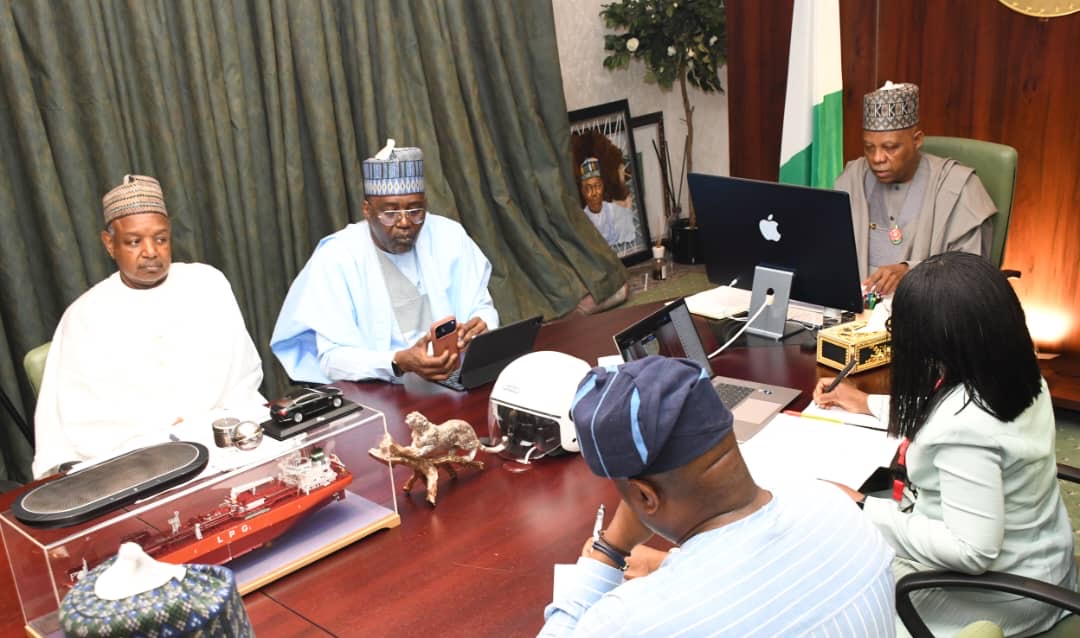
The National Economic Council (NEC), during its 154th virtual meeting on Wednesday, approved a significant financial package aimed at enhancing Nigeria's security architecture and addressing critical national issues. A sum of N100 billion was earmarked for the rehabilitation of training institutions for the Nigeria Police Force and other security agencies across the country. This crucial approval, which awaits final ratification from President Bola Tinubu, follows recommendations made by an ad hoc committee established to assess the dire condition of security training facilities nationwide. Additionally, N2.6 billion was approved for consultancy services related to this extensive rehabilitation project.
President Bola Tinubu had initially proposed a comprehensive overhaul of security agencies’ training institutions during the 152nd NEC meeting in October. The ad hoc committee, chaired by Enugu State Governor Peter Mbah, presented a report highlighting the extremely poor state of these facilities, stressing the urgent need for intervention to prevent undermining the country's overall security capacity. Vice President Kashim Shettima, who chairs the NEC comprising all 36 state governors, the Minister of Finance, the Minister of Economic Planning, and other key ministry representatives, reaffirmed the government’s unwavering commitment to resolving this issue. Shettima strongly urged state governors and federal institutions to ensure that economic reforms translate into tangible improvements in the lives of citizens, emphasizing that governance must be measured by real outcomes rather than mere rhetoric. He stated, “Our task is not to admire problems, but to solve them. Not to explain challenges, but to overcome them. And not to hope for progress, but to engineer it,” insisting that policies must be convincing instruments of change felt in markets, schools, clinics, and farms across the federation.
The meeting also included updates from the Accountant-General of the Federation on the nation's key financial accounts. As of November 2025, the Excess Crude Account (ECA) balance stood at $525,823.39. The Stabilisation Account recorded a balance of N71,647,494,101.12, while the Natural Resources Development Account held N79,252,769,532.35.
Significant progress was reported by the NEC Ad-hoc Committee on Polio Eradication, chaired by the Governor of Gombe State, which has met four times between June and November 2025. As of Week 47, Nigeria has seen a 39% reduction in circulating vaccine-derived poliovirus type 2 (cVDPV2) cases in 2025, with 73 cases recorded compared to 119 cases during the same period in 2024. Six priority states (Sokoto, Zamfara, Kebbi, Gombe, Kano, and Katsina) account for 63% of the total cases. Notably, Kano achieved a 94% decline in cases compared to last year, and Katsina recorded an 88% decline. However, 13 new detections (12 cVPV2 and 1 cVPV3) were confirmed across the country, including Gombe’s first cases of the year.
The first phase of an integrated Measles–Rubella, HPV, and Polio campaign, implemented across 20 northern states and Oyo, delivered meaningful gains. 83% of all planned settlements were reached with geo-evidence, and 92% and 95% of targeted children received the MR and polio vaccines, respectively. LQAS results showed an 85% pass rate for MR and 86% for polio. While Kano, Katsina, and Gombe passed LQAS, Kebbi, Sokoto, and Zamfara did not meet the 80% threshold, necessitating revaccination in affected Local Government Areas. A new round of nOPV2 campaigns is scheduled for December, divided into two blocs covering 12 and 9 northern states respectively, to close remaining immunity gaps before year-end. The NEC resolved that Deputy Governors across implementing states convene State Taskforce Meetings, State Governments work with security agencies to ensure safe access for vaccination teams, and LGA Chairmen be fully involved in campaign oversight by chairing Evening Review Meetings.
Furthermore, Ekperikpe Ekpo, the Minister of State for Petroleum (Gas), briefed the NEC on the domestic gas supply situation and the government’s strategy to address outstanding obligations to gas producers. Gas producers have a cumulative debt claim of $1 billion for gas supplied to the power sector since 2011, with N185 billion (78%) of the total naira-denominated debt claims validated by NNPC Gas Marketing Ltd (NGML) and the Nigerian Electricity Regulatory Commission (NERC). On April 4, 2024, President Tinubu granted approval for the urgent settlement of this N185 billion validated debt through future oil and gas royalty deductions. Following this, the Nigerian Upstream Petroleum Regulatory Commission (NUPRC) engaged with the six gas producers to agree on a royalty deduction schedule, a move commended by the Council to ensure improved supply of gas for domestic consumption, especially given Nigeria’s status as a largely gas-rich nation.