Mysteries Solved: 'From' Showrunners Finally Answer Season 4 Finale's Burning Questions
The creators of MGM+'s 'From' dissect the intense Season 4 finale, revealing the difficult decisions behind character deaths like Marielle and Elgin, and the psychological depths explored through Henry's hallucinations. They also touch upon Fatima's profound body horror transformation and the cryptic aging of the Boy in White, hinting at major developments for the series' final season.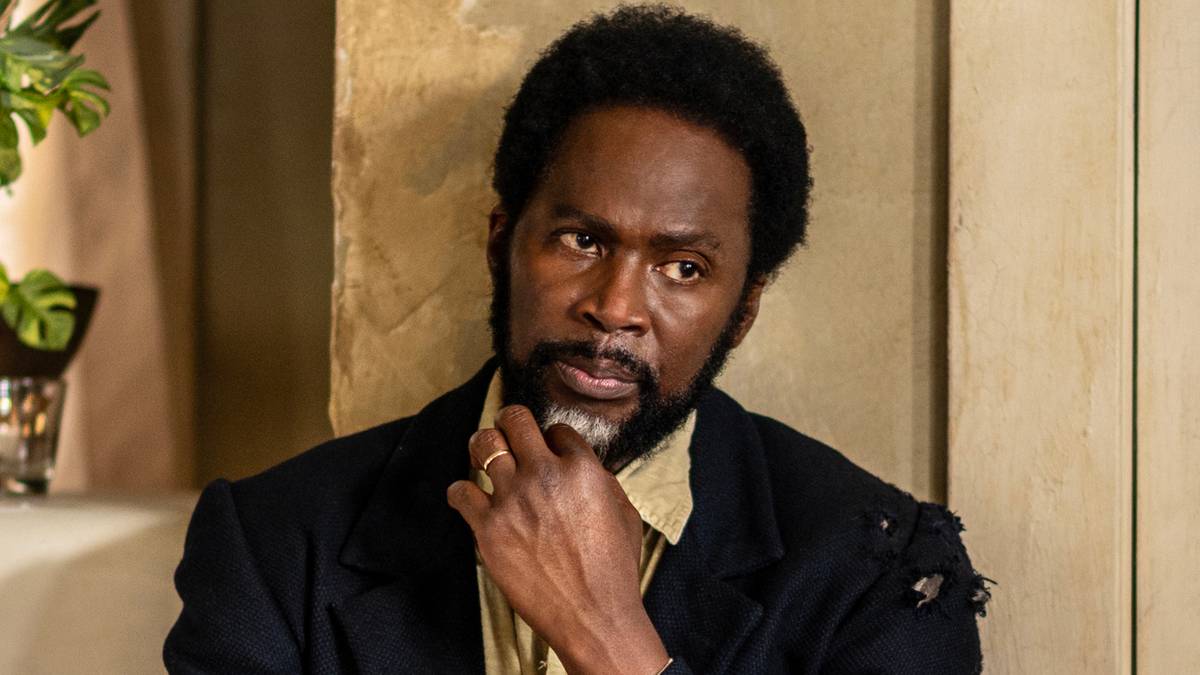
MGM+'s horror series "From" concluded its fourth season with a finale that plunged its trapped characters into even heavier and darker territory, offering some answers while raising profound new questions. In an exclusive interview with Collider, series creator John Griffin, showrunner Jeff Pinkner, and director Jack Bender discussed the pivotal events of the Season 4 finale, "If a Tree Falls in the Forest...," delving into character deaths, significant transformations, and the deepening mysteries that will define the upcoming final season.
The creators began by addressing the difficult decisions behind certain character departures, specifically Marielle and Elgin. John Griffin likened Marielle’s death to the unexpected loss of Father Khatri in Season 1, emphasizing how life can subvert expectations. He explained that Marielle and Kristi’s unlikely reunion, initially treasured, had settled into the mundane struggles of survival. Her sudden end forces Kristi, who has always been the town's "medic" and "rock," to confront her own brokenness, setting her on a challenging path for Season 5. Jeff Pinkner clarified Elgin's death as a direct consequence of the antagonist Sophia, also known as the Man in the Yellow Suit, taking definitive, brutal action against those who refuse her "job offer." This event underscored the inherent danger of Fromtown and Sophia's ruthlessness, with the potential origin story of the woman in the photograph remaining an open question.
Another central focus was the complex relationship between Henry and Victor, especially in light of Henry's harrowing alternate reality hallucinations. Pinkner acknowledged that these visions, where Henry believes he must destroy the "Victor in Fromville" to return to a more desirable reality, inadvertently serve as a "Lost" homage. This temptation of escaping into a fantasy reality is a tool used by the villain to make characters suffer, drawing parallels to Boyd's wife Abby Stevens's descent into madness. Griffin elaborated on the show's exploration of different types of horror—from physical creatures to the horrors of the unknown, each other, and ultimately, one's own mind. Henry’s struggle, like Sara's compulsion-inducing voices, embodies this "deepest level of the nightmare" where one’s own mind turns against them. The creators highlighted the show's commitment to humanity, emotion, and realism, particularly praising Robert Joy's spontaneous performance as Henry singing "Leaving on a Jet Plane" and Victor's poignant reaction, which beautifully encapsulates themes of loss, regret, and the human condition.
Fatima's transformation in the finale was discussed as a potent example of body horror, a genre element present since the show's inception, which the team, with their "unbelievable prosthetics and special effects team," are keen to explore. Her metamorphosis, linked to her pregnancy and potentially accelerated by Clara's tea under Sophia's influence, represents a significant and consequential change. Pinkner confirmed that the story of Fatima's transformation is "still telling," making them reluctant to reveal whether it can be reversed or if she is now fully a creature. This arc, like Victor's survival or Donna's burgeoning maternal instincts, underscores a broader theme of the show: how being in Fromtown fundamentally transforms its inhabitants, for better or worse.
The interview concluded by touching upon the intriguing final scene between Sophia and the Boy in White. The Boy in White's noticeably older appearance, acknowledged by Victor in previous seasons and Sophia in the finale ("Oh, look at you, all grown up"), is not merely an artifact of actor growth. Griffin confirmed that this change is "absolutely connected somehow to this group of characters that is in town," hinting at deeper story implications without revealing whether these developments are positive or negative. Jack Bender added a meta-commentary on the creative process, suggesting that sometimes the story tells the creators what to do, adapting to natural elements like an actor's aging and integrating it meaningfully into the narrative. This dynamic approach ensures that "From" continues to evolve its intricate mythology.