Mind-Blowing Discovery: Nolan's 'Interstellar' Inspires Real Science Breakthrough
Christopher Nolan's "Interstellar" is celebrated for its scientific accuracy, culminating in a groundbreaking achievement: the first scientifically accurate visual model of a black hole. Collaborating with astrophysicist Kip Thorne, the film's VFX team rendered Gargantua, a depiction later validated by NASA's 2019 image of a real black hole. This unique fusion of art and science anticipated reality, showcasing the film's profound impact.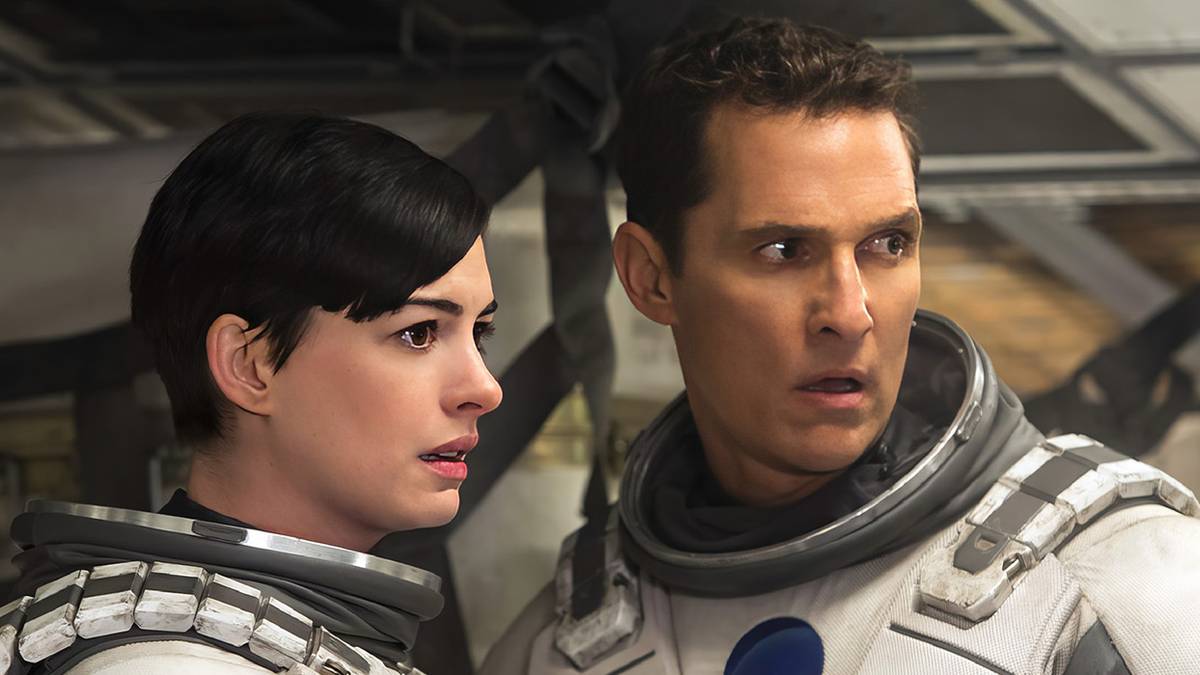
Christopher Nolan's 2014 film, "Interstellar," has cemented its place as a modern classic, celebrated for its profound emotional narrative, stellar ensemble cast, breathtaking visual effects, and remarkable scientific accuracy. Nolan's meticulous dedication to realism drove the production to an extraordinary scientific breakthrough: the creation of the first scientifically accurate visual model of a black hole, named Gargantua, thanks to the collaborative efforts of astrophysicist Kip Thorne and the film's VFX team.
Achieving scientific fidelity was paramount for "Interstellar," and Kip Thorne's expertise was invaluable in grounding the film's complex astrophysical concepts in reality. Beyond ensuring accuracy, Thorne collaborated closely with the artists from Double Negative, the VFX house, to conceptualize a spherical black hole that aligned with Nolan's vision. This partnership led to what is now recognized as the first accurate depiction of a black hole in visual media.
The journey to visualize Gargantua was fraught with scientific and technical challenges. VFX artist Paul Franklin and his team delved deep into the theoretical and mathematical underpinnings of black holes, guided by Thorne. While creating a wormhole proved relatively straightforward, Gargantua, with its profound light-bending gravitational effects, demanded innovation. Traditional ray-tracing software assumes light travels in straight paths, an assumption rendered invalid by a black hole's extreme gravity. Consequently, Double Negative's CG supervisor, Eugénie von Tunzelmann, led the development of entirely new software, processing an astonishing 800 terabytes of data, to accurately simulate the physics.
To render Gargantua's spherical appearance, Franklin applied Thorne's theories on accretion disks—matter swirling around a massive gravitational body. They discovered that the immense gravitational warping of space around the black hole also profoundly warped the accretion disk itself. Instead of a flat, stable ring like Saturn's, Gargantua's disk created a luminous halo that appeared to encircle the dark singularity, giving the black hole its distinctive spherical form. Unbeknownst to the team at the time, they had just made a significant scientific discovery.
Initially, the Double Negative team mistook the halo effect around Gargantua for a rendering glitch. However, Kip Thorne immediately recognized it as a genuine scientific phenomenon, consistent with the equations and theories he had provided. He remarked, "Why, of course. That's what it would do." This revelation underscored that, prior to "Interstellar," no one had ever visually modeled a black hole to understand its appearance; only abstract theorems and equations existed. Thanks to the film's production, the scientific community finally had a concrete visualization—a dark singularity enveloped by the light of a gravitationally trapped accretion disk. Thorne expressed his amazement, stating, "I never expected that. Eugénie just did the simulations and said, ‘Hey, this is what I got.’ It was just amazing."
The film's scientific accuracy extended beyond the black hole itself. Concepts like Miller's planet, where time dilation occurs due to its proximity to Gargantua, were initially thought to be impossible. Yet, Thorne demonstrated that such a planet could indeed exist and orbit a black hole if the black hole spun sufficiently fast. Gargantua's near-light-speed rotation explained why Miller's planet wasn't absorbed into the accretion disk, further solidifying the film's scientific plausibility.
The intersection of cinematic art and scientific reality reached a new peak in 2019 when NASA released the first-ever image of a real black hole, captured by the Event Horizon Telescope. Remarkably, this image—featuring a dark central shadow surrounded by an uneven accretion disk—bore a striking resemblance to Interstellar's Gargantua. While the real-world image's definition was not as pristine due to the vast distances involved, it clearly confirmed the fundamental elements and gravitational behaviors anticipated by the movie's model. This was not a case of "life imitating art," but rather a testament to how art, rigorously informed by science, could anticipate and visually represent a natural phenomenon before technology allowed for its direct observation. The 2019 image didn't just validate "Interstellar's" scientific accuracy; it confirmed that the film's visual design was as realistic and plausible as possible, adding another compelling reason to admire this groundbreaking cinematic achievement.