Mastercard Foundation Fuels Egyptian EdTech with 13 Startup Selections
Thirteen ed-tech startups have joined the third Egypt cohort of the Mastercard Foundation EdTech Fellowship, expanding its local portfolio to 36 companies. The program, run by EdVentures and the Mastercard Foundation, supports African ed-tech firms with business, financial, and learning science training. This new cohort signifies a shift towards specialized, employment-focused education, addressing critical gaps in job readiness and inclusive learning.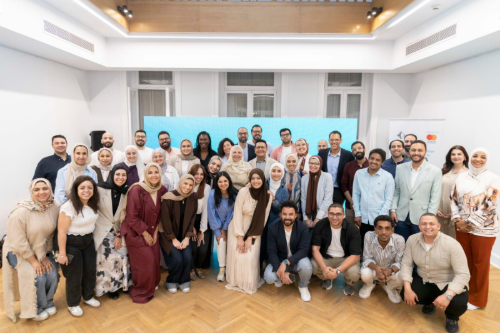
Thirteen ed-tech startups have been chosen for the third Egypt cohort of the Mastercard Foundation EdTech Fellowship, expanding the program's local portfolio to 36 startups. This fellowship is a collaborative effort between EdVentures, the venture capital arm of Nahdet Misr Group, and the Mastercard Foundation through its Centre for Innovative Teaching and Learning. Its primary goal is to empower African education technology companies by providing them with crucial business support, financial assistance, and specialized training rooted in learning science.
The newly selected cohort demonstrates a broad spectrum of innovation within the ed-tech sector, with startups addressing critical areas such as medical education, early childhood learning, entrepreneurship training, healthcare education, enterprise software skills, women’s upskilling, disability inclusion, employability, and social-emotional learning. Prominent companies joining this cohort include Wisdom Education, Hoopooh, Business Development Institute, Plan P, MedsPark, E-TripleSoft Learn, MOMKEN FOR HER, Edulga.ai, SDS Egypt, GMind, Qualiphi, Empower Hub, and Farid Academy.
Dalia Ibrahim, founder and CEO of EdVentures, emphasized the power of partnerships in expanding educational innovation and enabling founders to reach a wider audience of learners. Similarly, Wariko Waita, director of the Mastercard Foundation Centre for Innovative Teaching and Learning, highlighted the program's commitment to supporting innovators who are dedicated to broadening access to learning and creating opportunities for young people across both Egypt and the broader African continent.
A significant takeaway from this new cohort is the evolution of Egypt’s ed-tech market, which is moving beyond traditional online learning into more specialized and nuanced education services. Many of the chosen startups are deeply focused on key areas like healthcare training, enhancing employability, leveraging AI-powered learning solutions, promoting disability inclusion, fostering women’s economic participation, and integrating immersive tools such as Virtual Reality (VR) and Augmented Reality (AR).
This shift is crucial because contemporary education gaps extend beyond mere access to classrooms. They now encompass vital aspects like job readiness, the acquisition of practical skills, ensuring inclusive learning environments, and effectively connecting students with employers and tangible opportunities. The Mastercard Foundation’s distinctive model offers startups more than just visibility; it intelligently combines comprehensive business support, essential capital, and cutting-edge learning science. This integrated approach is designed to help founders develop products that are not only useful and scalable but also directly linked to measurable, real-world education outcomes.
For Egypt, the fellowship program serves to fortify the country’s standing as a leading regional ed-tech hub. For Africa as a whole, it signals a significant trend where education innovation is becoming increasingly localized, specialized, and sharply focused on employment. However, the overarching challenge for these promising startups will be achieving scale. They must successfully demonstrate that their innovative tools can effectively reach a large number of learners at a low cost, seamlessly integrate with schools and employers, and deliver demonstrable, impactful results beyond initial pilot programs.