Malami's Legal Nightmare: Court Denies Bail, EFCC Probe Looms
The FCT High Court has rejected former AGF Abubakar Malami's bail application, ruling his EFCC detention lawful amidst ongoing corruption probes. Malami faces criticisms for his public conduct and calls for the EFCC chairman's recusal, while past actions during his tenure as AGF are scrutinized for alleged disregard of the rule of law.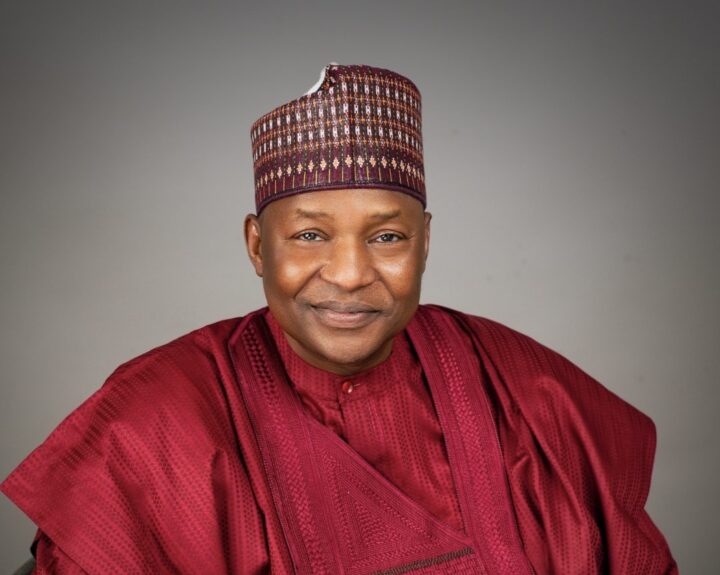
The Federal Capital Territory (FCT) High Court in Abuja has rejected an application by Abubakar Malami, former Attorney-General of the Federation and Minister of Justice, seeking bail from the custody of the Economic and Financial Crimes Commission (EFCC). In a ruling on Thursday, Justice Babangida Hassan declared Malami’s detention lawful, asserting it was backed by a valid court order. Malami, a Senior Advocate of Nigeria, had argued through his counsel, Sulaiman Hassan, that his continued detention during an ongoing investigation was illegal and violated his constitutional right to personal liberty. However, the EFCC, represented by J.S. Okutepa, also a SAN, countered, stating Malami was held pursuant to a lawfully obtained remand order from another FCT high court, issued by Justice S.C. Oriji, in accordance with the Administration of Criminal Justice Act (ACJA). The EFCC maintained it acted within legal bounds and would not detain any suspect beyond court-authorized periods.
Justice Hassan affirmed the EFCC's position, noting that both the constitution and the ACJA recognize detention based on a valid remand order from a competent court. He ruled Malami’s application procedurally flawed, as it effectively invited his court to review or overturn an order made by a court of equal standing. "Granting this application would amount to this court sitting as an appellate court over the decision of a court of coordinate jurisdiction," Justice Hassan stated, emphasizing this was beyond his court’s powers. Malami has been detained for corruption allegations, including money laundering, abuse of office, terrorism financing, fraudulent duplication of expenses related to the recovery of Abacha assets, and is being probed over several bank accounts and multi-billion-naira investments in Kebbi State.
The former Attorney-General’s conduct since his detention has drawn significant criticism. Public affairs analyst Stanley Ebube described Malami’s public posturing and proxy attacks against the EFCC as troubling and unbecoming, especially given his past role as the chief law officer. Ebube highlighted Malami’s demand for the EFCC Chairman, Ola Olukoyede, to recuse himself, interpreting it as intimidation and an attempt to manipulate institutions. He stressed that investigation is not persecution and no suspect can dictate the composition of an investigative body, regardless of former office or seniority at the bar, reinforcing the principle that no one is above the law.
Echoing these sentiments, Josef Onoh, former spokesman for the South East to President Bola Tinubu, accused Malami of hypocrisy and disregard for the rule of law during his tenure. Onoh urged Malami to cease attempts to blackmail and intimidate the EFCC Chairman and submit to investigations. Malami’s claims of “personal vendetta” and “political persecution” were deemed ironic by Onoh, who cited a history of politically motivated prosecutions, disobedience to court orders, and prolonged detentions under Malami’s watch. Specific instances included the removal of former EFCC acting chairman Ibrahim Magu, the prolonged detention of Col. Sambo Dasuki (retd.), and the prosecution of Olisa Metuh, despite court orders. Onoh also mentioned actions taken against the Indigenous People of Biafra (IPOB) and Nnamdi Kanu, which were condemned for disregarding court orders.
Onoh further dismissed Malami’s reliance on Chapter Nine of the Justice Ayo Salami Judicial Commission of Inquiry report as a basis for demanding Olukoyede’s recusal. He clarified that the report did not bar the EFCC from investigating former officials and that the EFCC Chairman’s prior role as Secretary to the Salami Panel did not create a legal or ethical conflict, as the law on recusal applies to judicial or quasi-judicial proceedings, not routine law enforcement investigations. He challenged Malami to defend his innocence in court rather than through public statements.
The EFCC had earlier clarified the administrative bail controversy surrounding Malami. The commission stated that Malami was granted provisional bail on November 28, subject to five conditions, none of which he fulfilled. Despite a deferment request on health grounds, Malami failed to provide credible evidence. He was re-invited and detained on December 8 after failing to meet outstanding bail requirements, contrary to his claim that his bail was revoked. The EFCC also denied restricting him from media interviews or political activities.
In a related development, the EFCC raided Malami’s homes and offices in Abuja and Kebbi. Malami alleged these operations were triggered by an earlier press release from his media team, which referenced Chapter 9 of the Salami Report, purportedly indicting EFCC chair Ola Olukoyede. However, Olukoyede had previously denied allegations from the Salami report, stating he was unjustly suspended but later vindicated and reinstated after a review found no wrongdoing. The EFCC has consistently described accusations of "weaponisation" and "politicisation" of the commission as misrepresentation, asserting that it investigates and prosecutes suspects from all political backgrounds equally, as no one enjoys immunity.