Mahama's Poultry Revolution: 'Nkoko Nkitinkiti' Program Hatches Millions of Birds to Secure Ghana's Food Future
President John Mahama has launched the 'Nkoko Nkitinkiti' initiative in Ghana, a nationwide programme aimed at revitalizing the poultry industry and boosting food security. Part of the broader Feed Ghana Programme, it involves distributing 3 million birds to 60,000 households and supporting farmers, addressing Ghana's reliance on poultry imports.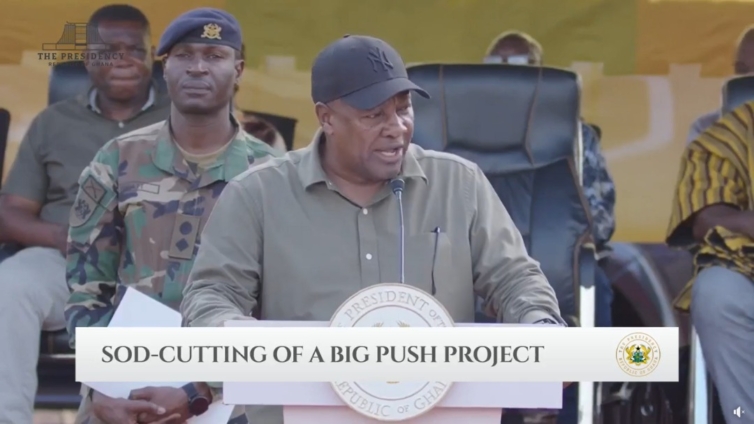
President John Mahama has officially launched the 'Nkoko Nkitinkiti' initiative, a significant nationwide programme aimed at transforming household poultry production and revitalising Ghana’s poultry industry. The launch event took place in Kumasi on Wednesday, November 12, where President Mahama described the initiative as a bold and practical step towards achieving food self-sufficiency and empowering communities across the country. He emphasized that the project is more than just a government intervention, calling it 'a national movement, a courageous step towards restoring food self-sufficiency, strengthening household resilience, and fostering sustainable livelihoods for tens of thousands of Ghanaians, especially women, youth, and vulnerable families.'
The 'Nkoko Nkitinkiti' initiative forms a key component of the broader Feed Ghana Programme, a national plan designed to drive agricultural transformation, food sovereignty, and shared prosperity. It is also part of the Poultry Industry Revitalisation Programme and is supported by the Food Systems Resilience Programme. The initiative aims to boost food security, support smallholder farmers, create income opportunities, and provide practical assistance to make poultry farming a sustainable and profitable venture for households.
President Mahama highlighted the critical state of Ghana's once vibrant poultry sector, citing persistent challenges such as high feed costs, limited access to improved breeds, inadequate processing capacity, and a heavy dependence on imports. He revealed that in 2023 alone, Ghana spent over $350 million importing poultry products, describing this as a 'drain on our foreign exchange and a missed opportunity for our farmers and entrepreneurs.' He affirmed the government's commitment to reversing this trend, stating, 'We must, and we will, reverse this trend,' and stressing the importance of Ghana reclaiming the pride of producing, processing, and consuming its own agricultural products.
The Feed Ghana Programme is structured around a three-pronged strategy designed to restore the poultry value chain from the household level to commercial production. The first component, the Poultry Farm-to-Table Project, will support 50 anchor farmers selected nationwide. Each of these anchor farmers will receive 80,000 birds, along with housing, logistics, and technical support, with an expected collective production of 4 million birds. This is anticipated to boost local feed demand and establish direct market connections between producers and processors.
The second component, supported by the Food Systems Resilience Programme, targets 500 small and medium-scale poultry farmers across all regions. These farmers will receive support to produce 3 million birds, thereby bridging the gap between large-scale farmers and community-based producers. The third and most community-driven aspect is the 'Nkoko Nkitinkiti' or Backyard Poultry for Nutrition and Livelihoods initiative, which aims to bring poultry farming directly into homes, schools, and communities. Under this phase, vulnerable households will receive pullets and starter packs to initiate production, transforming subsistence into self-sustaining livelihoods.
Under the 'Nkoko Nkitinkiti' initiative, the government plans to distribute 3 million birds across all 276 constituencies of the country, with each constituency receiving 10,000 birds. This will benefit approximately 60,000 households nationwide, with each participating household receiving 50 birds, along with field support and technical guidance to ensure the sustainability of their project. The breeds, pullets, and cockerels selected for distribution are chosen for their resilience, adaptability, and high productivity under local conditions.
Bright Kwadzo Demordzi, the National Feed Ghana Coordinator, further detailed the beneficiary selection process. Interested individuals must visit their District Agriculture Directorate to pick up registration forms. Officials will then conduct an inspection to confirm eligibility, with a crucial criterion being the presence of a suitable environment for keeping the birds. Applicants without adequate space will not qualify, as the main goal is to ensure that recipients can properly care for the birds. Both broilers and layers will be distributed under the project, and the Ministry of Food and Agriculture is responsible for providing proper care and management support for all distributed birds. Mr. Demordzi clarified that the birds given to beneficiaries are not to be returned and are permanently theirs.
Regarding infrastructure, President Mahama had earlier revealed that the first processing plant under the 'Nkoko Nkitinkiti' project was in the procurement stage, with construction expected to begin soon. Mr. Demordzi has now confirmed that the procurement phase has been completed, paving the way for President Mahama to officially cut the sod for construction to commence.