Macron Ignites Global Reparations Debate in Accra: France Pledges Historic Actions for Slavery Legacy
French President Emmanuel Macron has advocated for a comprehensive approach to reparations for slavery, extending beyond financial payments to include historical truth, education, memorialisation, and the restitution of cultural heritage. Speaking at the Next Steps Conference in Accra, he proposed an international scientific initiative and affirmed France's commitment to addressing this enduring legacy.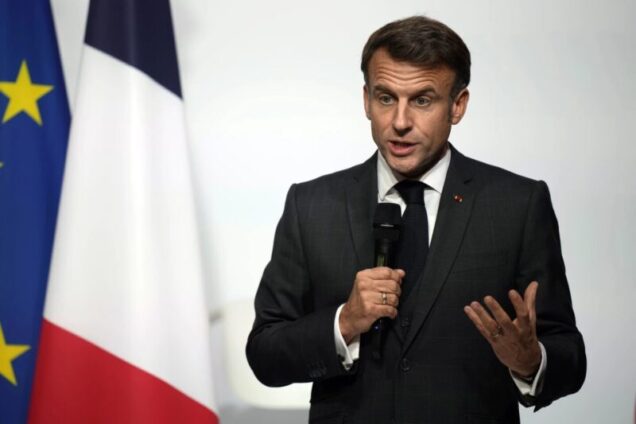
French President Emmanuel Macron has strongly advocated for a comprehensive approach to reparations for slavery, asserting that meaningful justice cannot be limited to financial payments alone. Speaking at the High-Level Consultative Conference on “Next Steps” under the United Nations Resolution on Enslaved Africans in Accra, Ghana, Macron outlined that reparative justice must fundamentally embrace historical truth, robust education, proper memorialisation, and the crucial restitution of cultural heritage. He underlined that discussions on this topic must acknowledge the broader responsibility of addressing the lasting legacy of slavery and colonial exploitation, emphasizing that "History cannot be reduced to a simple accounting ledger."
Macron elaborated that reparations can manifest in various forms, focusing on preserving historical memory and acknowledging the immense suffering endured by enslaved peoples and their descendants. He specifically highlighted the importance of scientific and historical truth, the construction of monuments, extensive teaching and research, and critically, the return of artworks stolen during those periods. As an example of resolving historical grievances, he cited France’s ongoing engagement with Haiti, stressing that reparations should never be seen as an endpoint or merely "a cheque written to bring the story to a close," but rather as an ongoing process to work out complex situations. He maintained that the history of slavery is a living legacy demanding continuous remembrance, dialogue, and action.
To further these goals, President Macron announced plans for France, alongside Ghana and other willing countries and institutions, to launch an international scientific initiative. This collaborative platform, bringing together researchers, historians, policymakers, and technical experts, aims to formulate concrete recommendations and support the global movement for recognition. A central pillar of this initiative will be the recovery and return of stolen artworks and cultural heritage items taken from enslaved and colonised societies, which Macron deemed essential for justice, reconciliation, and the restoration of cultural identity across affected nations.
Furthermore, President Macron urged major international institutions, including the United Nations, UNESCO, and the African Union, to actively support the global push for reparatory justice. He called for these organizations, along with regional bodies like the Caribbean Community, to align their mandates with the emerging global calls for historical accountability and redress, building a shared approach founded on knowledge, dialogue, and justice.
France's commitment to this cause extends to domestic initiatives. Macron affirmed that French higher education and research institutions would continue to support dedicated studies on colonial history and the legacy of slavery. These academic and research bodies are considered central to documenting, analysing, and teaching the realities of colonialism, ensuring this history is not lost over time. He also revealed plans for France to inaugurate a dedicated memorial site at Trocadero in 2027, the place where the Universal Declaration of Human Rights was adopted, specifically honouring the victims of slavery. This memorial will serve as a place of remembrance, education, and reflection, designed to ensure the experiences of enslaved people are passed on to future generations, while promoting a deeper understanding of human rights and historical justice. He proudly noted France's landmark 2001 law, which made it the first country to officially recognize the slave trade and slavery (from the 15th century against Africans, Amerindian, Malagasy, and Indian peoples) as a crime against humanity.
Macron's remarks were delivered amidst heightened global discussions on historical accountability, intensified by the recent adoption of UN Resolution A/RES/80/250. He commended Ghana’s leadership, under President John Dramani Mahama, for hosting the Accra conference, which serves as a vital platform for global leaders and experts to advance dialogue on reparatory justice and historical redress. Reaffirming France’s determination, Macron assured participants of his country's commitment to stand with them on this path of historical recognition.