Legislative Showdown: Senate's Crypto Bill Sparks Fierce Industry Debate
Ongoing legislative efforts to establish a digital asset market structure in the U.S. have faced significant hurdles, despite initial support from figures like Ripple CEO Brad Garlinghouse. The Senate Banking Committee's markup was abruptly pulled after Coinbase CEO Brian Armstrong publicly rejected the latest draft, citing a ban on tokenized equities, DeFi prohibitions, and the elimination of stablecoin rewards. Intense negotiations continue as lawmakers grapple with contentious issues and industry concerns.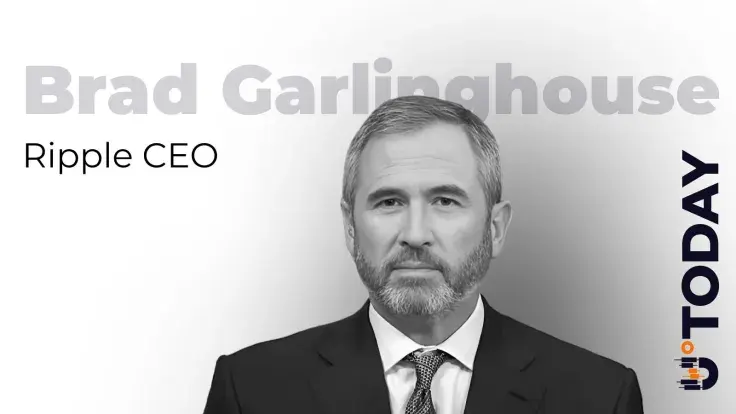
The legislative landscape surrounding digital assets in the United States has been characterized by intense negotiations and shifting proposals, notably centered on Senator Tim Scott’s market structure proposal, later refined into the Digital Asset Market Structure Act. Ripple CEO Brad Garlinghouse has been a vocal supporter of this initiative, hailing it as a "massive step forward" for the industry. Drawing from Ripple's own prolonged struggles with regulatory uncertainty, Garlinghouse emphasized that "clarity beats chaos," linking the bill's success directly to the broader success of the cryptocurrency sector.
Behind the scenes, the legislative process has been marked by significant activity. Just before a 5:00 PM deadline on a Wednesday, senators on the Banking Committee submitted an astonishing 137 amendments to the Digital Asset Market Structure Act. These amendments aimed to address critical "stumbling blocks" within the proposed legislation, including the regulation of decentralized finance (DeFi), ethical standards for officials holding digital assets, and the precise classification of digital commodities versus securities.
A particularly contentious issue that emerged was the "stablecoin rewards" standoff. This new restriction on stablecoin rewards, targeting yield or interest for merely holding idle stablecoin balances, quickly pitted the traditional banking sector against major crypto-native platforms, most notably Coinbase. While rewards tied to specific activities like staking or transacting might still be permitted, traditional banks heavily lobbied for this provision, arguing that interest-bearing stablecoins posed a "deposit flight" risk to the established financial system. This confrontation highlighted a deep divide within the industry, with Coinbase CEO Brian Armstrong declaring any restrictions beyond enhanced disclosure as a "red line" issue.
On January 14, 2026, Coinbase CEO Brian Armstrong publicly rejected the latest draft of the Digital Asset Market Structure Act, asserting that it was "materially worse than the current status quo." Armstrong's scathing critique, delivered just hours before the Senate Banking Committee was scheduled to vote, is widely credited with forcing an indefinite delay of the markup session. He outlined four primary "dealbreakers." First, a "de facto ban" on tokenized equities, which he argued would effectively stifle the burgeoning "Real World Asset" (RWA) space by making it difficult for companies to issue stocks or bonds on a blockchain. Second, the bill reportedly contained strict prohibitions on decentralized finance (DeFi) that, according to Armstrong, would grant the government "unlimited access" to user financial records, raising significant privacy concerns. Third, Armstrong claimed the bill could weaken the Commodity Futures Trading Commission (CFTC). Lastly, the draft amendments would eliminate stablecoin rewards, a critical revenue stream for platforms like Coinbase, which appeared to be a main sticking point for Armstrong's rejection.
Following Coinbase's public revolt and the bill's perceived "toxic" turn in the final hours, the Senate Banking Committee officially scrapped the market structure markup scheduled for the next day. The inability of the flurry of amendments to bridge the fundamental gaps between the anti-stablecoin banking lobby and the crypto lobby meant lawmakers were unwilling to proceed. Senate staffers are now expected to retreat to closed-door negotiations to attempt to resolve these complex issues.
The legislative journey of this bill has been lengthy and complex. Its origins trace back to the Financial Innovation and Technology for the 21st Century Act (FIT21), which the House passed with significant bipartisan support in May 2024, marking a historic moment as the first major crypto market structure bill to clear a chamber of Congress. Subsequently, lawmakers split stablecoin regulation into its own dedicated bill, the Guiding and Establishing National Innovation for U.S. Stablecoins (GENIUS) Act, which was signed into law on July 18. The remaining "Market Structure" language was then refined into the Digital Asset Market Clarity Act (the CLARITY Act). The House passed this version on July 17, sending it to the Senate. However, the Senate slowed down due to partisan disagreements over consumer protections. In December 2025, the Senate Banking Committee announced that the bill would be "punted" to 2026 to allow more time for bipartisan negotiations, entering its current contentious phase in early 2026.
Despite the recent setback and Coinbase withdrawing its support, the Polymarket odds for the bill's passage dropped but surprisingly remained above 50%. This suggests that some market observers view Brian Armstrong’s public rejection as a strategic maneuver or a bluff, anticipating that the White House may exert pressure on the Senate Banking Committee to reach a compromise with the industry. In a display of diplomatic optimism, Galaxy Digital CEO Mike Novogratz urged the industry to remain calm, characterizing the setback as a normal part of the "tense" final stages of lawmaking. He expressed confidence in the good faith efforts of senators on both sides of the aisle, believing they are genuinely working towards a resolution.