Legal Showdown: Court Ruling Threatens Democracy and NDC's Existence
A Federal High Court ruling in Lokoja to deregister the Nigeria Democratic Congress (NDC) has drawn strong condemnation from Chief Peter Ameh and the NDC leadership, who decry it as a judicial assault on democracy and question the court's integrity and finality of judgments. This controversy unfolds amidst other political developments, including the re-election of Governor Biodun Oyebanji in Ekiti State and significant APC wins in recent by-elections, along with ongoing PDP factional preparations for the 2027 general elections.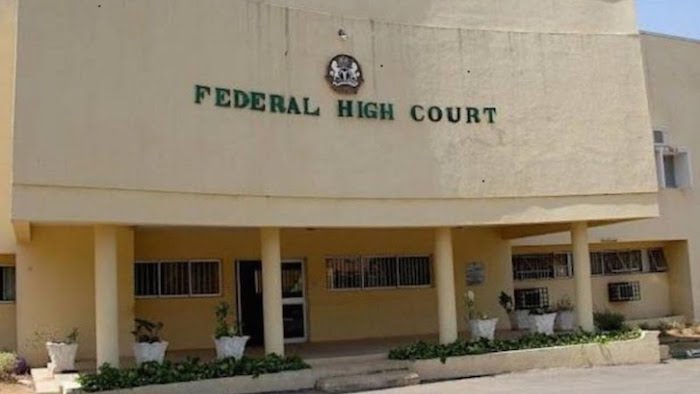
A recent Federal High Court ruling in Lokoja, which impacted the registration status of the Nigeria Democratic Congress (NDC), has ignited strong condemnation from prominent political figures, raising serious questions about Nigeria's judicial integrity and democratic process. Chief Peter Ameh, former national chairman of the Inter-Party Advisory Council (IPAC) and acting national chairman of the Coalition of United Political Parties (CUPP), vehemently described the court's decision as “a dangerous assault on democracy and the rule of law.”
Chief Ameh, in a statement released in Abuja, specifically reacted to the court's review of an earlier judgment that had recognized the NDC. He alleged that the ruling improperly reviewed the December 10, 2025, judgment, thereby undermining judicial independence and the finality of court decisions. Ameh expressed profound concern, stating, “It is laughable that a court would agree to deregister a duly registered political party simply because an unregistered, legally nonexistent party asked it to do so.” He further asserted that there is “deep system rot within the judiciary itself,” indicating a problem beyond executive interference.
According to Ameh, the application leading to this controversial review was filed by the Peace Movement Party (PMP), which he maintained is not a registered political party under Nigerian law and was not a party to the original suit. He emphasized that the Independent National Electoral Commission (INEC), initially the defendant, did not appeal the judgment within the prescribed three-month period. Ameh argued that the court became functus officio after delivering its judgment, meaning it had exhausted its powers over the matter and lacked authority to revisit substantive issues unless under exceptional circumstances such as lack of jurisdiction or fraud, none of which he believed existed to justify Justice Isa Dashen reviewing his own judgment. He further questioned the timing, noting the review application was entertained more than six months after the original judgment, particularly after the NDC had already concluded its primary elections and produced candidates nationwide, labeling it a “clear case of judicial overreach.”
The Nigeria Democratic Congress (NDC) itself has rejected the Lokoja ruling. In a press conference held in Abuja, Senator Moses Cleopas Zuwoghe, the NDC National Chairman, declared the party's intention to appeal the judgment. Zuwoghe firmly stated that the NDC had not been deregistered and assured the public and its candidates that the party remained on course. He condemned what he perceived as efforts to shrink the democratic space and stifle opposition voices, asserting that political platforms should be allowed to participate in the 2027 general election process, which is already underway. He added that if the Peace Movement Party was genuinely affected by the initial judgment, its only lawful recourse was to appeal, a window that has since closed, making the attempt to upturn the verdict via a motion an “outright abuse of court process.”
Both Ameh and Zuwoghe suggested political motivations behind the court's decision, viewing it as an attempt to weaken opposition parties ahead of the 2027 general elections. Ameh metaphorically described the judgment as “the hand of Esau and the voice of Jacob,” attributing it to a “failed APC government that is petrified of a free and fair election and is desperate to reproduce the rejected status quo through the 2027 general elections by strangulating virile opposition.” He called for civic action, including peaceful rallies and international attention, to resist what he termed judicial manipulation.
Meanwhile, other significant political events unfolded across Nigeria. In Ekiti State, the incumbent governor and All Progressives Congress (APC) candidate, Biodun Abayomi Oyebanji, secured a historic back-to-back re-election victory in the 2026 governorship election, polling 319,224 votes against Wole Oluyede of the Peoples Democratic Party (PDP) and Oluwadare Bejide of the African Democratic Congress (ADC). Oyebanji promised continued service with courage and humility, though both opposing candidates rejected the outcome, alleging irregularities, vote-buying, and intimidation. INEC subsequently presented the certificate of return to Governor Oyebanji and his deputy.
Similarly, by-elections saw the APC winning multiple contests. Asogwa Ikeje Israel (APC) emerged winner for Enugu North, Danladi Envulu-Anza (APC) for Nasarawa North, and Dayo Faduyile (APC) for Ondo South senatorial seats. Rabiu Shuaibu (APC) won the Dawaki Kudu/Warawa federal constituency, and Rabiu Aiki (APC) clinched the Zuru state constituency. Notably, Olaka Nwogu (PDP) won the Rivers South-east senatorial contest. Four newly elected senators, including Asogwa, Envulu-Anza, Faduyile, and Nwogu, were sworn in by the President of the Senate, Senator Godswill Akpabio.
Adding to the political dynamics, the Peoples Democratic Party (PDP) witnessed factional activities in preparation for the 2027 general elections. The Kabiru Tanimu Turaki-led faction presented certificates of return to 28 governorship candidates, 109 senatorial candidates, 360 House of Representatives candidates, and 993 House of Assembly candidates. Concurrently, the Nyesom Wike-backed PDP faction also presented certificates of return to its governorship candidates during a National Executive Committee (NEC) meeting in Abuja.