Jane Austen's Etiquette Unveiled: Decoding Social Calls in Regency England
Discover the fascinating historical meaning of 'calling' in the Regency Era, where it signified a crucial social visit rather than a telephone conversation. This practice, essential for networking and maintaining social standing, was governed by strict rules of etiquette, specific timings, and the elegant use of calling cards. Uncover how these 'morning calls' profoundly shaped social interactions and community life.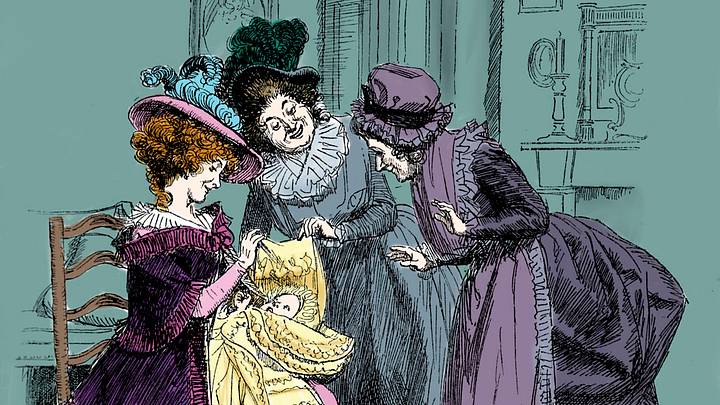
Before the widespread availability of the telephone in the early 20th century, people had been 'calling' each other for centuries, a practice whose meaning fundamentally shifted by the Regency Era. During this period, 'to call' signified a physical visit, a social custom vital to networking and maintaining one's standing. As depicted in Jane Austen's *Pride and Prejudice*, Mrs. Bennet's insistence that her husband 'call on' Mr. Bingley highlights the era's reliance on these social structures, often referred to as 'morning calls', which were veiled opportunities for strategic introductions and connections.
The etymological roots of the word 'call' trace back to the Proto-Germanic root 'gal', meaning to shout or cry out. This evolved into the Old Norse 'kalla', maintaining a similar vocal meaning. By the mid-1200s, the English word 'callen' was used to denote crying out to a specific person, such as calling for someone's attention. The significant semantic shift occurred in the mid-1700s, influenced by French social customs.
France popularized the use of a card when visiting, stating the visitor's name and allowing the host to decide on receiving guests without an in-person rejection. These became known as 'calling cards' because their primary purpose was to gain the host's attention. England soon adopted this trend, solidifying 'making a call' to mean a physical visit, whether accompanied by a calling card or not. This practice became deeply embedded in the social fabric of the Regency Era.
Regency Era society dictated strict rules for these 'morning calls'. Individuals of a lower social class were expected to await a calling card from those of a higher standing before initiating a visit. However, calling within one's own class was permissible. Newcomers to a town were to wait for established neighbors to make the first call. Adherence to time limits was also crucial; a social call typically lasted around 15 minutes and was strictly not to exceed 30 minutes. The essence of these calls was to foster connections through brief conversations, ensuring guests departed before imposing on the host's day.
Despite their designation, 'morning calls' typically took place in the afternoon, with the optimal time generally considered between 1:00 and 4:00 pm. Understanding the host's daily schedule was paramount to avoid rude interruptions, such as during their midday meal. Knowing when to 'take your leave' was equally vital. If a visit occurred at an inconvenient time, but the host was too polite to decline, the visitor was expected to depart swiftly. Furthermore, if other visitors arrived while one was present, it was customary to make one's goodbyes and leave shortly after their arrival, preventing the host from being overwhelmed by too many callers. Conversation topics during these calls were kept light, enabling an abrupt conclusion and departure as soon as any hint of inconvenience was perceived.