Is There Such a Thing as Dignity of Labour Or We Just Judge Careers We Don’t Understand?
Is the statement dignity of labour real or is it a social construct? Let's examine the views and perception of career shaming, class bias, and how we value work in the 21st century.

Is there such a thing as dignity of labour with no judgement or unfair perception?
I'm asking because these days, people are usually judged whether quietly or not based on the kind of jobs they do, and not regarding the fact that it is legal, puts food on the individual's table and does not bring harm to anyone.
If you are a guy and can carry out a social experiment, try and walk into any barbershop filled with guys or maybe your friends and just announce to them that you have taken on a side job as a bricklayer for extra income and look at their reactions.
Do this again and tell them that you got a contract as a building construction expert and that would be your side hustle to get extra income and nobody will actually ask you what you are really expertising on.

The first scenario is usually with laughter and gimmicks that are usually immediate, unfiltered, and deliciously sharp.
“Bricklayer? You sure say na serious hustle be this so?”
“You go fit cope with the work so?”
The tone is usually playful from both men and women sef, but the subtle direction of this teasing is real and very clear: The choice of work is subject to ridicule, not respect.
Interestingly the second scenario is subject to applause and congratulatory, even if they don't know that the two mean the same thing, just like LinkedIn people, no shades intended tho.
Now imagine a reversed case for a lady; let's say a lady, let's call this lady Kemi.
If Kemi is seen carefully applying eyelash extensions for a client, her friends and others around would actually celebrate her for being an “independent girl” and showing the “boss babe energy” all this is to applaud her hustle.


There is no one question if her choice of work or anything. No one is teasing her expertise. In fact, there was a well-worn slang ready for that: BossBabe.
Now this is not a gender war article or trying to talk about inequality of any sort, it's based on the public perception of careers of both genders in society.
And that brings to me ask the question bothering me and it is barely whispered or not even mentioned at all, but everywhere you to, it is implied intentionally or not:
Is dignity of labour real or is it just a social construct we use to feel better about some jobs and look down on others?
The Illusion of Career Hierarchy
There is nothing inherently wrong with choosing a career simply because you enjoy it, because it pays the bills or because it fulfills you.
But somewhere along the line, society developed an invisible ranking of jobs and most of the time, that ranking says loud and clear: some work is respectable, other work is not.
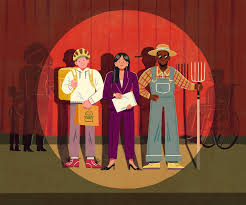
Let us be frank: the word “dignity” is often reserved for jobs that come with a tie, a desk, a title, or an office with a view.
Anything outside that neat office cubicle? Well, that must be inferior. Right?
Wrong, yes it is very wrong?
Ask a farmer feeding a village of hungry people whether his labour is dignified. Ask a waste collector whether sanitation is beneath anyone. Ask a health worker during a pandemic whether their work is meaningless. They will show you dignity in sweat, commitment, and contribution.
In fact, agriculture, the backbone of food supply in the world, is so undervalued that many young people refuse to touch it, yet it is the lifeline of every nation.

Without food, there is no work, without work there is no economy. A hungry man cannot focus, plan, or grow. Hunger collapses potential the way termites collapse that old veranda door you’ve been meaning to fix.
So if dignity of labour truly exists, it should apply to every job that helps sustain life, order, and society.
But the reality is that dignity is often assigned, not inherent and assigned by social perception, not by actual worth.
When Career Judgement Becomes Classism and Mythmaking
Why is it that Kemi’s “eyelash extension hustle” or relatable scenario about ladies receive praise, while the earlier scenario about bricklaying is usually met with laughable comments and perception?
Part of the answer lies in gender expectations and perceived social status.
In many circles, a woman doing beauty work is glammed up as “entrepreneurial.” She is creative, independent, feminine, and stylish.
A man doing physical labour? He is labelled lacking ambition, directionless, or “not serious.”
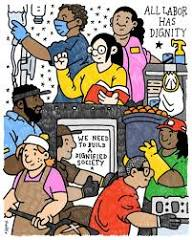
The irony is loud when this same crowd dreams of a partner with a “rich man or woman” label, someone whose job may be a desk job, a title, or a small contract, regardless of the actual contribution or worth.
Then there is the shaming of 9-to-5 workers. “Eh, Monday to Friday? I nor fit do that kind work oo.”
Yet the irony intensifies when you realise some 9-to-5 professionals earn astronomical incomes.
According to reports and as seen in various sectors of the economy some of the highest paid salaries in Nigeria are in specialized engineering, banking executives, and multinational technology firms. These individuals are involved in the same 9-to-5 work being ignored.
And fracture that conversation to include Meta, which reportedly acquired employees with compensation packages reaching into six figures (in dollars) for certain roles.
These are not “less serious” jobs by society’s own standards, yet the very same society often disdains the idea of stable employment.
Everybody wan just pursue remote work.
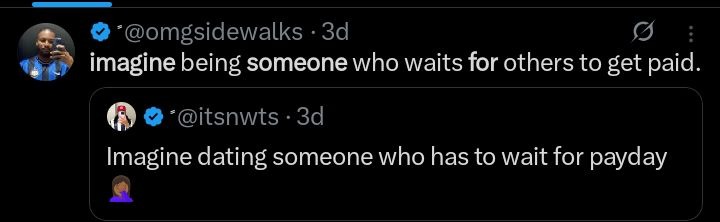
People mock “waiting for payday” as if it is a character flaw, yet they neglect how money discipline, long-term savings, pension plans, and stable salaries contribute to wealth over time more effectively than short-term trends chasing social media hype.
Using job as a shorthand for character not only breeds classism, it also distorts how we value people.
If you wouldn’t mock someone for taking the bus because they want a car, then why mock someone for taking a job because it serves their goals?
If you don’t own a car yourself, the judgment becomes grotesquely ironic. Jobs are not merit badges; they are means to sustain dignity, not labels of worth.
Career, Contribution, and the Real Meaning of Respect
Here is a truth that I have come to understand and only few people admit it: people don’t shame careers they shame what does not fit into their preconceived standards.
If you don’t understand what bricklaying actually demands, strength, precision, endurance, skill, then it looks easy.
If you don’t know how eyelash extensions require steady hands, creativity, and customer management, it looks trivial.
If you have never planted a field, you might not see how agriculture is the foundation of civilization.
Because the fact is that everywhere you look, work is work and dignity arises from effort, contribution, and impact, not from social approval.
The idea that some jobs are inherently superior is a modern myth, born not from economic logic but from social ideology.

In this age of social media, where career status is often illustrated with titles, lifestyle photos, and hashtags, the perception of a job overtakes the reality of the work.
But to build a society where everyone’s contribution matters, we must reset the narrative:
Respect is not earned through prestige or titles, it is earned through responsibility and contribution.
Value is not determined by opinion, it is determined by impact and outcomes.
Dignity is not a social privilege, it is a human right inherent in every honest effort.
If we learn to see work for what it actually does, not what status it supposedly confers, we will start to value everyone whether they are farmers, builders, cleaners, artisans, transporters, tech workers, creatives and yes, even eyelash artists with equal respect.
And we might begin to understand that income, not impression, is what sustains families, builds economies, and shapes futures.
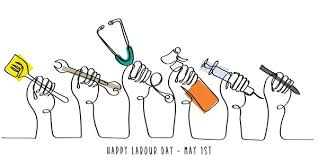
Conclusion: The Work We Do Should Define Us Not the Judgement of Others
So the next time someone sneers at a career choice about you or someone else, take your time and ask them, if their judgement is based on true concern or on perception?”
Also ask them if the job in question contributes to society or not?
And more importantly if anyone asked for their paralyzed and bedridden opinion.
This is because society cannot applaud some work and dismiss others.
If dignity of labour is real and it must be, then it must apply to every honest way of earning.
Because in a world where food has to be grown, houses built, health maintained, transport operated, and art created, every job matters.
Some earn more, some earn less, but every single role out there is part of the engine that keeps society functioning.
And until we recognize that, the word dignity will remain a label we assign selectively, not one we truly understand.