Iran War Fallout: UK Businesses Brace for Economic Storm
The Iran war's escalating fallout is forcing UK businesses to halt investment and hiring plans, impacting the economy amid rising costs and global uncertainty. While initial GDP growth surprised, surveys reveal a widespread shift towards cost management, with job creation under threat. However, potential "bright spots" like reshoring production could emerge.
The worsening fallout from the Iran war is compelling businesses in the United Kingdom to reconsider and frequently halt their investment and hiring strategies, leading to a new era of political and economic uncertainty.
More than two months since the commencement of the US-Israeli conflict with Iran, comprehensive surveys of UK employers reveal a significant shift in corporate priorities from growth to rigorous cost management.
This change is driven by escalating operational expenses and pervasive global instability, which collectively erode business confidence.
According to a detailed survey conducted by the accountancy firm BDO, a substantial majority, over half of medium-sized businesses, have identified soaring energy and fuel costs, compounded by persistent supply chain disruptions, as their foremost challenges in the wake of the intensifying Middle East conflict.
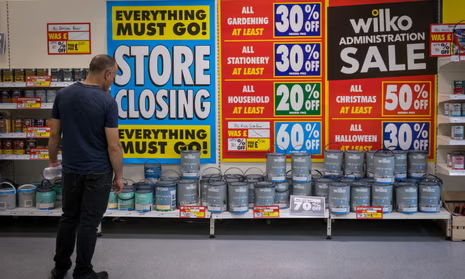
Concurrently, an environment of heightened domestic political uncertainty, marked by Keir Starmer’s Labour government preparing for a potential leadership challenge, further dissuades business leaders from committing to new investments within Britain.
Richard Austin, a partner at BDO, articulated this predicament, stating that UK businesses are not focused on expansion but are instead "struggling to absorb the latest economic shock in an uncertain global and political backdrop."
In response to this growing economic concern, the Chancellor, Rachel Reeves, has traveled to Paris to engage with G7 finance ministers. The objective of these high-level meetings is to coordinate international strategies among the world’s leading economies to mitigate the extensive economic fallout stemming from the war.
Reeves is also anticipated to unveil the subsequent phase of support measures designed to cushion British households and businesses from the impact of the crisis.
Despite these efforts, business leaders maintain a cautionary stance, warning that the economic damage originating from the Middle East conflict continues to escalate steadily.

Further corroborating these trends, a separate report issued by the Chartered Institute of Personnel and Development (CIPD), the authoritative body for HR professionals, highlighted that UK employers are decidedly prioritising cost management over expansion initiatives.
Nearly 60% of employers specifically cited cost containment as their primary focus. This emphasis is a direct consequence of rising energy and supplier bills, which are exacerbated by increased labour costs resulting from last year’s uplift in employer national insurance contributions and mandatory increases in the legal minimum wage.
The labour market, too, shows signs of strain. A report from the Recruitment and Employment Confederation (REC) indicated that job creation is under significant threat.
The number of vacancies across the UK in April experienced a notable decline of 7.7% compared to March, settling at 711,733, and also registering a 5.6% decrease from April of the previous year.
While job postings for specific roles such as pilots, travel agents, and train drivers saw the steepest declines, there was an uptick in demand for nannies and au pairs, sales executives, and couriers.

Neil Carberry, the chief executive of the REC, observed that "The labour market is entering a more unpredictable phase after a solid start to the year." He attributed the easing momentum in April to a "growing sensitivity to the conflict in the Gulf" and the timing of the Easter holidays.
Carberry warned that the combination of global conflict and "sudden domestic political uncertainty" could further suppress hiring activity in the forthcoming months, leading to a "more uneven hiring environment" where some firms retrench while others continue to meet underlying demand.
Despite these prevailing challenges, BDO's analysis identified potential "bright spots" within the UK economy amidst the Middle East conflict. Some companies are proactively seeking to fortify their supply chains in light of geopolitical volatility.
Almost a third of surveyed business leaders expressed intentions to prioritise UK-based suppliers, and an additional 28% are actively considering relocating production facilities to the UK or closer to home.
This strategic shift could provide a significant stimulus to British manufacturing sectors.

Remarkably, the British economy has, to some extent, defied initial predictions of a weak first quarter despite the escalating ramifications of the Iran war.
Official figures released by the Office for National Statistics (ONS) recorded a gross domestic product growth of 0.3% in March.
This outcome suggested that the Iran war, which commenced on the final day of February, did not immediately or as severely impact business and consumer activity as initially anticipated, even with the surge in oil and gas prices caused by the closure of the Strait of Hormuz.
However, economists largely remain pessimistic regarding the economic outlook for the remainder of the year.
They suggest that a portion of the growth observed in the first three months might be attributed to businesses and consumers preemptively stocking up on essential goods, fuel, and raw materials in anticipation of potential supply shortages and impending higher borrowing rates.
The overall economic landscape for the UK thus remains fraught with uncertainty, balancing resilience with significant external pressures.