Imminent Danger: California's San Andreas Fault Primed for Catastrophic 'Big One'
California's San Andreas Fault is significantly overdue for a major earthquake, dubbed the "big one," with recent studies of the Myanmar earthquake suggesting a potentially catastrophic impact. Experts warn of up to an 8.3 magnitude quake, capable of causing over $200 billion in damage and widespread infrastructure failure, highlighting the critical need for preparedness.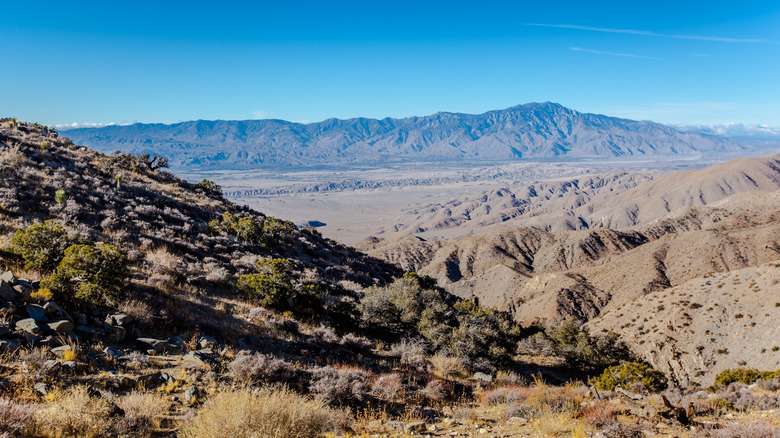
California's notorious San Andreas Fault, an 800-mile-long fracture in the Earth's crust, is widely considered overdue for a significant seismic event, colloquially known as the "big one." The ever-present threat of such a catastrophic earthquake looms large over the Golden State, a reality underscored by recent global seismic activities.
Scientists have been particularly alerted by the Myanmar earthquake, which registered a magnitude of 7.7 in late March 2025. This powerful tremor, occurring along the Sagaing Fault—a geological feature often compared to the San Andreas Fault has provided crucial insights into the potential severity of future earthquakes in California. A study published in the Proceedings of the National Academy of Sciences of the United States of America (PNAS) revealed that the Myanmar event suggests that subsequent ruptures along the San Andreas Fault could be far more intense than previously anticipated, potentially unlike anything ever witnessed.

Photo Credit: Popular Science
Jean-Philippe Avouac, one of the study's authors fromCaltech, explained that "Successive ruptures of a given fault, even as simple as the Sagaing or the San Andreas faults, can be very different and can release even more than the deficit of slip since the last event." This implies that while the exact timing and magnitude of the "big one" remain unknown, the Myanmar earthquake offers a sobering glimpse into the potential scale of damage. The Earthquake Country Alliance estimates that the San Andreas Fault is capable of generating an earthquake with a magnitude of up to 8.3.
California's largest recorded earthquake along the San Andreas Fault was the 1857 Fort Tejon earthquake, believed to have reached a magnitude of 7.9. While it resulted in two fatalities, its impact was less devastating than what a modern-day "big one" could entail. The United States Geological Survey (USGS)developed a ShakeOut scenario, which projects that a major earthquake in Southern California could cause over $200 billion in damage.

Photo Credit: Pinterest
Such a catastrophe would have profound consequences, particularly for densely populated areas like Los Angeles. Infrastructure would be severely compromised, leading to widespread power outages, disruptions in cell service, and overwhelming challenges for first responders. For context, the 1994 Northridge Earthquakein the Los Angeles area, though not caused by the San Andreas Fault, registered a magnitude of 6.7 and resulted in the destruction of freeway bridges and left thousands homeless.
The purpose of these insights is not to induce fear but to emphasize the critical importance of preparedness. Sarah Minson of USGSadvises, "Don't go anywhere. Don't run outside. A huge number of the injuries that occur in earthquakes are people stepping on broken glass or trying to run during the shaking and falling down." Understanding and implementing safety protocols during an earthquake are essential for minimizing harm.