If This Happened to Your President, Would You Believe It?
The Venezuelan president has been captured by the US government led by Donald Trump. What does this mean for the country and the talks of global power? Views are usually different. Read this and see how modern audiences accept narratives before verifying facts.
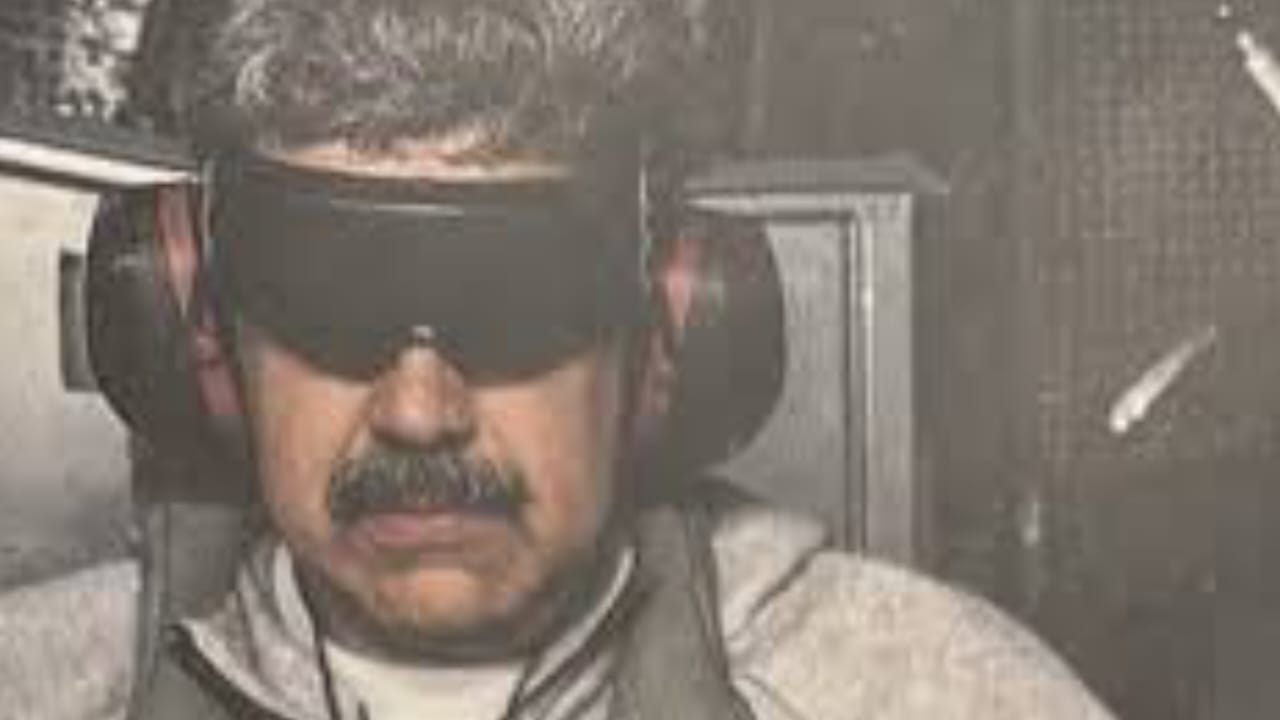
There are things you would hear on the news or come across on social media that you would say is not possible and maybe not true.
There are others that you would hear that you would want for it to be true, even if you're even seeing the confirmation of it on the news, your belief and sentiments would want it to happen over and over again.
The headline on the news and across various blogs has been like something on fire with the recent news, “The Venezuelan president has been captured by the US government led by Donald Trump.” Since the announcement of the operation, screens have been lit up and various timelines refreshed to current updates of what is really happening.
Some Venezuelan citizens—at least according to a video clip on Youtube—appeared to rejoice with a mix of fear of uncertainty, while others are still at a crossroads, fully confused of what to expect and do.
The interesting thing about this is the speed at which this news is circulating, many individuals are just simply sharing it. In a digital moment measured in seconds, claims like this that would normally demand verification before actually spreading have traveled round the world without permission on various borders of the world.
But just hold on and pause for a moment. A sitting president captured by another sitting president?
By what authority, under which law, through what process?
Where, in this dramatic leap, do democracy, sovereignty, and rule of order stand, that is if they stand at all or do they only matter when they flatter certain narratives?
Just to be clear, the whole point of writing this is not about celebrating or condemning Venezuela’s leadership or the action of the US government.
This is not a defense brief about what truly transpired during the operation nor is it a prosecution memo on the Venezuelan president, those ones nor concern me.
In plain terms from me to you, this is a stress test of how democracy is understood, of how modern audiences process power and authority, and of how news now behaves when public spectacle outruns scrutiny.
Beneath all the noise that has been on the internet for a few days now, is a quiet question that needs to be asked: are some countries bigger than others—bigger than law, bigger than process—without us even needing to say “world power” out loud?
Belief Is Faster Than Truth
Whether you agree or not, belief is way faster than the truth itself. What I mean is that the narration that people want to be in the public is faster than the truth itself.
Dramatic political claims travel because they feel complete and collectively agreed upon. All these claims arrive pre-packaged with emotion, outrage, satisfaction, relief, and fear, so the work of thinking feels unnecessary in this context.

Many people do not read beyond the headline, and a smaller number of people have actually taken their time to ask and know what actually happened and why it happened.
Political loyalty and fear play their parts, sentiments and confirmation bias does the rest. If a story flatters what we already believe about a country, a leader, or a system, it slides past our internal fact-checker.
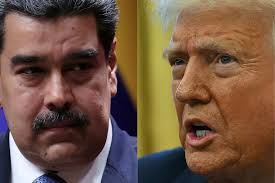
Social media, in its usual way, rewards this behaviour, speed is incentivized, and accuracy is optional because people are actually too lazy to verify information. The algorithm crowns the quickest reaction, not the most careful reader.
In this view, belief has become more of a political identity than anything else. People no longer ask questions like Why did all this really happen. They actually intuitively check if it suits their narrative or, worse, satisfies their sentiment. Laws begin to feel like laws only when they serve a story we already accept.
As with most news before now, rumors have always quickly filled gaps that we ignore and do not fact-check. There are also whispers of ulterior motives flying left, right, and center—Venezuela’s vast oil reserves, among the largest in the world, and its deposits of other valuable minerals.
Maybe the US government is after it and wants to infiltrate the Venezuelan economy; all this we don't know for sure, as it is speculation and unverified news.
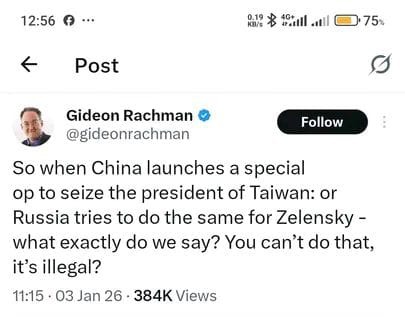
Also, let's face the fact here: the US government captures a sitting president. Is this a display of power, and what does it actually mean? Because if it were like another world power that did this, let's say China or Russia, the story would have been different based on accountability and individuality of sovereign states, but that is not in my power to judge.
If It Were Your President
Reactions have been predictably different in the country of Venezuela and across the globe. Some have applauded the narrative without question, and others have opposed it outright without a second thought.
Others are saying it is a punishment, but without actually pausing to ask how punishment is meant to work between sovereign states. Who lives in this world without asking why something is done?
Now flip the frame. If this were your president, would you be happy about it? Would you accept the fact that another country could decide, announce, and execute accountability on your behalf? Or would the questions arrive one at a time? All of this without sentiments or apathy towards politics.
Who is this man at the center of the claim, and I mean the Venezuelan president, and what did he actually do that would warrant such an action? Even if allegations exist, even if wrongdoing is suspected, does accountability skip institutions?
Is it not the responsibility of a nation’s parliament, courts, and citizens to hold their leader to account? Or do personal sentiments now replace the rule of law in interactions between sovereign states? Or can a nation interfere in another nation's affairs?
What feels like “justice” from afar actually begins to look like something that needs to be done until it actually knocks on your door without warning.
Truth in the Age of Performance
Permit to say that politics today is staged, branded, and marketed. Competing stories are all filling the air at once—each confident, each urgent, each claiming clarity and an agenda that needs to be fought for.
Influence is usually exercised through agenda-setting: what is emphasized, what is omitted, what is repeated until it feels settled. Outrage and apathy become tools to fuel this scenario, and the outcome can be predicted by those who play the game.
Because the plain truth is that belief in or hatred for a public figure can be weaponized without ever settling the facts.
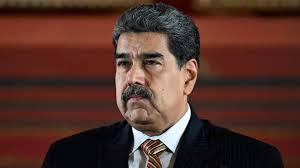
To be clear, this is not an endorsement of Venezuela’s leadership. I do not take part in any side of this coin of a matter. This is just a refusal to abandon facts, because it seems to look like verification has slipped behind emotion and sentiment towards politics.
Headlines now do the work that reporting used to do; nobody actually moves past the headline to read the full story, and many institutions struggle to regain trust once lost.
Many readers no longer ask which source is credible; they just look for which version feels right to them.
Does truth still matter, or has perception replaced it? If the answer is perception, then democracy has now become a synonym for performance, and accountability has only become a stage for playfully painted outcomes.
The only antidote for this is slower consumption: reading beyond headlines, checking primary sources, distinguishing sanctions and indictments from arrests and captures, and refusing to outsource thinking to virality.
Conclusion
In summary, just know that this is not about proving or disproving the morality of a viral claim. It is about questioning what happens and insisting on sourcing real information before belief hardens into certainty.
It is also about power, who wields it and who we allow to wield it, because maybe if it were another country that captured the Venezuelan president, irrespective of what he has done, they would have been backlashed for infringing on the sovereign rights of a state.
Because the truth is, belief is easily activated and quietly censored, often without believers realizing it has happened. And so it is important to keep our core question in mind, this time heavier and uncomfortably personal: are some countries simply bigger than others?
Who truly controls the global stage, a collective system painted by institutions like the United Nations, or a select few whose power feels right and is not questioned?
There is no neat ending here, only a responsibility to pause and ask about. And to also remember that when headlines feel too powerful to question, that is precisely when questioning matters most.