If Every Crisis Is Breaking News, Why Does Nothing Feel Broken Anymore?
Breaking news no longer breaks through. Audiences have grown numb to headlines amid misinformation, shrinking attention spans, survival instincts, and broken government promises, raising urgent questions about what journalism must become to matter again.
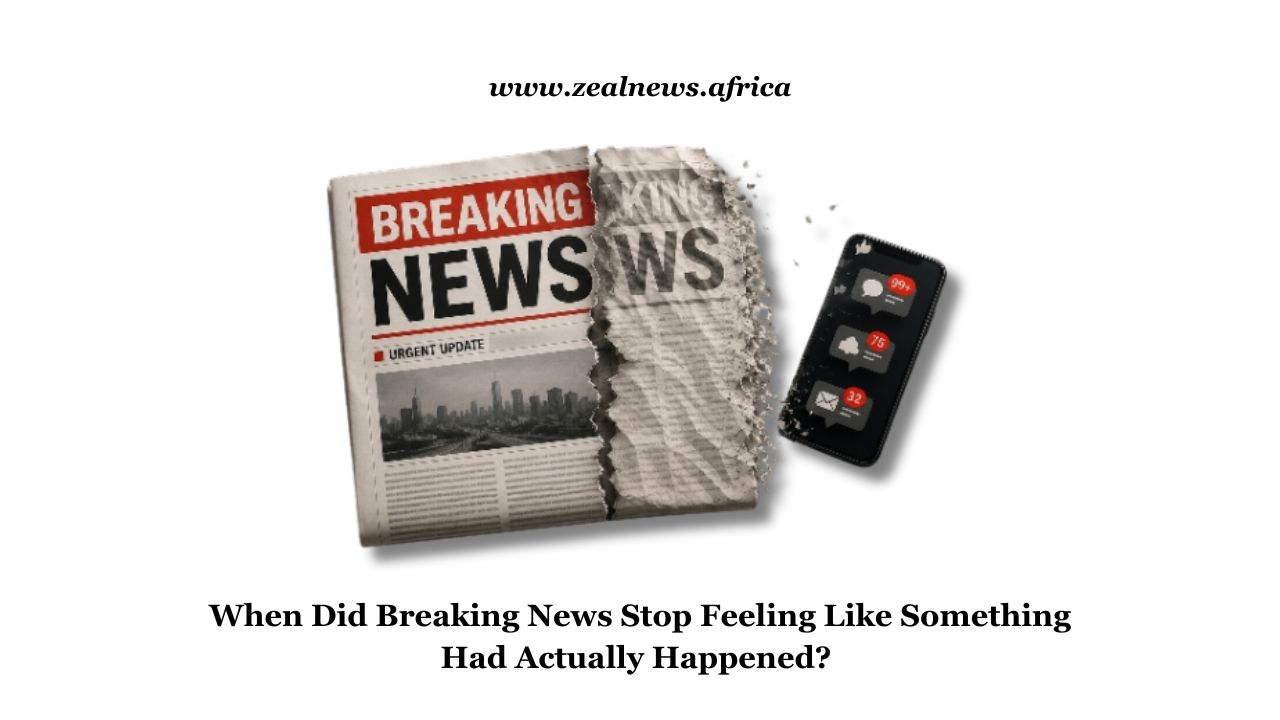
Once upon a time, breaking news did actually break something, or maybe not
Ngozi always hears the notification from her phone before she even gets to see what it's about. The sound still announces itself with urgency, but urgency has become one of the cheapest things on the internet.
Her phone buzzes every time it's in her purse as she either idles through Lagos traffic, at times while she is at home or at work, and without looking, she already knows what it will be.
It would probably be another headline, another crisis, another announcement competing with hundreds of others. News no longer arrives as an interruption. It arrives as routine.
She swipes it away without reading it, the way she swipes away most things now, and turns the radio down instead of up. A few years ago, she would have reached for that phone like it was oxygen. Today, it barely registers above the noise.
Once upon a time, breaking news was actually breaking news because it interrupted ordinary life. It carried the feeling that something had genuinely changed. You heard a story for the first time and would notice that something changed in the economy, or maybe there was a major government decision.
There was something optimistic to hear, and even when the news was bad, people still listened with the hope that things would eventually get better. Maybe that hope was not always justified, but at least it existed. There was still some relief in believing that tomorrow or the next day could be different.
But today? Is news still breaking news, or has it become another catalogue of carefully packaged headlines competing with every other notification, reel, meme, and message waiting on Ngozi's phone?
The Cultural Moment That Quietly Died

There used to be a shared gasp that accompanied major news. A newsroom would break a story, and an entire country would pause long enough to absorb it before deciding what it meant.
That collective moment has thinned out into something scattered and private, absorbed alone through a screen and forgotten within minutes.
Over the years, news has not disappeared. Its ability to command sustained public attention has. From political apathy to declining interest in actual news, more people now prefer getting information from social media than from traditional news outlets like newspapers, television, or even radio.
What caused this cannot really be pinned to one thing. Too much bad news has made people numb. Too much talking has made urgency feel ordinary.
Every day brings another crisis, another promise, another scandal, another outrage, until extraordinary events begin to feel strangely expected. Ngozi does not scroll past headlines because she does not care.
She scrolls past them because caring, every single time, has become too expensive, and she can't afford that at the moment, not with everything going on in her head.
The Great Migration And The Noise That Followed

Social Insight
Navigate the Rhythms of African Communities
Bold Conversations. Real Impact. True Narratives.
Somewhere over the last decade, audiences have quietly migrated. The front page gave way to the timeline, and the newsroom now competes with influencers, comedians, celebrities, and anonymous accounts for the same few seconds of attention.
At the same time, misinformation now spreads faster than verified reports, making it harder to know what is true and what is simply trending.
A rumour dressed in confidence now travels faster than a verified report wrapped in context buried under three paragraphs.
This migration did not happen in isolation. It happened alongside a growing problem of low attention spans. Social media and mobile devices changed how people consume information, making it harder to concentrate on stories that require time and depth.
A five-minute explainer now feels like a demand. A documentary feels like homework. The algorithm rewards the headline, not the reading, and people simply learned how to live inside the reward and not the process.
When Promises Run Out, So Does Attention

There is another reason people stopped leaning in: repeated promises eventually taught many citizens that headlines do not always become reality.
Ngozi has heard some particular promises over and over again, in a different administration, delivered with a different smile.
Political apathy is often mistaken for indifference, laziness, or even disinterest. More often, it is disappointment repeated often enough to become a habit.
Economic hardship quietly changes the hierarchy of attention; you cannot expect someone who is fighting to survive today to be deeply concerned about tomorrow's headline.
Some people are struggling just to make life comfortable. Some are thinking about their next meal so they do not go to bed hungry, and survival has a way of shrinking tomorrow until today is all that matters.
The News You Can No Longer Afford To Read
The gradual replacement of thoughtful journalism, documentaries, long-form reporting and meaningful public conversation with entertainment, clout chasing and endless distraction has accelerated the shift.
The list, honestly, is endless. Ngozi's phone is overflowing with content. What it rarely offers is sustained attention.
If this is the media environment we have built, then journalism cannot pretend nothing has changed. Maybe breaking news can never recover the cultural power it once had. The world simply moves too quickly for that.
But journalism can still break something else. It can break through confusion with clarity, through noise with context, and through cynicism with credibility.
It is to make accurate, meaningful information worth slowing down for again. Ngozi will still swipe past most of what lands on her screen tonight. The task is no longer to make her look. It is to earn the look back.
Social Insight
Navigate the Rhythms of African Communities
Bold Conversations. Real Impact. True Narratives.
The next headline that matters will probably not be the first one people see. It will be the one that restores enough trust, clarity, and relevance to make them stop scrolling long enough to care again.