Iceland Shakes Europe: 'No' Vote Deals Crushing Blow to EU Enlargement Dreams
Iceland has voted 'No' in a pivotal referendum, rejecting the resumption of negotiations to join the European Union. Despite deep existing ties, concerns over national sovereignty and fisheries control proved decisive, signaling a setback for Brussels' enlargement ambitions.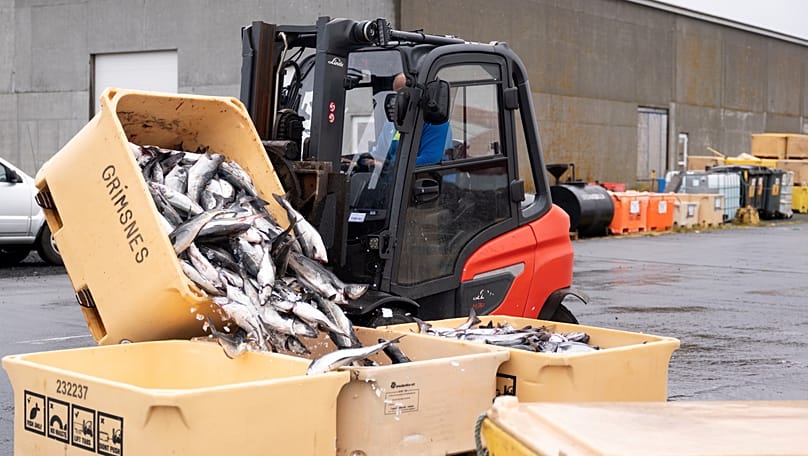
Icelanders have narrowly rejected the reopening of negotiations on joining the European Union in a closely watched referendum, with officials confirming a "No" victory. The final results showed 118,040 votes (52.8%) against resuming talks, while 105,399 votes (47.2%) supported the proposal. A total of 225,031 votes were cast, indicating a robust voter turnout of 82.5%, reflecting widespread public interest in the matter. This outcome effectively shelves the EU debate in Icelandic politics for at least two more years, closing the door on full accession for the foreseeable future, despite Iceland already being deeply integrated with the bloc.
The referendum revealed a stark urban-rural divide across the country's six constituencies. Initial partial results, heavily drawn from the capital, Reykjavík, showed the "Yes" camp comfortably ahead. Reykjavík North recorded 57.5% "Yes" votes, and Reykjavík South saw 54.5% in favor of reopening negotiations, aligning with a broader European pattern of greater support for political and economic integration in major cities. However, as rural and coastal constituencies began reporting after midnight, the picture shifted dramatically. The Northwest, Northeast, and Southern constituencies delivered strong "No" majorities, often exceeding 60%, with fishing communities demonstrating profound opposition to EU quota-sharing rules. The turning point occurred around 7 am CET when the northern agricultural region, a traditional bellwether, reported a 60/40 split in favor of "No," pushing the national count into "No" territory. The lead never fully reverted, culminating in the Southwest constituency, the second-largest, confirming the national "No" vote around 11:30 CET.
Iceland's journey with EU membership aspirations began after the 2009 financial crisis pushed its economy to the brink, prompting the nation of roughly 400,000 people to seek EU membership. Accession talks, however, stalled in 2013 when a euroskeptic coalition took power. Prime Minister Kristrún Frostadóttir's current Social Democratic-led government revived the question this year, arguing that an increasingly volatile international climate warranted asking voters whether to pursue closer EU ties. The government had committed to abiding by the referendum's outcome, despite it carrying no legal force.
The primary driver behind the "No" vote was the deeply ingrained concern over national control, particularly regarding Iceland's vital fishing industry. As an island nation with a sprawling Exclusive Economic Zone in the North Atlantic, fishing is a major employer, accounting for approximately 8% of the country's GDP and nearly 40% of its exports. Iceland has historically fiercely protected its fishing rights, famously engaging in the "Cod Wars" with the United Kingdom between 1958 and 1976, which concluded with Reykjavík's victory. The prospect of falling under the EU's Common Fisheries Policy (CFP), which dictates quotas and management rules, proved a significant deterrent. Polling showed that 90% of Icelandic fishing companies opposed joining the bloc, and despite government assurances of seeking "full authority" over its fishing system and the European Commission's readiness to explore "creative" solutions, fears of relinquishing sovereignty outweighed potential benefits. Concerns about agricultural policy and national economic control also played a crucial role in shaping public opinion.
Interestingly, geopolitical considerations, such as US President Donald Trump’s assertiveness over the Arctic region and his interest in acquiring Greenland, which had underlined Iceland's strategic position in the North Atlantic, did not sway voters towards the "Yes" camp. Supporters of EU membership had argued that the country would be safer inside the Union amidst a volatile international climate, but for a majority of Icelanders, these arguments were not strong enough to overcome deep-seated concerns about sovereignty and national control over key economic sectors. Prime Minister Frostadóttir cautiously noted during the campaign that it was impossible to know whether the benefits would outweigh the drawbacks before actual negotiations, contributing to the mild support from the ruling coalition for the "Yes" vote.
Despite the rejection of full membership talks, Iceland's relationship with Brussels will not fundamentally change. The country already enjoys a comprehensive "status quo" partnership, being deeply integrated with the EU through the European Economic Area (EEA) agreement – which grants unfettered access to the single market, albeit excluding fisheries and agriculture – and the passport-free Schengen zone. Iceland is also part of the Emissions Trading System (ETS) and participates in flagship programs like Erasmus and Horizon. This extensive level of access has required Iceland to adopt nearly 9,000 pieces of EU legislation without having a vote in Brussels. The nation is also closely aligned with the bloc's foreign policy and is a member of NATO and the Council of Europe. Voters seemed to conclude that "so far, so good" was enough, expressing satisfaction with existing arrangements.
For Brussels, the outcome represents a significant reputational setback for its enlargement strategy. The EU has been striving to revive enlargement as a strategic project, particularly in the wake of Russia's invasion of Ukraine, aiming to project strength and stability. The addition of Iceland, a stable democracy with a highly developed economy and an enviable €84,000 GDP per capita, would have offered a powerful narrative for the enlargement strategy, demonstrating that membership remains attractive to wealthy countries and that the EU can expand in any direction. Instead, a potentially straightforward success story has turned into an unwelcome reminder that even a closely aligned country can view full membership as a step too far. This defeat inevitably revives memories of past rejections in popular votes, such as France and the Netherlands rejecting the Constitutional Treaty in 2005, Ireland's initial rejection of the Lisbon Treaty in 2008, and notably, Norway's double rejection of EU membership in 1972 and 1994, both driven by concerns over sovereignty and natural resources, particularly fisheries. Switzerland has also repeatedly rejected deeper integration while maintaining extensive economic ties. The Icelandic "No" reinforces the idea that in an increasingly uncertain world, national control appears ever more valuable to some nations, even those deeply connected to the European project.