How Late Nollywood Legend Taiwo Hassan Got the Name ‘Ogogo’ And Turned an Oriki Into a Legacy
Taiwo Hassan, popularly known as Ogogo, got his iconic name from his family's Oriki, a Yoruba praise name that became central to his identity and Nollywood legacy.

There are names an actor chooses, and there are names that seem to find the actor. For Taiwo Hassan, popularly known as Ogogo, the name that eventually became inseparable from his face, voice, and career was not created in a branding meeting or invented for the screen; it came from somewhere much older, somewhere personal.
It was a name that had existed within his family long before millions of people would hear it in Yoruba films. That distinction matters because Ogogo was more than a nickname.
It was an Oriki, a Yoruba praise name carrying fragments of family history, identity and memory, and Hassan eventually turned that inheritance into one of the most recognisable identities in Yoruba cinema.
In a November 2024 interview with City People, Hassan explained that the name came from his family Oriki and became attached to him through the very thing that introduced him to the world of performance: the art of reciting praise poetry.
Before Ogogo Became a Movie Name
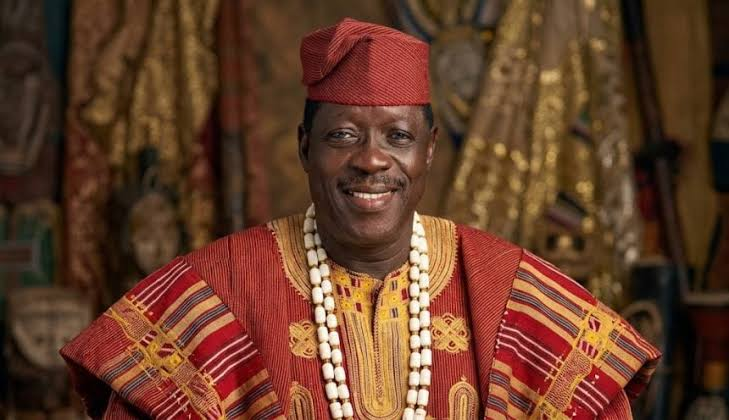
Long before Taiwo Hassan became Ogogo, he was already learning how powerful words could be when spoken with rhythm, confidence, and cultural understanding. Hassan recalled that he began his acting journey in 1981 and initially played the role of an Akede Oba, a praise chanter whose responsibility involved reciting the Oriki of kings and chiefs.
It was a role that required more than memorising words. The performer had to understand the weight behind the names, the history inside the praise and the cultural language through which people were recognised.
Hassan became so good at it that, as he recalled in that City People interview, people began calling him “Olohun Iyo”, a reference to the quality and flavour of his voice and delivery.
Then something interesting happened. As Nigerian home videos began changing the way Yoruba stories reached audiences, Hassan found himself doing what he had already done on stage: praising people, introducing characters and sometimes praising himself through lines drawn from his own family Oriki. The name “Ogogo” was already part of his inheritance, but performance gave it a public life.
That is where the story becomes bigger than a stage name. Hassan did not have to manufacture an identity for the audience; he brought a part of his existing identity into his work, and the audience gradually adopted it as their own way of knowing him.
His colleagues began calling out “Ogogo,” and a name that had once belonged primarily to family memory became attached to a man whose career would eventually span more than four decades.
There is something deeply Yoruba about that journey. Oriki is not merely praise; it can function as memory, identity and inheritance, carrying stories about where a person comes from and the qualities associated with a lineage.
For Hassan, that cultural inheritance did not remain confined to family gatherings or traditional ceremonies; it travelled with him into theatre, home videos and eventually the wider Nigerian entertainment industry.
This explains why “Ogogo” sounded different from an ordinary celebrity nickname. It carried history before it carried fame. Every time Hassan introduced himself through the familiar praise lines associated with his family, he was not simply performing a character; he was bringing a piece of his lineage into the performance.
And over time, the distinction between the man and the name became almost impossible to make. Taiwo Hassan was the actor, but Ogogo became the identity audiences remembered.
He grew from a theatre performer into an actor, producer, director and screenwriter, while also becoming one of the recognisable faces of Yoruba-language cinema.
When a Name Becomes a Legacy
Hassan was also among the co-founders of the Odunfa Caucus, a theatre group that became an important training ground for several Yoruba actors. His career therefore existed within a larger theatrical tradition, one in which performance was not separated entirely from culture, language and communal memory.
This is why his story is worth remembering beyond the immediate sadness of his death. Hassan died on August 23, 2026, at 66, and was buried in Ilaro, Ogun State, the following day according to Islamic rites.
The details of his final days were widely reported after his daughters publicly disclosed his stage-four cancer diagnosis and sought medical assistance, but those circumstances are only one part of the story he leaves behind.
The more enduring part may be found in the name itself. Ogogo survived because Taiwo Hassan gave a family name a public voice, and then gave that voice a career.

There are actors whose names disappear behind their characters, and there are actors whose names become characters themselves. Hassan belonged somewhere in between: he carried a name from his family into his craft until the name became part of Nigerian popular culture.
That is the quiet power of an Oriki. It can begin as something spoken about you by those who know where you come from, and eventually become something an entire generation uses to remember who you were.