How Digital Footprints are Rewriting the Rules of Power and Persuasion
In the digital age, politics is a numbers game. This article explores how political campaigns and governments are using online analytics to micro-target voters, analyze public sentiment, and shape public discourse, for better and for worse.
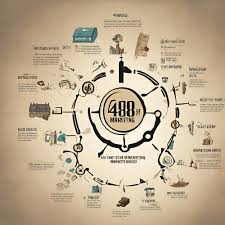
In the digital age, the currency of political power is no longer just money or media influence, it is data. Every click, search, and "like" leaves behind a digital footprint that political campaigns and governments are now meticulously collecting and analyzing. The old model of politics, built on broad-based television ads and generic stump speeches, is rapidly being replaced by a sophisticated, and often controversial, new paradigm.
From Mass Media to Micro-Targeting

Source: Google
The evolution of political campaigns from broad-based advertising to precision micro-targeting is one of the most significant shifts in modern politics. In the past, campaigns would craft a few central messages and broadcast them to a large, undifferentiated audience through television, radio, and print. The hope was that these messages would resonate with a large enough segment of the population to secure a victory.
Today, that model is considered outdated. The new approach, known as micro-targeting, relies on collecting vast amounts of data from online platforms, data brokers, and public records to create highly detailed voter profiles.
This data goes far beyond basic demographics, encompassing an individual's online behavior, consumer habits, interests, and even personality traits. Campaigns can then use these profiles to segment voters into tiny, specific groups, allowing them to deliver highly personalized messages at a mass scale.
For example, a political campaign might identify a group of voters who are concerned about environmental issues but are generally hesitant to vote. Using their digital footprint, the campaign could send them a targeted ad on social media showing a candidate's stance on renewable energy, while another ad, sent to a different segment of voters, might focus on the same candidate's position on tax cuts.
The message is not what a candidate believes, but what the data suggests a specific person wants to hear. This precision marketing is incredibly powerful, as it allows campaigns to engage with voters on the issues they care about most, increasing the chances of mobilization and persuasion.
However, this has serious implications for voter autonomy, as individuals may not even be aware that the political messages they are seeing have been crafted specifically to exploit their personal preferences and vulnerabilities.
Sentiment Analysis: The Pulse of the Public

Source: Google
Beyond targeting, online analytics play a critical role in shaping public policy and government communication. Gone are the days of relying solely on expensive and slow-to-conduct public opinion polls.
Today, governments and political parties can use sentiment analysis, a field of natural language processing to gauge public opinion in real-time. By analyzing the language used in social media posts, news comments, and forums, they can identify the emotional tone of public discourse on a particular issue.
This real-time feedback loop allows policymakers to adjust their communication strategies, and in some cases, even their policies, in response to public sentiment.
If a new policy is being met with widespread anger or confusion online, a government can quickly release a clarifying statement or launch a new communication campaign to address the concerns.
This tool can be used to make governments more responsive to their citizens. For instance, in times of crisis, sentiment analysis can help officials understand where the public is most in need of information or resources.
However, it can also be used to simply manage public perception without truly addressing a problem, creating a government that is more focused on optics than on substance. The use of this technology raises concerns about whether policies are being shaped by genuine public interest or by the emotional reactions of a vocal online minority.
The Darker Side: Echo Chambers, Disinformation, and Democratic Integrity
While data analytics can be a powerful tool for civic engagement, its use also carries significant ethical concerns and poses a direct threat to democratic integrity.

SOURCE: Stanford Report
The most prominent danger is the creation of digital echo chambers and filter bubbles. When algorithms are designed to show users content that aligns with their pre-existing views, people become trapped in a feedback loop of information that confirms their biases.
This can lead to a more polarized society, as individuals are less likely to be exposed to different perspectives or engage in civil discourse with those who hold opposing views. This phenomenon is a serious threat to a healthy democracy, which depends on a marketplace of ideas and a public that can engage in reasoned debate.

Furthermore, the same micro-targeting techniques used for political persuasion can be weaponized to spread misinformation and disinformation at an unprecedented scale. False narratives, doctored images, and conspiracy theories can be targeted to specific groups of people who are most likely to believe them, all without the rest of the population even seeing the content.
This undermines the very concept of a shared public reality and can be used to manipulate voters, suppress turnout, or sow discord. The Cambridge Analytica scandal, in which a political consulting firm used data from millions of Facebook users to create psychological profiles and target them with tailored political ads, served as a stark and global wake-up call to the manipulative potential of this technology.
Protecting democratic integrity from these threats requires a multi-pronged approach. Governments and international bodies need to implement stronger regulations on data privacy and the use of personal data in politics.
This could include requiring greater transparency from political campaigns about their data sources and targeting methods, as well as holding social media platforms accountable for the content they host.
Civic education is also critical, as citizens must be empowered with media literacy to critically evaluate the information they consume and recognize the signs of manipulation. The ultimate goal is to ensure that technology is used to strengthen, not undermine, our political systems.
Why This Story Matters for a Global Audience
This story is of critical importance because it directly addresses the future of democracy and the role of the informed citizen in a digital world. The application of digital data in politics is a global phenomenon, affecting countries from the US and Europe to emerging democracies in Africa.
The tools and techniques used in one election are quickly adopted and adapted elsewhere, making the battle for democratic integrity a universal one.
By exposing the mechanics of this powerful tool, we empower our readership to be more media literate and critically aware of the information they consume.
This article will serve as a vital guide for citizens, journalists, and policymakers, ensuring they understand the stakes and can work to ensure that technology is used to strengthen, not undermine, our political systems.
The future of political power is no longer in the hands of those who shout the loudest, but in the hands of those who can best analyze and act on the vast sea of data we all leave behind. It is a future that we must all be prepared to navigate with caution, skepticism, and a commitment to preserving the integrity of our democratic processes.