Hollywood Shuns Soderbergh's Controversial Scrapped Film
Steven Soderbergh and Ed Solomon discuss their film "The Christophers" and reveal insights into their creative processes, including Soderbergh's use of AI in his John Lennon documentary. They also tackle the future of movie theaters, the challenges of unmade projects, and their shared cinematic influences.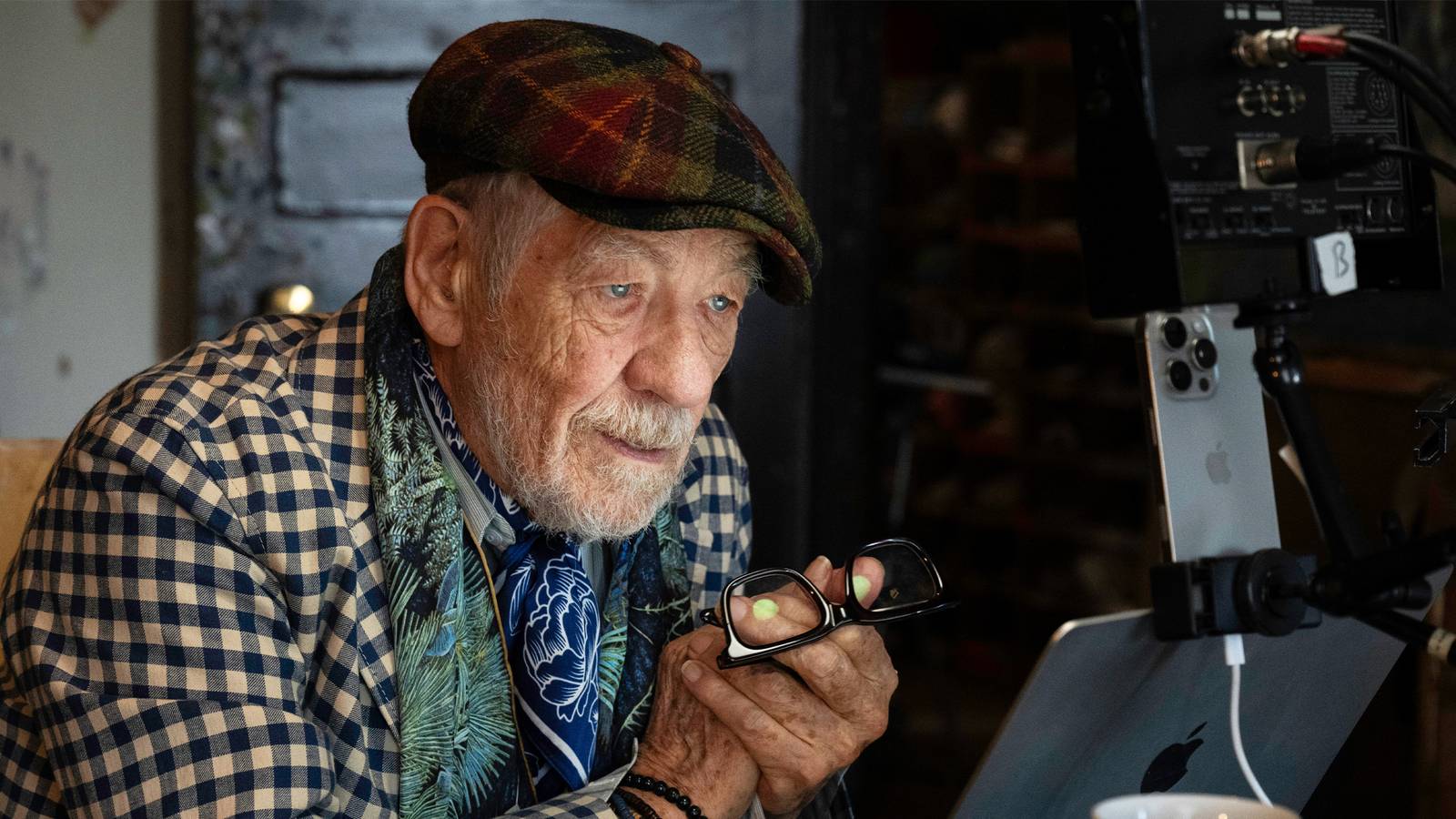
Oscar-winning director Steven Soderbergh and acclaimed screenwriter Ed Solomon recently engaged in a wide-ranging conversation with Collider's Steve Weintraub, discussing their collaboration on the drama "The Christophers," their creative philosophies, and the evolving landscape of the movie industry. In "The Christophers," Soderbergh not only directs but also serves as cinematographer and editor, while Solomon's script features an electrifying pairing of Ian McKellen and Michaela Coel. Their discussion touched upon the profound impact of working with McKellen, Soderbergh's unique approach to a film's visual language, and the conscious effort to avoid forced sentimentality in storytelling.
Both artists revealed projects they desperately wanted to make but couldn't get off the ground due to their provocative nature. Soderbergh shared his frustration over "Tentpole," an "extremely provocative" talking monkey movie with a great cast that "nobody would touch," not even "billionaires who want to be in the movie business." Solomon recounted a similar experience with an animated film he co-wrote with Chris Matheson 25 years ago, which was deemed "too weird" despite their significant personal investment in a recorded reading. These anecdotes highlight their belief in pushing creative boundaries and refusing to pre-censor themselves, even when facing industry skepticism.
The conversation also delved into the seismic shifts occurring within the movie industry, particularly concerning the health of movie theaters. While large-scale event films continue to draw audiences to IMAX and other big screens, smaller films struggle to attract viewers. Solomon emphasized the "pheromonal experience" unique to theatrical viewings, especially for genres like horror and comedy, and the importance of the communal aspect. Soderbergh advocated for "radical experiments" on the exhibition side, such as flexible pricing and local curation of classic films, but acknowledged the difficulty posed by the veto power of major cinema chains. Both agreed that the ubiquitous availability of films on streaming platforms has diminished the urgency of going to theaters, a challenge that needs innovative solutions.
Soderbergh, having personally shot "Contagion" in IMAX, expressed a desire for more large-format screens to accommodate a wider variety of films, believing that "everything looks better like that." He argued that while ticket prices are a factor, the value proposition of a movie ticket – offering two hours of often years-in-the-making entertainment for mental well-being – is often underestimated. Reflecting on cherished movie-going experiences, Soderbergh mourned the loss of iconic theaters like the Ziegfeld, Arclight, and Dome, while Solomon fondly recalled the historical ambiance of Westwood's Village and Bruin theaters.
A lighter, yet "controversial," point of discussion was Solomon's aversion to popcorn noise in theaters, humorously suggesting the invention of "silent popcorn." He and Soderbergh concurred that extraneous noises, like crunching popcorn or illuminated phone screens, disrupt the "dreamlike state" crucial for immersive film engagement, preferring silence once the main feature begins.
Another significant topic was the role of Artificial Intelligence in Hollywood. Soderbergh openly defended his use of AI in his upcoming documentary, "John Lennon: The Last Interview," to create "thematically surreal images" for philosophical discussions where no archival material existed. He views AI as a problem-solving tool, stressing that the film is "less good" without it, and advocating for transparency rather than a blanket ban on its use by artists. He believes that the negative reaction often stems from a fear of replacement rather than an artistic critique. Solomon, however, prefers the human creative process, stating that he has not significantly used AI in his writing, finding the act of dreaming and writing to be the enjoyable core of his work.
Regarding "The Christophers," the filmmakers discussed how the character of Julian's house, filled with countless objects, became a narrative device reflecting his inability to let go of things. Soderbergh, who eschews attachment to material possessions and even burned 44 years of his journals to repress his ego, found Julian's house "triggering." Solomon shared insights into his writing process, emphasizing the power of truthful, spontaneous dialogue over excessive wordsmithing, citing the line "Weinstein has ruined the robe for the rest of us" as an example. Both highlighted the transformative experience of workshopping the script with Ian McKellen, learning the "depth of a character" and the necessity of writing from an actor's point of view, which deepened their understanding of character motivation and truthfulness.
Soderbergh also detailed his meticulous approach to visual grammar as a director and cinematographer. He establishes early rules regarding lenses, camera movement, cutting patterns, and visual palette, which he then refines on set, making granular decisions about elements like zoom versus dolly shots. He acknowledged moments, like during the first "Ocean's" film, when it took him time to find the "signature frame" that defined the movie's aesthetic, but ultimately, his confidence in his choices allows him to avoid paralysis from over-coverage. Crucially, both filmmakers underscored their commitment to portraying honest characters and situations, explicitly rejecting "unearned sentimentality or forced sentimentality" in "The Christophers," finding the small, personal transactions between characters more truthful and moving.
Finally, they shared their favorite films by iconic directors: "Paths of Glory" by Stanley Kubrick (both), "After Hours" (Soderbergh) and early defining works like "Alice Doesn't Live Here Anymore," "Mean Streets," and "Taxi Driver" (Solomon) by Martin Scorsese, "Pan's Labyrinth" by Guillermo del Toro (both), and "Memento" by Christopher Nolan (both). When asked about "Star Wars," both chose "The Empire Strikes Back," despite Solomon's memorable experience of having the ending spoiled by a stranger before seeing it in the theater.