Heartbreak for Kenyan Families: Missing and Fallen in Ukraine War, Calls for Answers Mount
Kenyan families are urgently demanding answers about their relatives lured to Russia for jobs and subsequently sent to the Ukraine war front, with many now missing or confirmed dead. The emotional toll is immense as families grapple with the uncertainty and the lack of bodies for burial, highlighting the devastating human cost of the conflict.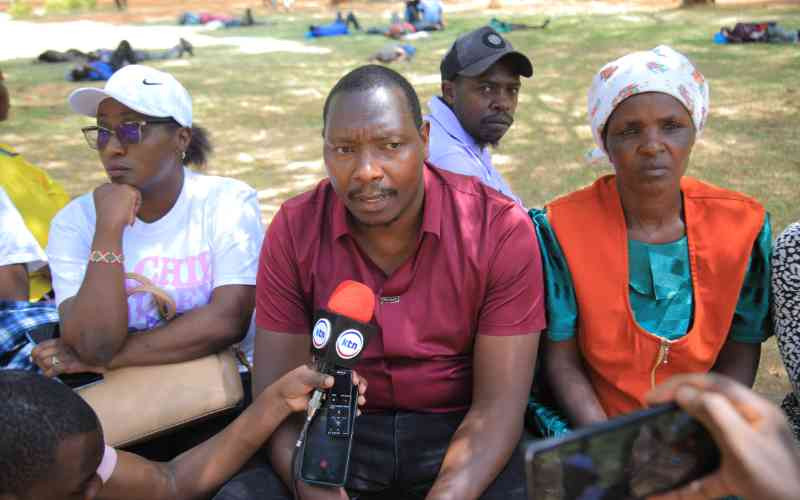
Families of Kenyan men who travelled to Russia in search of lucrative job opportunities are demanding urgent answers from the government regarding the fate of their loved ones. These relatives, numbering 14 families, gathered at Jevanjee Gardens in Nairobi to share harrowing accounts of how their kin left Kenya between October and November last year, only for communication to abruptly cease months ago, leaving them in agonizing uncertainty.
The grim reality of the situation was underscored by a report from Ukrainian intelligence on Friday, indicating the recovery of the bodies of two Kenyans, Denis Ombwori and Simon Wahome. Their remains were reportedly discovered near another Kenyan fighter, Clinton Nyapara Mogesa, who was killed in the same area. Further information from Ukraine’s Defence Intelligence specified that Denis Bagaka and Simon Gititu were found dead in the Donetsk region of eastern Ukraine, having been lured into the war while working for private security firms in Qatar. The rights group Vocal Africa counts over 18 Kenyans as killed or missing in the conflict, highlighting the profound and painful impact the war is having on Kenyan families.
Esther Njenga narrated the distressing experience of her nephew, John Njenga Wanjiru. He left Kenya in October last year, enticed by a recruitment agent promising multiple job opportunities in Russia. The last conversation the family had with him was on November 24, when he informed them he was being taken to the front line, where network access would be unavailable and phones were prohibited. He asked his family to pray for him. Wanjiru, a driver with no prior military experience, had mentioned being subjected to a two-week military training upon arrival, a detail that baffled his family given his lack of weapon familiarity. Five months of silence have since devastated his mother, who is emotionally overwhelmed and struggling to cope with the unknown fate of her son, stating, “We don’t know if he is alive or dead. That uncertainty is killing us. We just want to know the truth.”
Peter Kamau Gitau shared a similar ordeal concerning his younger brother, Gerard Gitau, who departed Kenya on October 4 last year. Their communication continued until November 14, when Gerard revealed he had been deployed to ferry food supplies to soldiers on the front line. Kamau, from Gatundu, Kiambu County, believes his brother is undoubtedly involved in the Russian military, most likely as a fighter, but remains unaware if he is alive or deceased. The emotional toll on his family, particularly their elderly mother who suffers from health complications, has been immense. Kamau expressed his pain and the burden of taking his brother to the airport, stating, “It is very difficult explaining to my mother where her son is. That burden stays with me every day.”
The families’ collective plea is for the safe return of their loved ones. If they are alive, they want them brought back; if dead, they seek closure through burial. The prolonged silence and the agonizing lack of bodies to bury are causing profound trauma, with Kamau articulating the sentiment, “But this silence is traumatising.” The true human cost of Russia’s war is deeply impacting these Kenyan communities, revealing itself through the profound grief and uncertainty faced by those left behind.