Global Tensions Flare: Trump's Iran Stance & Hormuz Control Sparks International Outcry
The United States declared itself the "GUARDIAN OF THE HORMUZ STRAIT," proposing a 20 percent transit toll, a move immediately met by Iran's Foreign Minister Abbas Araghchi, who conceded compensation was due but asserted Iran's guardianship and disputed the rate. This radical shift, criticized even by conservative media, dismantles decades of international maritime law regarding free passage and sets a dangerous precedent for global chokepoints. The escalating tensions and legal ambiguities surrounding a "blockade without a war" highlight the profound reordering of the international rules-based order.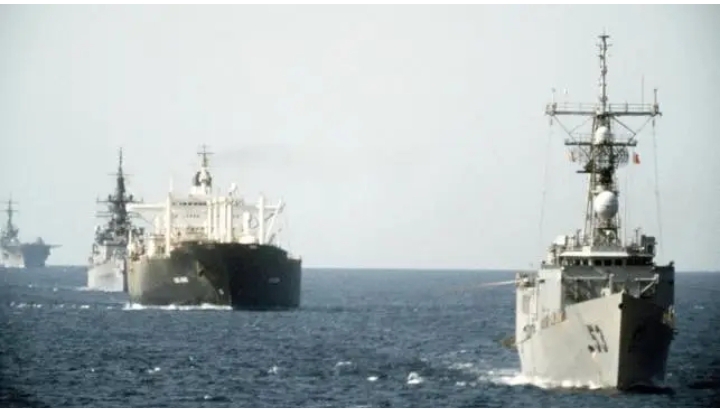
In a significant and highly controversial policy shift, the United States, under President Donald Trump, declared itself "THE GUARDIAN OF THE HORMUZ STRAIT" and proposed a 20 percent toll on all cargo transiting the crucial waterway. This announcement, made via a presidential post, marked a radical departure from decades of international maritime law and immediately ignited a heated exchange with Iran, the primary littoral state.
Iranian Foreign Minister Abbas Araghchi swiftly responded, agreeing that whoever secures the Strait deserves compensation, but asserted that Iran has always been its true guardian and that the 20% rate was excessive. Araghchi stated that Iran "will be fair," effectively shifting the debate from *whether* ships must pay tribute to *what rate* they should pay. This subtle but profound concession by the U.S. that passage could be taxed, rather than challenging the very notion, fundamentally altered the legal landscape.
Legal experts, particularly those with experience in shipping law, highlighted the radical nature of Trump's announcement. For 75 years, the principle of "freedom of the seas" and the regime of transit passage, codified in Part III of the UN Convention on the Law of the Sea (UNCLOS), ensured that international straits like Hormuz could not be obstructed or taxed in peacetime. Article 26 of UNCLOS explicitly prohibits general levies for the privilege of passage, allowing charges only for specific services rendered. The United States, though not a party to UNCLOS, had historically insisted that transit passage bound Iran as customary international law, enforced by the US Navy. Now, Washington proposed to charge 20% of cargo value from thousands of kilometers away, an act the President termed "FAIRNESS" but which was widely seen as a replacement of international waterway doctrine with tribute.
Tehran's response proved to be a "trap" from a legal perspective. Customary international law, the sole basis for America's position in Hormuz since it never ratified UNCLOS, relies on consistent state practice and the belief that such practice is legally required (opinio juris). When Iran previously instituted its own permit-and-fee regime, Washington's stance was that no state could condition or charge for transit. By proposing its own toll, the U.S. inadvertently validated Iran's underlying legal theory. Araghchi's reply acknowledged this, stating: "you have adopted our legal theory; we now dispute only the price." This move, rather than Iranian missiles, effectively "killed" the decades-old American legal position, setting a dangerous precedent that future tribunals and nations wishing to tax vital chokepoints worldwide (e.g., Bosphorus, Malacca, Panama) could cite.
Further compounding the legal absurdities, President Trump declared the reinstatement of "THE IRANIAN BLOCKADE," aiming to stop not only Iranian ships but also Iran's customers. In the law of naval warfare, a blockade is a belligerent right, existing only in a state of armed conflict, requiring formal declaration, notification, effectiveness, and impartiality, as defined by the San Remo Manual. Yet, Washington simultaneously insisted it was not at war with Iran. This created an untenable situation for shipowners, insurers, and underwriters, who faced a "blockade" that was not a blockade, imposed by a non-belligerent state, targeting an undefined class of "customers." With Iran's Persian Gulf Strait Authority also declaring passage "currently unfeasible" without its own permit system, vessels in the Gulf found themselves navigating competing assertions of authority, each deemed an act of war by the other, leading to unprecedented uncertainty and soaring war risk premiums.
The President's actions drew sharp criticism even from conservative media outlets. The Wall Street Journal's editorial board, typically a defender of Republican presidents, published a scathing critique. They characterized an earlier memorandum of understanding with Iran as a "fraud" that quickly collapsed and the new 20 percent toll as a "bad idea." Most strikingly, the Journal wrote, "With the MOU Mr. Trump gave the regime a reprieve, and as usual it perceived U.S. weakness." This direct accusation from a flagship conservative paper that Iran saw weakness and exploited it dealt a significant blow to the administration's "strongman" narrative, which had long claimed unique deal-making ability and restored American strength.
These developments unfolded against a backdrop of a highly volatile conflict. In a letter to Congress, Trump categorized recent military strikes, which commenced on July 7, as vital for protecting American lives and interests. U.S. Central Command (CENTCOM) confirmed striking over 300 military targets in Iran, retaliating against threats to shipping lanes, and launching additional offensive operations under presidential orders. This renewed escalation followed the collapse of a fragile, weeks-long truce. Congressional Republicans expressed deep concern that unstable energy markets could impact voters ahead of midterm elections, while opponents on Capitol Hill argued that active naval blockades constituted ongoing hostilities, negating claims that the War Powers Resolution's 60-day operational limit had been paused. The Senate and House both passed measures to halt unauthorized hostilities, though their legal impact remained limited due to presidential veto power and the resolutions not going to the president's desk. Trump, however, maintained that the executive branch held full authority over the campaign's scope.
Ultimately, this crisis represents a profound reordering of the international system. The "rules-based international order," particularly the principle of the freedom of the seas—long considered its "crown jewel" and consistently enforced by the U.S. Navy—is being liquidated by its own architect. The moral force of American naval power rested on its disinterested policing of the seas, taking nothing for itself. By introducing a toll, America transformed its role from a guardian upholding a global doctrine to a practitioner of what many in the maritime world understand as a "protection racket"—offering "safety and security" for a percentage of cargo. While the Strait of Hormuz may remain open, the fundamental doctrine that the world's waterways belong to the community of nations and cannot be farmed for revenue effectively died, not because Iran closed it, but because America opened a toll booth, setting a precedent that power, not rules, dictates the new order.