GH¢50M Bail Outrage: Dennis Miracles Aboagye's Ordeal Sparks Legal Firestorm and Political Fury
Dennis Miracles Aboagye, an aide to the NPP flagbearer, has been arrested by EOCO over alleged GH¢55 million financial irregularities. His GH¢50 million bail, deemed excessive and impractical by lawyers and politicians, has sparked widespread criticism of EOCO's methods and calls for parliamentary intervention amidst concerns over human rights and judicial fairness.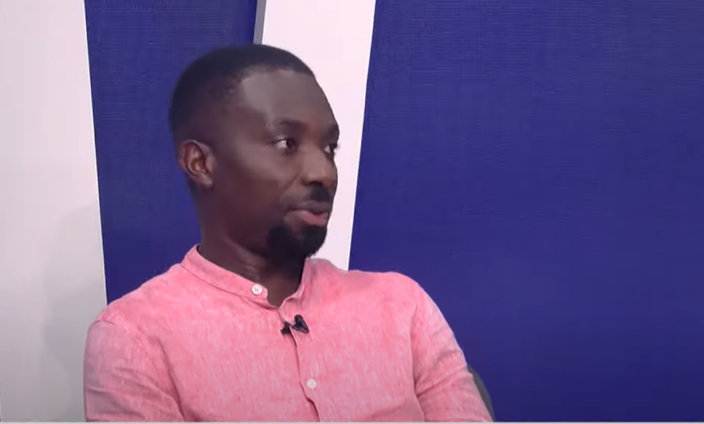
Dennis Miracles Aboagye, an aide to the New Patriotic Party (NPP) flagbearer, Dr. Mahamudu Bawumia, and former Executive Secretary of the Inter-Ministerial Coordinating Committee on Decentralisation (IMCCoD), has been at the center of a widespread controversy following his arrest by officials of the Economic and Organised Crime Office (EOCO) upon his return to Ghana. He was taken into custody as part of ongoing investigations into alleged financial and procurement-related irregularities amounting to approximately GH¢55 million during his tenure at IMCCoD. These allegations also implicate the Secretariat's former Accountant, Gerald Appiah, and other unnamed individuals, though Mr. Aboagye maintains his innocence as no court has found him guilty of any offense.
Following his arrest, Mr. Aboagye was granted bail in the sum of GH¢50 million with three sureties, two of whom were required to be justified. However, meeting these stringent bail conditions proved significantly challenging. His legal team, led by Samuel Atta Akyea, described the requirements as "excessive" and "humongous," leading to his continued detention. During this period, EOCO officials reportedly escorted Mr. Aboagye to his residence at Larteh Akuapem as part of their probe, the specific details of which were not publicly disclosed by the agency.
The severity of the bail conditions and EOCO's handling of the arrest drew sharp criticism from various legal and political figures. Gary Nimako Marfo, the NPP's Director of Legal Affairs, explicitly labeled the GH¢50 million bail as "excessive, oppressive, illegal, [and] unconstitutional," arguing that bail should ensure an accused person's appearance in court, not serve as a punitive measure before conviction. Private legal practitioner Martin Kpebu echoed these sentiments, calling for a more "sensible" and "practical" approach to bail, especially for individuals like Mr. Aboagye who, having traveled abroad and willingly returned, were unlikely to abscond. Kpebu also highlighted the practical difficulties in requiring registered properties for sureties, noting that a vast majority of properties in Ghana are not formally registered, thereby creating unnecessary hurdles and delays.
Beyond the bail conditions, EOCO's methods of arrest and detention also came under intense scrutiny. Samuel Atta Akyea questioned the necessity of arresting Mr. Aboagye at the airport, suggesting a simple invitation for questioning would have sufficed given his client's cooperative history. He criticized the prolonged detention for "more than 48 hours" without interrogation, asserting that such actions undermine the principles of the criminal justice system and unfairly treat Mr. Aboagye as a "common criminal." Sulemana Braimah, Executive Director of the Media Foundation for West Africa (MFWA), similarly challenged the "Rambo style" arrest, pointing out that there was no indication Mr. Aboagye had obstructed investigations, gone into hiding, or failed to cooperate with previous EOCO invitations.
The matter escalated to Parliament, where the Minority Leader, Alexander Afenyo-Markin, strongly condemned EOCO's actions. He described the arrest and over three-day detention as a "threat to Ghana's democracy and human rights," despite Mr. Aboagye's consistent cooperation with investigators. Afenyo-Markin warned against politicizing the issue, emphasizing that such "excesses" could set a dangerous precedent for all political actors. He called on the Attorney General to appear before Parliament to explain the circumstances surrounding the arrest, detention, and bail conditions, underscoring the House's responsibility to address what he termed "human rights abuses." John Darko, Member of Parliament for Suame, reinforced the criticism, accusing investigative bodies like EOCO of acting as if they possess powers superior to the courts by setting unreasonable conditions. He stressed that bail should be a guarantee of appearance, not a tool for punishment or a "witch-hunt" in the fight against corruption.
Critics across the board underscored that while supporting anti-corruption efforts, such investigations must be conducted fairly, decorously, and without giving the semblance of abuse of power or undue hardship, especially given the presumption of innocence. The incident has ignited a broader debate on the appropriateness of bail conditions and the operational conduct of state investigative agencies in Ghana.