Global Insight: The Definitive Ranking of Nations for Women's Well-being
A new report from the Georgetown Institute for Women, Peace and Security reveals significant global disparities in women's well-being and rights. Northern European nations lead the world in inclusion, justice, and security for women, while countries affected by conflict rank lowest. The United States places 31st, highlighting varying conditions for women across the globe.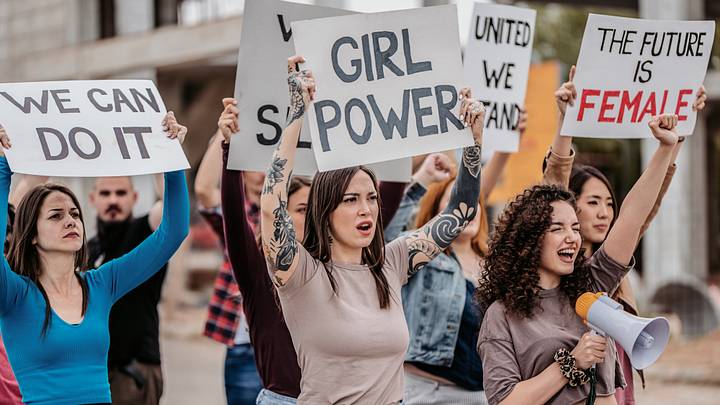
The global standing of women's well-being and rights demonstrates significant disparities across different parts of the world, despite women constituting just under 50% of the world's population, according to data from the United Nations and the World Bank. The precise percentage of women within a country's population can vary, with Saudi Arabia reporting 39.57% female residents, while Russia shows women making up 53.63% of its population. Beyond demographics, women's rights, including issues of justice, security, and inclusion, also fluctuate greatly by country, influenced by a multitude of internal factors.
An analysis by the Georgetown Institute for Women, Peace and Security identifies the best and worst countries for women, highlighting distinct regional patterns. Northern Europe consistently leads the way, with Denmark topping the list, followed closely by other Scandinavian nations and their neighbors. These countries, including Iceland, Norway, Sweden, Finland, Luxembourg, Belgium, Netherlands, Austria, and New Zealand, consistently achieve strong scores across indicators measuring inclusion, justice, and security for women. Women in these high-ranking nations benefit from advanced education levels, robust financial inclusion, high workforce participation, comprehensive legal protections, and substantial political representation. Furthermore, these countries report relatively low rates of violence against women, contributing to their high overall scores.
While Latin American countries have shown improvement in recent years, with nations like Costa Rica and Uruguay entering the top 25% in the Georgetown University survey, none have managed to break into the top 10, which remains predominantly European. This upward trend for some Latin American nations signals positive developments in their approach to women's rights and well-being, though there is still a gap compared to the top performers.
Conversely, the worst countries for women are often characterized by political instability and ongoing armed conflicts, which severely undermine women's rights and security. A stark statistic reveals that over 70% of women residing in the 12 lowest-ranking countries live within approximately 30 miles (50 kilometers) of armed conflict. Such environments escalate women's exposure to gender-based violence, injustice, and critical issues related to maternal health. Afghanistan is ranked by Georgetown University as the worst country for women, grappling with recent armed conflicts, significant political struggles, and a severe reduction in women's rights. Other nations frequently plagued by conflict that appear among the top 10 worst countries include Yemen, the Central African Republic, Syria, Sudan, Haiti, the Democratic Republic of the Congo, Burundi, South Sudan, and Myanmar.
In North America, the United States ranks 31st out of 181 countries, placing it below Serbia and Malta but ahead of Czechia and Hungary. Neighboring Canada achieves a higher position at 16th, while Mexico is ranked significantly lower at 147th. These rankings underscore the complex global landscape of women's rights and well-being, demonstrating that geographical location, political stability, and societal structures profoundly impact the lives of women worldwide.