Global Auto Industry in Crisis: 57 Million Unwanted Cars Spark Economic Fears
The global automotive industry is struggling with chronic overcapacity and low profitability, exacerbated by political resistance to plant closures and a surge in Chinese manufacturing. As electrification adds further complexity, a novel approach involving U.S.-China joint ventures is proposed to repurpose existing factories, rationalize global capacity, and share vital technological expertise.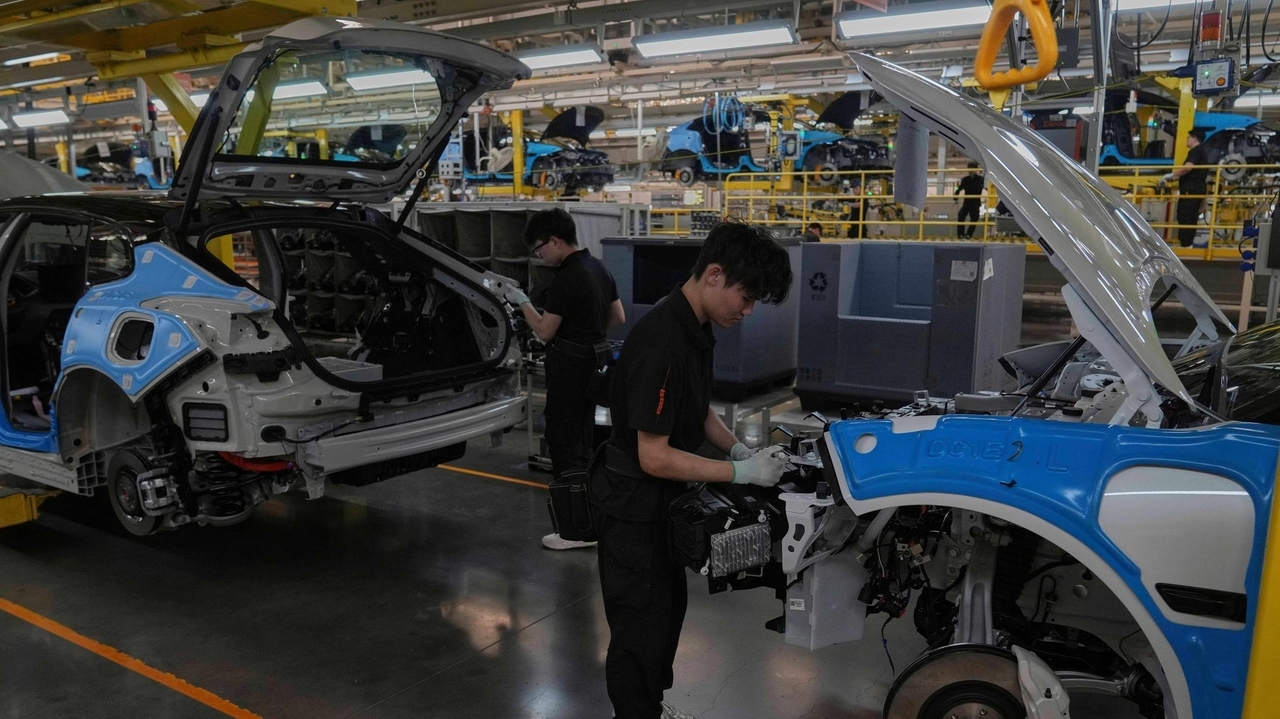
The global automobile industry, despite symbolizing prosperity and personal freedom for billions, is plagued by a fundamental problem: chronic overcapacity, leading to a "miserable, grinding" manufacturing environment. Last year, the world's automakers collectively achieved an aggregate operating margin of only 3.6%, a figure less in dollar terms than that of a single large technology company like Apple Inc. This stark reality underscores the current anxieties gripping iconic car brands in the U.S. and Europe, intensified by the rising threat from Chinese new entrants.
The root of this issue lies in the societal and political importance nations place on manufacturing cars. A car plant closure is often seen as a societal bombshell rather than a purely economic decision, leading to deferred decisions to shutter factories and avoid job losses. Auto plants are not merely facilities for consumer products; they are symbols of economic vitality and crucial reserves of industrial capability that underpin national security. This perspective fosters an environment of chronic oversupply.
According to a BloombergNEF report, approximately 85 million new passenger vehicles are projected to be sold worldwide this year. However, the global industry possesses the capacity to churn out a staggering 142 million vehicles. Building assembly lines is capital-intensive, making profitability highly dependent on running them as much as possible to distribute fixed costs across a larger volume of vehicles. Industry analyst Glenn Mercer suggests a breakeven point of 80% capacity utilization or more, rendering the current global average of 60% dismal. Major automaking nations and regions, with the exception of South Korea, are struggling on this front, with the U.S. having notably lost its pre-pandemic leading position.
The past decade has seen roughly 28 million vehicles' worth of new manufacturing capacity added globally, with four-fifths of this expansion occurring in China. Yet, sales have only increased by 5 million over the same period. China's domestic vehicle market has plateaued, leaving the country with enough capacity to produce more than two cars for every one sold domestically. Consequently, Chinese automakers are now pushing millions of vehicles overseas to sustain their plants; without these exports, their utilization would fall below 50%, rather than its current dismal 60%. China is effectively exporting its excess car capacity problem worldwide.
The rest of the world has taken notice and responded with trade restrictions. The U.S. has largely sealed itself off from Chinese models and is increasingly turning against its North American free trade partners, with Mexico, a significant vehicle exporter, appearing particularly vulnerable. Europe is imposing quotas after tariffs proved insufficient to stem the flow of Chinese imports. Even the mighty Volkswagen AG is taking the previously unimaginable step of ceasing production at several German plants, highlighting the severe pressure on incumbents.
Adding another layer of complexity is the multi-speed process of electrification, encompassing battery-electric, range-extended, and various hybrid vehicles. Incumbent automakers like General Motors Co. and Ford Motor Co. are reconfiguring plants for flexibility to shift production across different drivetrain types. Mixed-assembly capacity already accounts for about half of the world's total and is expected to surpass internal combustion engine-only capacity in the U.S. this year. The shift to EVs exacerbates the overcapacity issue, as not only Chinese EV makers but also startups like Rivian Automotive Inc. establish their own dedicated assembly lines. While dedicated capacity for gas-guzzlers is projected to decline by roughly 5 million units by 2030, more than 10 million vehicles' worth of mixed and EV-only capacity is anticipated to come online within the same timeframe.
For a healthy industry, excess capacity must be removed from the system. As trade restrictions proliferate, this process must predominantly focus on China, which accounts for only a quarter of global vehicle sales but more than a third of its manufacturing capacity. A potential solution could involve a strategic deal, spearheaded by the U.S., to manage this transition. While U.S. automakers are currently shielded from Chinese competition, perpetual protectionism risks making them irrelevant and American drivers face unaffordable vehicles. Accommodating Chinese competition through mandatory joint venture plants in the U.S. offers a pathway to import crucial know-how and technology without completely sacrificing the domestic industry.
The key to this approach would be to repurpose existing, underutilized U.S. manufacturing capacity for these Sino-U.S. joint venture plants, rather than constructing entirely new facilities that would compound the existing overcapacity problem. Examples of such initiatives already exist, such as Ford’s agreement with Geely Automobile Holdings Ltd. at an underutilized factory in Spain. While U.S. politicians are apprehensive about Chinese market encroachment, Chinese automakers' need to diversify beyond their oversaturated domestic market provides significant leverage in negotiations. Leveraging this position could not only help manage the integration of Chinese competition into the American car market but also provide an inducement to rationalize China’s own bloated manufacturing capacity and revive at least some underutilized plants in the U.S. An active assembly line, even under joint ownership, is generally more desirable than a dormant one.