Gilgo Beach Victim Update: New Suspect Accused in Tragic Homicide
A former Tennessee state trooper, Andrew Dykes, has been indicted for the 1997 murder of his former girlfriend, Tanya Jackson, whose dismembered remains were once tied to the Gilgo Beach serial killer probe. Prosecutors allege the motive was Jackson's attempt to break up Dykes' marriage. The case, which relied on DNA evidence and witness testimony, is now facing a defense motion to dismiss based on privacy law violations during a secretly recorded interview.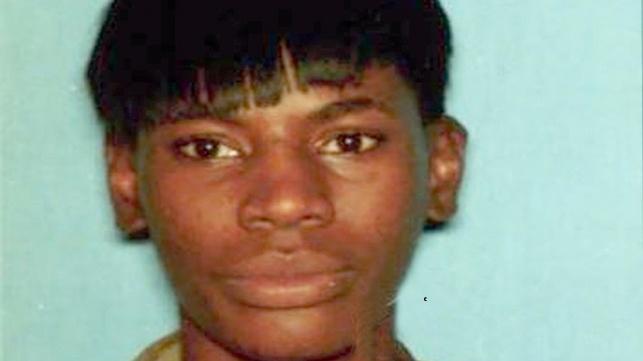
Andrew Dykes, a former Tennessee state highway patrolman, has been indicted on a single count of second-degree murder in the 1997 death of his former girlfriend, Tanya Jackson, whose dismembered remains were initially linked to the notorious Gilgo Beach serial killer investigation. Prosecutors in Nassau County allege that Dykes, 67, of Ruskin, Florida, killed Jackson, 26, because she was attempting to break up his marriage, as revealed in court documents opposing a defense motion to dismiss the case.
Jackson's partial remains were discovered in a Rubbermaid container in Hempstead Lake State Park on June 28, 1997. For decades, detectives identified her as Jane Doe No. 3 or "Peaches" due to a heart-shaped peach tattoo, considering her a potential victim of the Gilgo Beach serial killer. It wasn't until 2023 that both Jackson and her then 2-year-old daughter, Tatiana Dykes, whose body was found separately in Jones Beach State Park in 2011, were identified through advanced genetic testing. Andrew Dykes' name appears on Tatiana's birth certificate as the father, although he has not been charged in the child's death. Critical DNA evidence from a vaginal swab taken from Jackson was found to match Andrew Dykes.
The extramarital affair between Dykes and Jackson began in the mid-1990s while both served in the Army. Jackson, a Gulf War veteran, was a medical technician, and Dykes was an anatomy and physiology instructor at Fort Sam Houston, San Antonio, Texas. At the time, Dykes was married with children. After finishing his military career, Dykes was stationed in Fort Hamilton, Brooklyn, where he lived with his family.
Prosecutors cited testimony from Jackson's acquaintance, Tammy Coleman, before a Nassau County grand jury to establish Dykes' alleged motive. Coleman testified that Jackson harbored "hostility" toward Dykes' wife and "would often seek out [his] wife to confront her about the relationship." The prosecutor, Ania Pulaski, paraphrased Coleman's testimony, stating that Jackson "did so in the hopes that [Dykes] would leave his wife for her." Coleman also revealed Jackson's determination to be with Dykes, recalling that immediately after giving birth to their daughter in Texas, Jackson packed her bags and drove herself and the baby to New York to follow Dykes, despite him living with his family there. Andrew Dykes' son, Aundrey Dykes, 43, of Orlando, Florida, offered a contrasting recollection, stating his mother was not one to fight over his father and recalled only one instance where Jackson called their house. Pulaski argued that Coleman’s statements are crucial for understanding Jackson's state of mind and Dykes' potential motive.
Following Jackson’s disappearance, Dykes never reported her missing, telling investigators he believed she had left on her own. Another grand jury witness, identified as "TH," testified that in June 1997, the same month Jackson's body was found, Jackson confided in her that she intended to stay in New York and bring her sister from Alabama to live with her.
The legal proceedings have also seen a motion from defense attorney Joseph LoPiccolo to dismiss the case. LoPiccolo argued that a secretly recorded interview of Dykes by Nassau County investigators violated his client's rights, citing Florida privacy laws that typically require all parties' consent for recording conversations. However, prosecutor Pulaski countered that Florida law includes a carve-out for law enforcement officers conducting interviews as part of an investigation, citing relevant case law. LoPiccolo retorted that this exception applies specifically to Florida law enforcement, not out-of-state agencies like Nassau police. Despite this, Aundrey Dykes expressed no concern about his father’s statements to police, asserting, "At the end of the day, there’s nothing that he said that was untrue."
Nassau County prosecutors also revealed their intent to introduce Dykes’ disciplinary history as a state trooper into the trial testimony, noting that he had been fired from the Tennessee Highway Patrol. Dykes subsequently worked in security with the Tennessee Department of Labor for eight years. The judge’s decision on the defense motion to dismiss is anticipated by the end of November, with additional arguments from prosecutors expected later this week.