Ghana's Top Anti-Graft Office Under Fire: OSP's Future Hangs in the Balance
Majority Chief Whip Rockson-Nelson Dafeamekpor has clarified his stance on the Office of the Special Prosecutor (OSP), defending its legal framework while advocating for improved performance and cost-effectiveness. He critiques the OSP's centralized operations and high budget relative to its output, suggesting reforms to enhance Ghana's anti-corruption efforts amidst ongoing legal debates over the OSP's prosecutorial powers.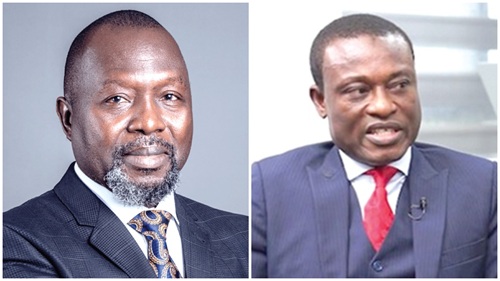
Rockson-Nelson Dafeamekpor, the Majority Chief Whip and Member of Parliament for South Dayi, has vehemently defended the legal framework of the Office of the Special Prosecutor (OSP), while simultaneously calling for its enhanced performance and efficiency. He has consistently rejected the notion that requiring the OSP to seek authorization from the Attorney General undermines its independence, asserting that true independence lies in the freedom to execute statutory duties without improper interference, rather than an exemption from constitutional oversight. Dafeamekpor argues that the OSP operates under its own governing board, not under the day-to-day control of the Attorney General, highlighting this separation as the core of its independence. He also draws parallels with the judiciary, emphasizing that even highly independent public officers like judges function within systems of checks and accountability, thus cautioning against demands for "absolute independence" in any constitutional democracy.
Despite his strong defense of the OSP's constitutional grounding, Dafeamekpor has clarified that his previous criticisms were rooted in concerns about cost-effectiveness and performance, not a desire to abolish the institution. He underscored his deep involvement in the formulation of the OSP bill, stating that his parliamentary reputation was built on his contributions to its creation. His primary concern revolves around the value derived from the OSP relative to its substantial budgetary allocations. For instance, in 2025, the OSP received approximately GH¢267 million, significantly more than the Attorney General’s Department’s GH¢144 million. Dafeamekpor suggests that combining these resources could empower the Attorney General's Department to expand its prosecutorial efforts, particularly at regional and district levels, thereby improving overall anti-corruption outcomes.
Dafeamekpor has urged the OSP to significantly improve its output and expand its reach across the country, particularly into regional and district offices, to detect financial irregularities more proactively. He criticized the current system as being too reactive, stressing that prevention is key to the anti-corruption fight. He pointed out that the OSP's centralized operations limit its effectiveness, leaving other state institutions, such as the police and the Attorney General’s Department, to manage much of the workload in various parts of the country. He maintained that the OSP's budget, including an allocation of GH¢158,936,458 in 2026, appears excessive when compared to its reported output of handling only a few cases, questioning whether the nation is truly getting value for money.
The debate surrounding the OSP's powers intensified following a recent High Court ruling that reportedly challenged its prosecutorial authority. This legal challenge led to the adjournment of a high-profile criminal case involving former Public Procurement Authority Chief Executive, Adjenim Boateng Adjei, to June 17, 2026. Dafeamekpor acknowledged the OSP's right to appeal this decision and seek a stay of execution, but firmly stated that a mere filing of a process does not automatically stay a court order. He advised the OSP to apply for an abridgement of time to expedite the hearing of the stay motion, indicating that until a stay is granted, the Attorney General is justified in proceeding with related actions. He also dismissed suggestions of a major conflict between the OSP and the Attorney General, labeling such claims as an overstatement.