Ghana's State Enterprises Under Scrutiny: SIGA Report Uncovers Billions in Irregularities and Profits!

Ghana's 2025 State Ownership Report reveals a mixed financial landscape for state entities, highlighted by a significant reduction in financial irregularities. While institutions like GEXIM Bank, NPA, YEA, and EPA showed robust growth and resilience, others such as CBG faced profitability challenges, and CPC experienced a sharp financial deterioration. The report underscores the need for continued strategic interventions to ensure the sustainability and economic contribution of these public institutions.
Pelumi Ilesanmi
Pelumi IlesanmiAcross Africa1 hour ago5 minute read
Ghana's State Enterprises Under Scrutiny: SIGA Report Uncovers Billions in Irregularities and Profits!

The 2025 State Ownership Report, published by the State Interests and Governance Authority (SIGA) under the theme “Resetting the Economy for a Better Ghana,” provides a comprehensive assessment of the financial, operational, and governance performance of Ghana’s specified entities. This report covers state-owned enterprises, joint venture companies, and other public institutions across diverse sectors, highlighting both improvements and areas of concern.

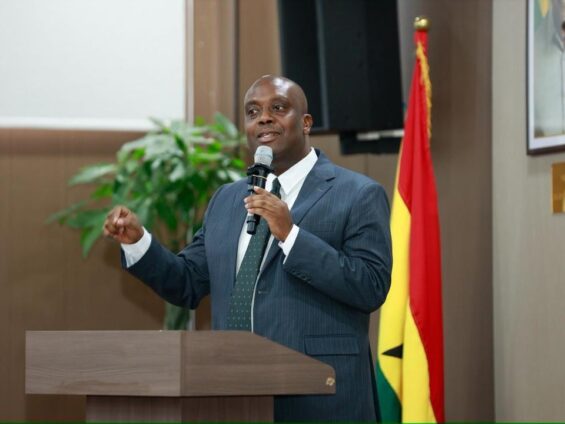
A significant positive trend noted in the report is the substantial reduction in financial irregularities across five audited sectors, including ministries, departments, and agencies; metropolitan, municipal, and district assemblies; the District Assemblies Common Fund; public boards and state-owned enterprises; and public universities and colleges of education. Deputy Minister for Finance Thomas Nyarko Ampem announced a remarkable 62.9 percent decline in irregularities, from approximately GH¢20.72 billion in 2024 to GH¢7.69 billion in 2025. This GH¢13.03 billion reduction significantly surpassed the government’s target of a 50 percent cut for 2025, demonstrating that focused attention on public financial management, stronger controls, and greater accountability can yield measurable results.

Several key state entities showcased robust financial performance in 2025. The Ghana Export-Import Bank (GEXIM Bank) recorded a 90.21 percent increase in interest income, rising from GH¢80.91 million in 2024 to GH¢153.90 million in 2025, supported by expanded lending activities. The bank's loans and advances grew by 20.14 percent to GH¢1.56 billion. Concurrently, GEXIM Bank drastically cut its interest expenses by 99.08 percent, from GH¢26.99 million in 2024 to GH¢250,000 in 2025, pushing net interest income up by 184.98 percent to GH¢153.65 million. The bank also significantly strengthened its capital adequacy ratio to 75.3 percent, up from 53.7 percent in 2024, demonstrating enhanced capacity to absorb potential losses and expand financing for export-oriented businesses. Its shareholders’ funds expanded by 28.63 percent to GH¢2.10 billion, and total debt and liabilities declined by 45 percent to GH¢378.01 million. While profit before tax of GH¢467.56 million was lower than the GH¢547.17 million in 2024, the report characterized GEXIM Bank's financial performance as robust.

The National Petroleum Authority (NPA) also demonstrated strong financial improvement, with total revenue increasing by 43.09 percent to GH¢819.50 million in 2025 from GH¢572.71 million in 2024. Its surplus soared by 75.89 percent, reaching GH¢447.19 million, up from GH¢254.24 million in 2024. This growth was primarily driven by a 38.40 percent rise in internally generated funds (IGF) and an impressive 332.11 percent increase in finance income.

The Youth Employment Agency (YEA) achieved a major financial turnaround, moving from a GH¢77.58 million deficit in 2024 to a GH¢110.45 million surplus in 2025, marking an improvement of approximately GH¢188.03 million. This was fueled by a 52.9 percent increase in revenue, including a 159.7 percent surge in GETFund receipts and a 27.5 percent rise in Communication Service Tax income. YEA's short-term solvency notably improved, with its current ratio increasing from 1.94:1 to 20.05:1, and net assets more than doubling to GH¢199.21 million, indicating a stronger equity base and reduced debt exposure.

The Environmental Protection Agency (EPA) exhibited remarkable financial resilience, more than tripling its accumulated fund from GH¢110.59 million in 2024 to GH¢375.19 million in 2025. Total income rose by 24.12 percent to GH¢306.34 million, with internally generated funds (IGF) accounting for 99.23 percent of this, underscoring its strong capacity for self-financing. Despite higher expenditures, the EPA posted a net surplus of GH¢25.01 million. Its debt-to-asset ratio sharply declined from 16.53 percent to 4.91 percent, signifying a significant reduction in financial leverage. The EPA is transitioning into the Environmental Protection Authority, with these strong financial indicators providing a robust foundation for its expanded mandate in environmental governance and enforcement.

Conversely, Consolidated Bank Ghana Limited (CBG) presented a mixed financial picture. While total assets increased by 7.33 percent to GH¢17.86 billion and customer deposits grew by 11.89 percent to GH¢14.53 billion, the bank experienced a sharp decline in profitability. Profit before tax plummeted by 87.25 percent, from GH¢160.06 million in 2024 to GH¢20.40 million in 2025, primarily due to increased impairment charges and operating expenses. Despite an improvement in its gross non-performing loan ratio from 15.03 percent to 12.50 percent and a 15.65 percent growth in shareholders' equity to GH¢1.50 billion, the substantial retained losses of GH¢1.93 billion continued to constrain its capital generation.

The Cocoa Processing Company (CPC) recorded a significant deterioration in its financial performance. Operating revenue fell by nearly half, a 46.87 percent drop from GH¢481.88 million in 2024 to GH¢256.01 million in 2025. This contraction was not met by a corresponding reduction in costs, leading to a widening net loss of GH¢144.06 million, up from GH¢99.12 million in 2024. The company's equity was severely eroded, falling by 62.35 percent to GH¢113.22 million, and its debt-to-asset ratio worsened from 86 percent to 94 percent, indicating a highly leveraged and financially fragile capital structure. Liquidity remained weak, with a current ratio of 0.25, significantly below the healthy benchmark. SIGA emphasized the need for CPC management to address the root causes of this revenue decline to restore financial viability.

Overall, the 2025 State Ownership Report portrays a mixed but generally improving financial landscape for Ghana’s state entities. While significant strides were made in reducing financial irregularities and several institutions like GEXIM Bank, NPA, YEA, and EPA demonstrated enhanced resilience and profitability, challenges persist for others such as CBG and particularly CPC, necessitating targeted interventions to ensure their long-term sustainability and contribution to the national economy.

Loading...