Ghana's Security Recruitment 'Ponzi Scheme' Outrage: Minority Demands Bi-Partisan Probe Amid Corruption Claims
Ghana's security services recruitment is facing intense backlash over alleged exploitation of unemployed youth, charging of fees, and a stark imbalance between applicants and available positions. Critics, including the Minority in Parliament and security consultants, are demanding an immediate suspension, full refunds, and a shift towards more transparent, decentralized recruitment processes, while also questioning the government's broader strategy for youth employment.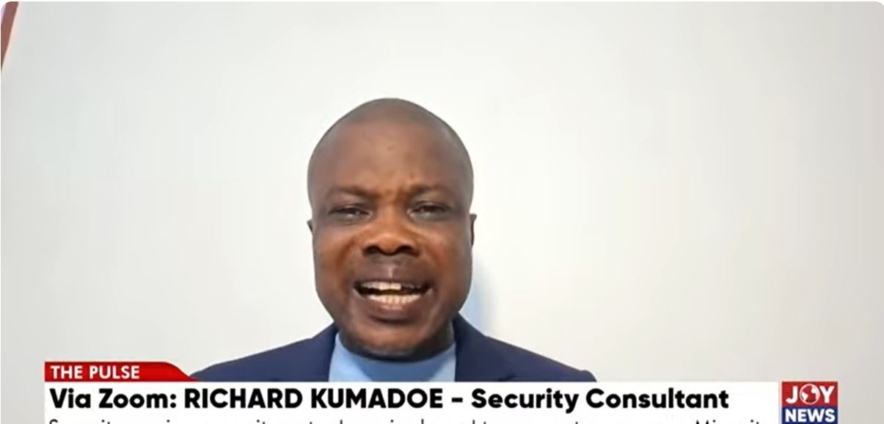
Ghana's ongoing recruitment exercise into its security services has ignited widespread controversy, drawing sharp criticism from security consultants, the Minority in Parliament, and concerned citizens over issues of transparency, fairness, and the rationale behind charging applicants. With nearly half a million applicants vying for only about 5,000 available positions, the process has been described as a “major recruitment scandal” and even a “Ponzi scheme” designed to exploit unemployed youth.
Security consultant Richard Kumadoe has vociferously questioned why applicants are being charged substantial fees when the government incurs minimal financial burden in the recruitment process. Speaking on Joy News' The Pulse, Kumadoe highlighted that the application process is largely online, with applicants purchasing forms digitally and covering their own travel costs to verification centers. He noted that government's direct financial involvement is primarily limited to vetting, background checks, and interviews, none of which necessitate state funding for applicants. While acknowledging that charging fees is not unique to the current administration, he firmly believes that applicants should not be charged at all.
The Minority in Parliament has amplified these concerns, demanding the immediate suspension and dissolution of the entire recruitment exercise. John Ntim Fordjour, Ranking Member on Parliament’s Defence and Interior Committee, called for a bipartisan parliamentary probe and insisted on immediate refunds for all applicants. He denounced the process as a “biggest recruitment scandal” and a “Ponzi scheme,” arguing that it was deliberately structured to attract vast numbers of hopeful youth despite the drastically limited job openings. Revelations from Interior Minister Mohammed Mubarak Muntaka indicated that around 500,000 young Ghanaians applied for just 5,000 roles across agencies like the Ghana Police Service, Ghana Immigration Service, Ghana National Fire Service, and Ghana Prisons Service, with a staggering 179,000 out of 180,000 applicants for the Ghana Immigration Service alone deemed ineligible.
Concerns also extend to the transparency of the aptitude testing process. Rev. Fordjour criticized the current system where applicants are notified of disqualification days later via text message, even when they feel they performed well. He proposed a system with uninterrupted internet access for tests and immediate, AI-generated feedback. Furthermore, the decision to increase the recruitment age limit from 25 to 35 years was lambasted as a misleading move that contributed to the exceptionally high number of applicants, creating a false impression of wider opportunities.
Beyond the immediate administrative issues, the broader economic implications of the government's approach to youth employment have been sharply criticized. Commentator Kwame Sowu labeled leaders' reliance on security service recruitment as a primary solution for youth unemployment as “political bankruptcy.” He argued that such an approach is more suited to countries at war than to a nation pursuing economic transformation. Sowu highlighted Ghana's heavy reliance on imports for consumer goods, questioning the utility of parading security service recruitment as a meaningful economic solution. He stressed that expanding the security payroll merely burdens the public purse and does not create wealth, advocating instead for investments in vocational training, technical apprenticeships, and enterprise development to foster sustainable skills and production.
Calls for remedies have been wide-ranging. Al-Hassan Kodwo Baidoo, a concerned citizen, penned an appeal to the Interior Minister, emphasizing the moral conscience of the state and the trust between the state and its youth. He proposed a transparent audit of the digital recruitment platform to address technical failures, a refund of at least 80% of application fees to unsuccessful applicants, and priority consideration for those affected by technical issues in future exercises. Richard Kumadoe went further, urging Interior Minister Mubarak Mohammed Muntaka to step aside and allow individual security agencies to conduct their own recruitment processes, citing successful independent recruitment by other agencies like the BNI and military as a precedent. He attributed the current “chaos” to the centralized process and mismanagement from the minister's office.
The situation underscores a critical ethical dilemma: when a recruitment system profits from the desperation of hundreds of thousands of unemployed youth by selling application forms for a fraction of available positions, it risks commodifying hope. This not only erodes trust in public institutions but also carries national security implications, as frustrated youth, repeatedly facing perceived injustice, could become vulnerable. Critics unanimously urge the government to prioritize fairness, accountability, and genuine opportunity over revenue generation and bureaucratic inefficiencies, affirming that Ghana's future hinges on treating its youth with dignity and providing pathways for productive engagement rather than mere patronage.