Ghana's Justice in Crisis: Public Fury Mounts Over Year-Long Delay in ORAL Case Prosecutions
The debate over Ghana's delayed corruption prosecutions, particularly those stemming from the ORAL investigations, highlights a complex interplay between legal due process, political promises, and public expectation. While officials advocate for patience to build 'water-tight' cases, critics emphasize the need for systemic judicial reforms and improved political communication to manage public frustration and restore confidence in anti-corruption efforts.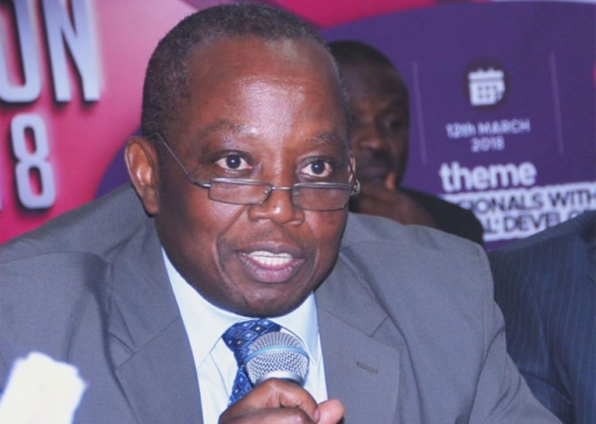
The issue of delayed prosecutions in corruption-related cases, particularly those arising from the Operation Recover All Loots (ORAL) team's investigations, has become a significant point of public contention and discussion in Ghana. Daniel Yao Domelevo, the Board Chairman of the Economic and Organised Crimes Office (EOCO) and a former Auditor-General, initially voiced deep frustration over the perceived "snail pace" of anti-corruption efforts. Nine months after the government assumed office, Domelevo expressed dissatisfaction with the slow progress in prosecuting corrupt former public officials, warning that such delays could erode public trust in the administration's commitment to accountability.
However, Domelevo later clarified that his remarks were "taken out of context," asserting that he acknowledged the significant work being undertaken by the Attorney-General (AG), EOCO, and the Office of the Special Prosecutor (OSP). His dissatisfaction, he explained, was directed at the inherent slowness of the legal system and the broader framework for fighting corruption, rather than a direct critique of the government's dedication. He emphasized that while a lot of work was ongoing, he could not "see the end of the tunnel, not to talk of the light at the end of the tunnel," highlighting the procedural inefficiencies.
In response to these concerns, Elikem Kotoko, the Deputy Chief Executive Officer of the Forestry Commission, urged the public to exercise restraint. Kotoko argued that the government's cautious approach is a deliberate strategy to ensure due process is meticulously followed and to build "water-tight" evidence. This, he stated, is crucial to prevent future attempts to overturn prosecutions. He disclosed that the Attorney-General's office is currently reviewing approximately 2,400 pieces of evidence submitted by ORAL, which lacks prosecutorial powers. Kotoko assured Ghanaians that prosecutions in corruption-related cases could be expected within "a year or more," emphasizing that due diligence should not be sacrificed for speed, despite public pressure for swift justice.
Dr. John Osae-Kwapong, a fellow with the Ghana Centre for Democratic Development (CDD-Ghana), provided a critical perspective on the public's frustration, attributing it largely to the current government's own political promises made while in opposition. Dr. Osae-Kwapong argued that the government is now facing the consequences of having created expectations of swift prosecutions, even though the complexities of legal processes dictate a slower pace. He distinguished between the legal and political dimensions of the anti-corruption fight, noting that the public primarily perceives the latter. He highlighted the irony of former critics now advocating for patience, underscoring a lesson in political communication and the crucial need to manage public expectations regarding the slow-grinding wheels of justice.
Further elaborating on systemic issues, Senyo Hosi, Convenor of the One Ghana Movement, pointed to Ghana’s current justice system as a fundamental impediment to timely and effective investigations and trials in corruption cases. Hosi stressed the urgent need for major reforms to address long-standing weaknesses in the system, citing delays in investigations and trial processes as persistent problems, alongside concerns about political will. While acknowledging some gradual "structural reforms resetting" within the judiciary, he called for genuine commitment from the government and Parliament to leverage their current absolute majority to enact substantive changes in the judicial process, thereby enabling expedited trials and swifter resolutions to corruption cases.
The ongoing debate therefore encapsulates a complex interplay of legal adherence, political accountability, and public trust. While officials like Elikem Kotoko underscore the necessity of building robust cases through painstaking due process, voices like Dr. Osae-Kwapong and Senyo Hosi emphasize the political ramifications of unmet promises and the imperative for fundamental judicial reforms. The objective remains clear: to recover stolen state funds, estimated by President Mahama to be around GH¢21 billion, and bring perpetrators to justice, but the path to achieving this is fraught with challenges related to process, perception, and systemic overhaul.