Ghana's Fierce Standoff: Leaders Defend Sovereignty Against Anti-LGBTQ+ Foreign Pressure
Ghana's anti-LGBTQ bill is under legal review by President Mahama, a decision supported by the Christian Council, while Speaker Bagbin calls for parliamentary reconsideration. This comes amidst an African inter-parliamentary conference in Accra, where leaders strongly advocate for national sovereignty and resistance against external influences on the continent's family values.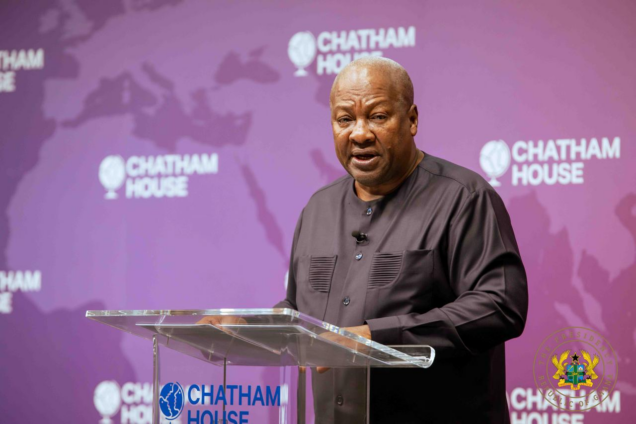
Ghana's Human Sexual Rights and Family Values Bill, 2025, widely known as the anti-LGBTQ bill, continues to be a focal point of intense debate, both domestically and across the African continent. President John Mahama has decided to subject the bill to further legal and constitutional review before granting his assent, a move supported by the Christian Council of Ghana.
President Mahama's decision was announced during a visit to the United Kingdom, where he emphasized the need for additional scrutiny to ensure the legislation meets all constitutional requirements. The Christian Council, through its Coordinator for Interfaith and Ecumenical Relations, Rev. Jehodia Godwin Amuzu, affirmed its support for the President's approach. Rev. Amuzu stated that this process aligns with the President's constitutional obligations to seek legal advice and ensure the bill's legal robustness against potential challenges. He urged Ghanaians to exercise patience, noting that while the President had previously assured religious leaders of his intention to assent to the bill, the current review ensures its fitness for purpose, particularly given its origin as a private member's bill.
Adding another layer to the controversy, Speaker of Parliament Alban Bagbin recently called for lawmakers to revisit aspects of the bill's passage. He expressed surprise at the completion of all legislative stages, prompting debate among legal observers and parliamentarians. Former First Deputy Speaker Joseph Osei Owusu, however, argued that only a constitutional breach, not merely a procedural irregularity, would justify reopening a passed bill. Majority Leader Mahama Ayariga also insisted on the validity of the bill's passage, stating that the Speaker lacks authority to reverse a decision of the House.
Amidst this internal debate, Accra recently hosted the Fourth African Inter-Parliamentary Conference on Family, Sovereignty and Values. This significant event brought together parliamentary leaders from across Africa to discuss and caution against what they described as growing external influence on family values and social policies on the continent. The conference underscored the insistence that African nations must retain the right to define their own cultural and moral frameworks without external pressure.
A representative from Eswatini at the conference highlighted that 'attacks on the African family' are no longer theoretical but manifest in societal issues like rising divorce rates and cultural confusion among youth. She emphasized that the role of African parliamentarians is to safeguard the right of individual societies to define family according to their histories, beliefs, and social realities, asserting this as a matter of national sovereignty. The representative also criticized external voices that oppose African unity in defending values and identities, stating that such criticism often promotes an 'anti-life, anti-family agenda' and 'progressive woke ideology' that challenges Africa's social values.
Speaker Alban Bagbin, addressing the conference, reiterated this sentiment, urging African countries to resist external pressure to alter domestic laws and cultural norms. He argued that attempts to condition international support on the adoption of foreign legal and cultural standards undermine the sovereignty of African states and violate principles enshrined in the United Nations Charter. Bagbin also critiqued narrow Western definitions of the family, advocating for the expansive and resilient nature of the African family structure.
Archbishop Nicholas Duncan-Williams, founder and General Overseer of Action Chapel International, also spoke at the conference, calling for greater unity among African nations. He stressed that Africa possesses immense natural wealth and potential but requires visionary leadership, unity, and a strong sense of purpose for lasting development. The Archbishop emphasized that national prosperity is built not just on resources but on principles of doing right by country and citizens, and the importance of a clear national vision. He concluded with a hopeful vision of an Africa where future generations would prosper within their own borders, free from the need to seek opportunities abroad, echoing Ghana's first President, Kwame Nkrumah, on the importance of cooperation and collective development.