Ghana's Borders Rocked by Foreign Currency Seizure Scandal: Central Bank Launches Probe
The Bank of Ghana has launched a Preliminary Investigation Committee to tackle the issue of undeclared foreign currency moving through Ghana's borders. This initiative aims to strengthen monitoring and combat illicit financial activities like money laundering and tax evasion, posing significant risks to the nation's financial integrity.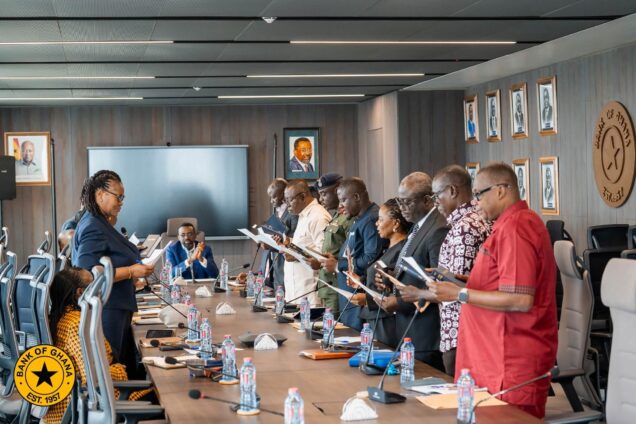
The Bank of Ghana (BoG) has taken a decisive step to fortify the integrity of the nation's financial sector by inaugurating a Preliminary Investigation Committee on Seized Foreign Currency. This crucial initiative is a direct response to the persistent challenge of undeclared foreign currency flows through Ghana's various airports and border points. Dr. Johnson Pandit Asiama, the Governor of the Bank of Ghana, underscored the committee's importance, stating its primary objective is to bridge a significant void within Ghana's financial framework. This will be achieved by enhancing the existing mechanisms for both monitoring and thoroughly investigating foreign currency that has been seized by regulatory authorities. The Governor highlighted that considerable sums of foreign currency have been observed traversing the country's boundaries without the mandatory declaration, posing substantial risks to the national economy and financial stability.
Dr. Asiama further elaborated on the grave implications of these undeclared currency movements. He explicitly warned that such flows create fertile ground for serious illicit activities, including money laundering, widespread tax evasion, and a spectrum of other unlawful financial operations. He reiterated, "Undeclared currency flows create room for money laundering, tax evasion and other illicit activity." Beyond facilitating crime, these undeclared funds also severely impede the capabilities of financial intelligence agencies. They diminish the quality and quantity of financial intelligence available to authorities, thereby compromising their ability to effectively monitor and regulate the financial system. Furthermore, currency that circulates outside the officially declared channels inevitably diverts valuable funds away from Ghana's formal financial markets, weakening the overall economic structure.
To combat this multifaceted challenge effectively, the Bank of Ghana is not operating in isolation. It has forged strong partnerships with several key governmental and security entities. These collaborators include the Ghana Revenue Authority, responsible for national tax administration; the Ghana Airports Company Limited, overseeing airport operations; National Security, safeguarding national interests; the Economic and Organised Crime Office (EOCO), tasked with investigating economic crimes; the Financial Intelligence Centre, focused on combating financial crime; and the Attorney General’s Office, providing legal oversight. This collaborative effort is a concerted push to safeguard Ghana’s vital borders, ensure the stability and transparency of its markets, and protect its valuable national resources from the adverse effects of illicit financial activities.